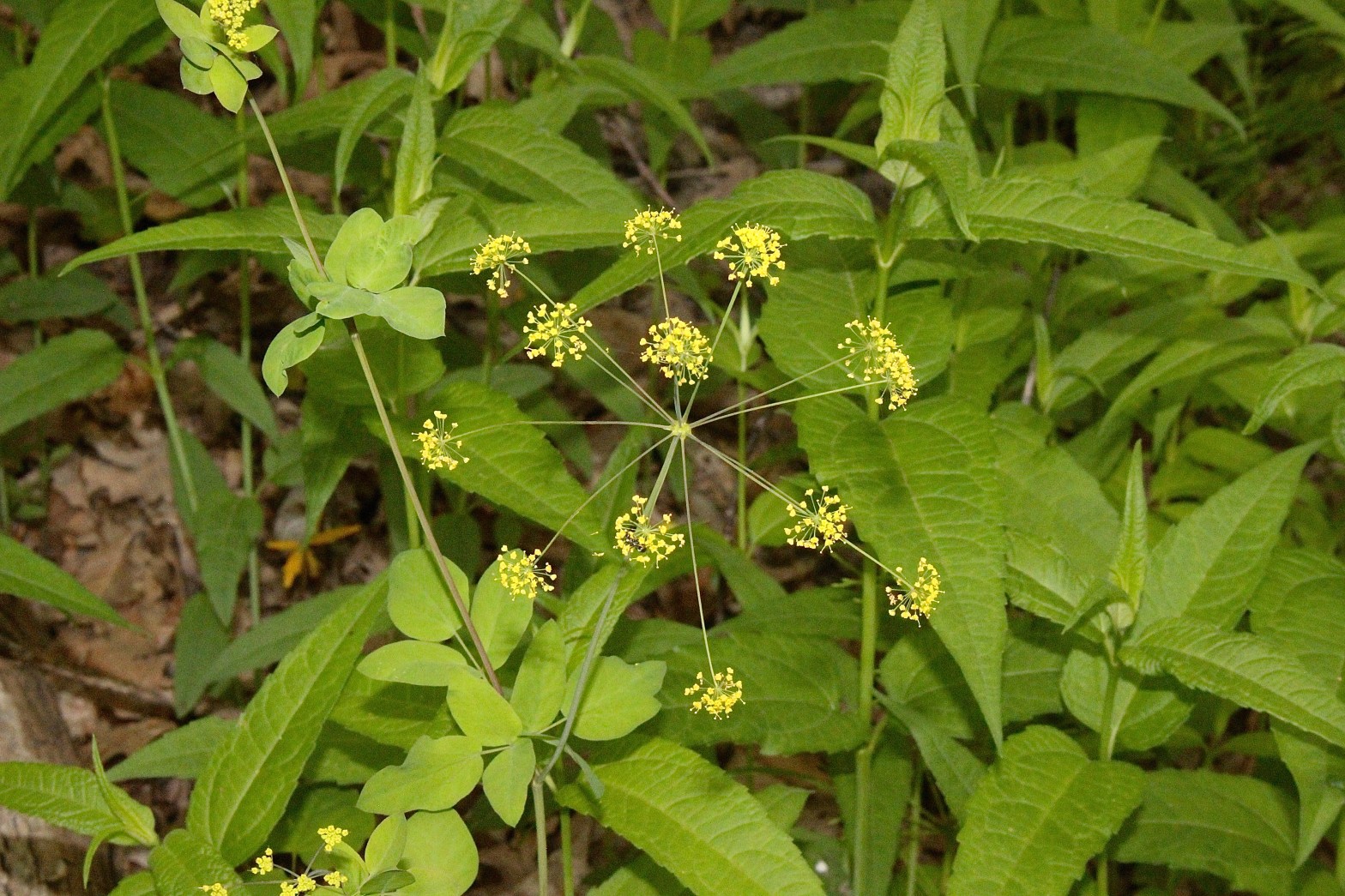
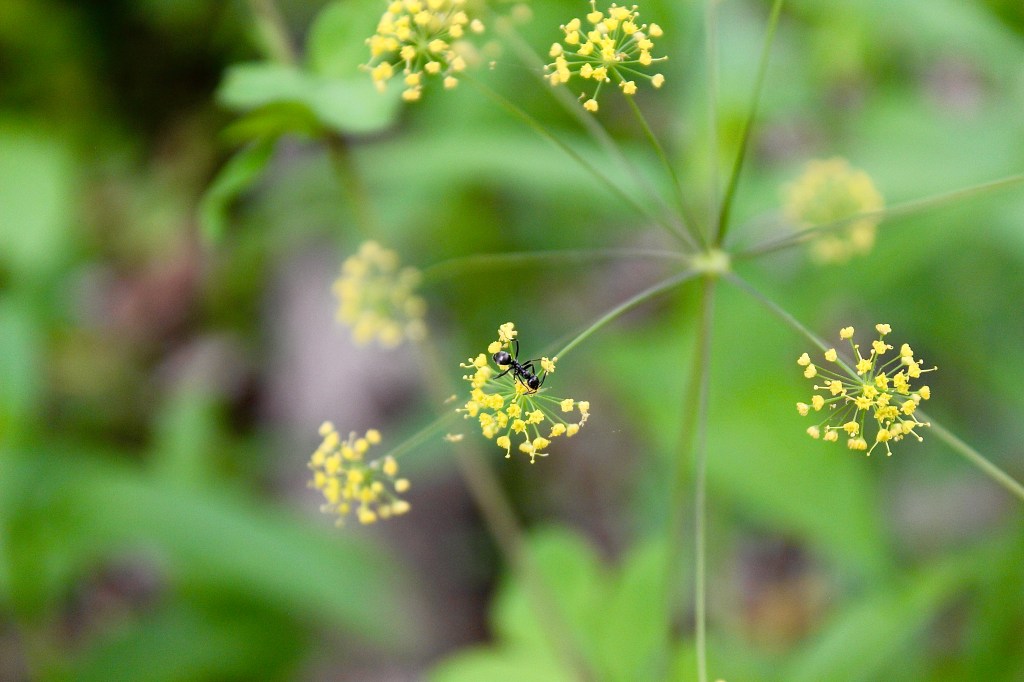
The other day, I paid a visit to one of my favorite natural areas in the Quad Cities: Black Hawk State Historic Site. In particular, I chose to explore the dry, rocky bluff along the Rock River to see what spring flora I could find. Making my way along on the footpath, I soon came upon an area where I helped clear brush this past winter. A dense patch of European buckthorn and rough leaf dogwood had been cleared from a steep south-facing slope where a few stems of remnant prairie species had been spotted the year prior. To my surprise, I was met with lush green and yellow where the thicket and minimal herbaceous cover had been. Yellow Pimpernel (Taenidia integerrima), which, as of last year, grew only in a narrow strip along the footpath where sunlight was adequate, now blanketed the slope! Little did I know that hundreds of plants were lying in wait beneath the brush.
If you have not heard of this funny sounding wildflower belonging to the Carrot Family before, no need to feel bad because Yellow Pimpernel is an uncommon species found almost exclusively in high quality natural areas. It is a plant that does not tolerate heavy shade, and subsequently it is most abundant in open woodlands and savannas, communities which have been in decline for the past two centuries. Yellow Pimpernel was likely much more abundant on the landscape in pre-settlement times than it is today.
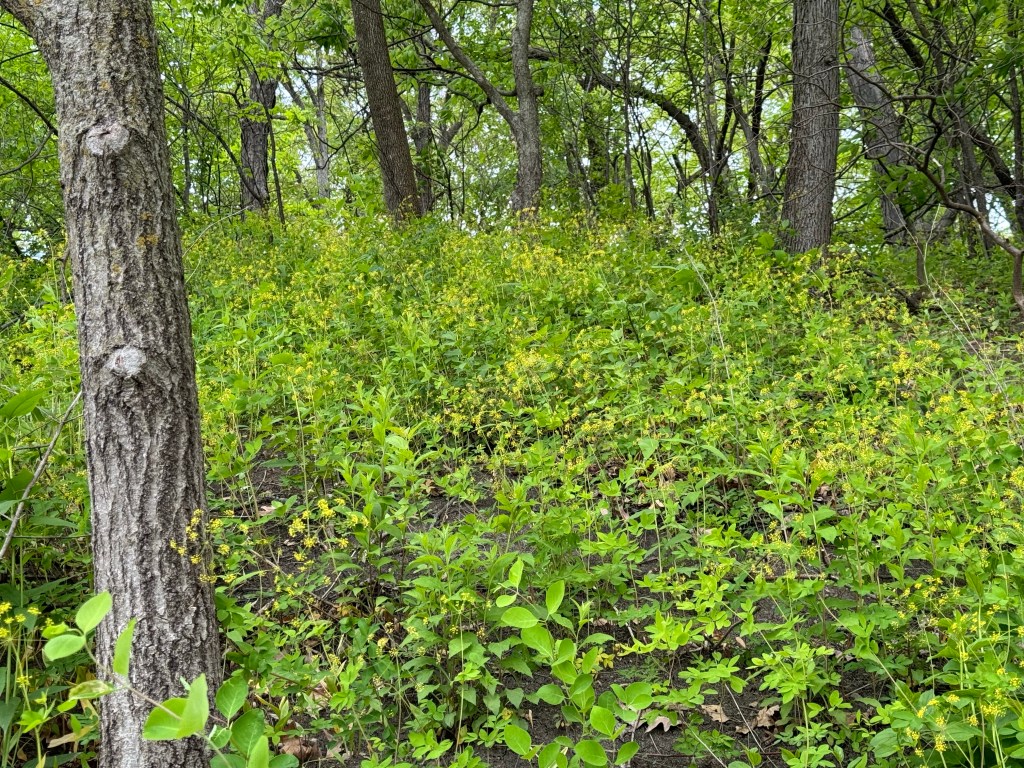
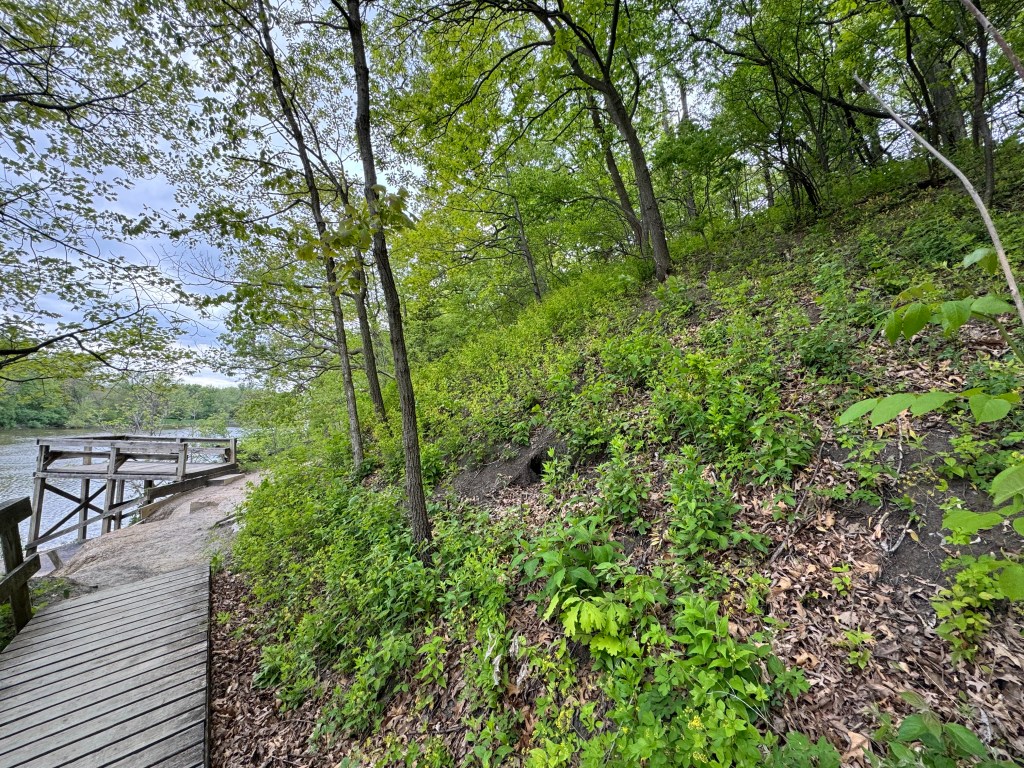
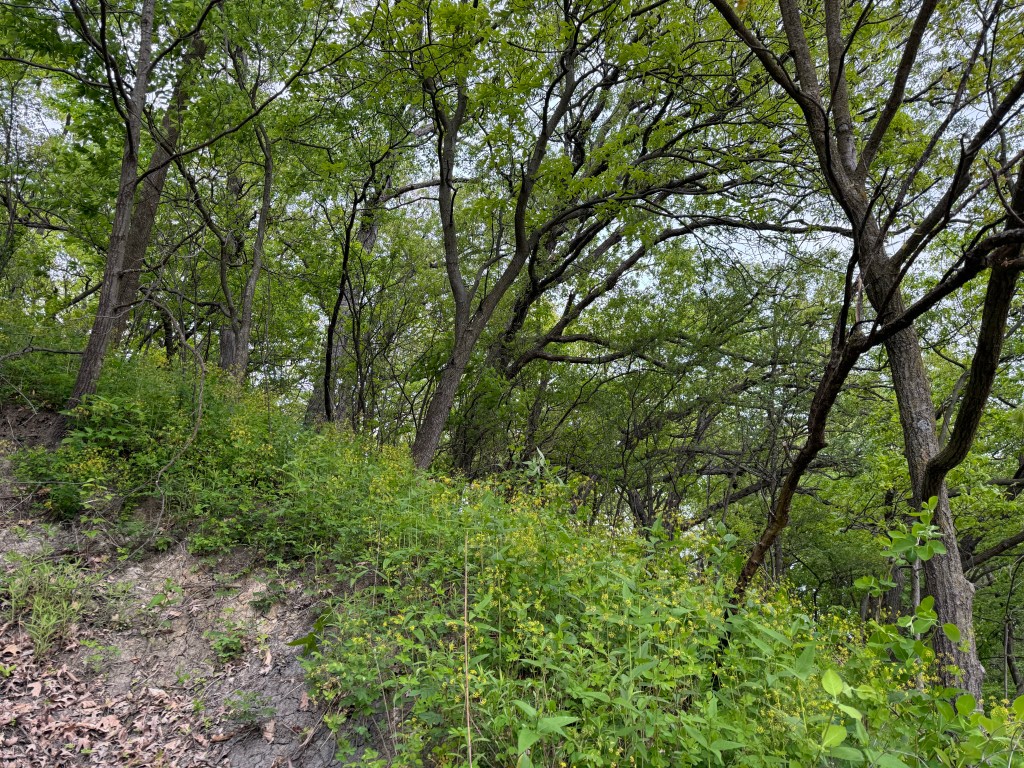
This story is not unique to Yellow Pimpernel, however. A large portion of our native flora once flourished in the part-shade of fire maintained oak woodlands and savannas. Since the arrival of Europeans and the removal of indigenous peoples who regularly burned the landscape, so much of our open oak woods and their diverse and beautiful inhabitants have been diminished by canopy closure, fire suppression, and invasive species encroachment. Virtually all remnant oak communities here in the Quad Cities are experiencing this slow and painful death, and the results are less diverse, functional, and beautiful natural areas. Our neighbors to the east in the Chicago Region have been laying the foundation on how to steward these spaces in our day and age for decades now, and I think the time is ripe for the Quad Cities to follow suit and forge our own path in oak woodland restoration.
The golden sight I beheld at Black Hawk is one of success, hope, and inspiration. We have the ability to nurture and heal our suffering natural communities, and sometimes all it takes is a few hours of brushing clearing to make a visible difference.
Recommend reading: The demise of fire and “mesophication” of forests in the eastern United States by Gregory J. Nowacki, Marc D. Abrams. 2008 https://www.fs.usda.gov/research/treesearch/40238
 Flora of the Quad Cities Region