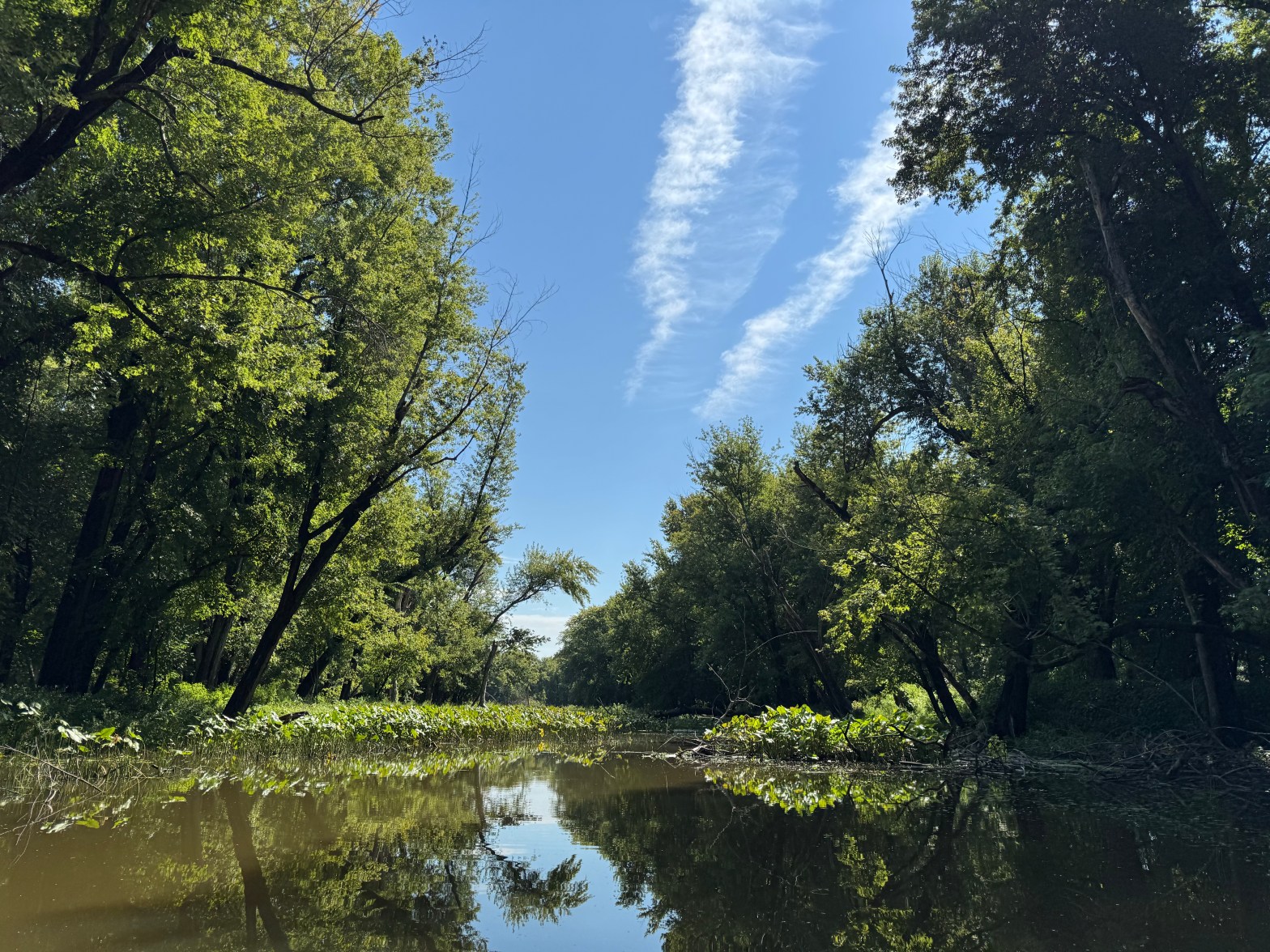
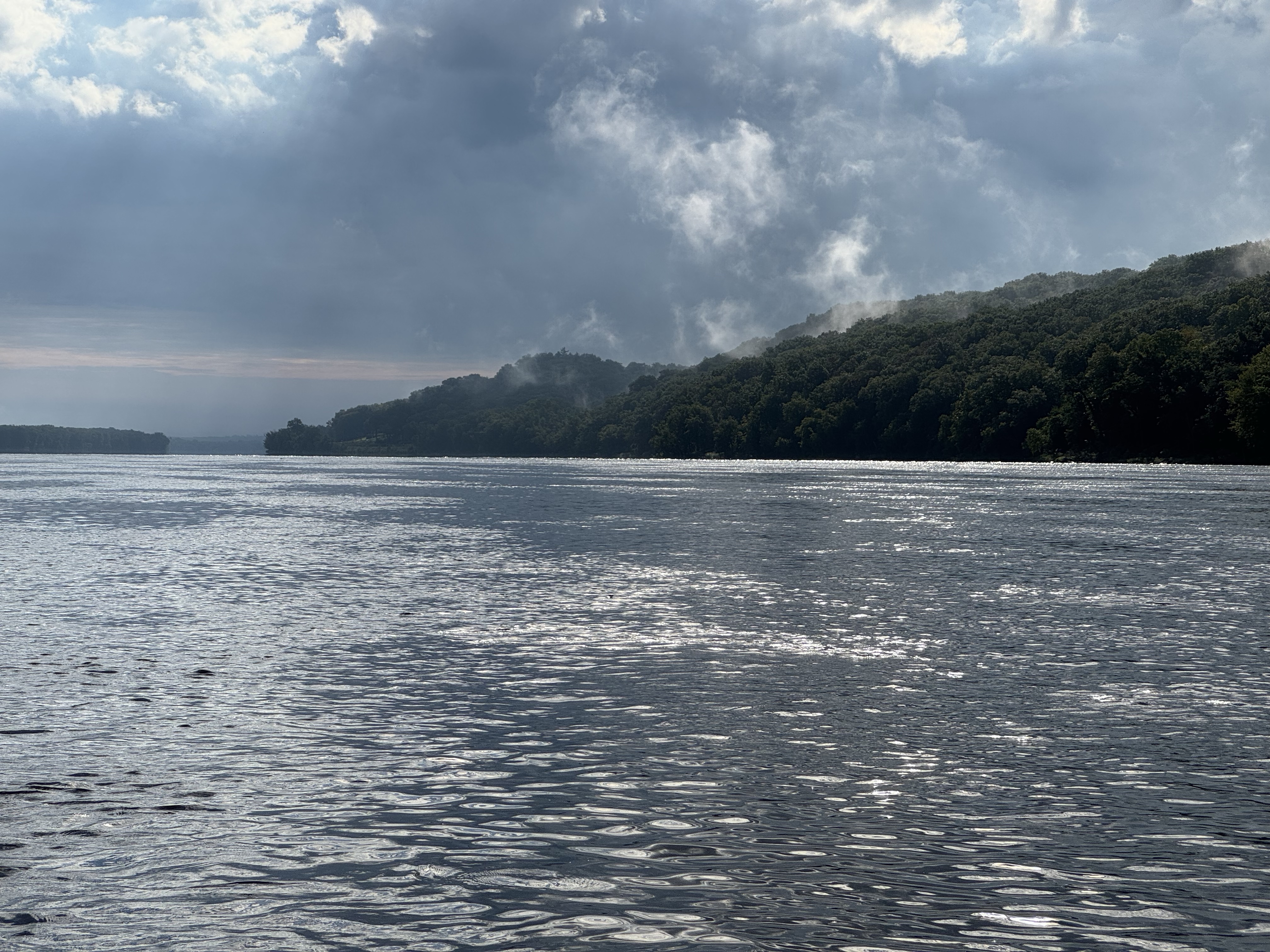
This year, it struck me that despite living most of my life here in the Quad Cities, I’ve actually spent very little time on the Mississippi River. With its wide channel, broad floodplains, islands, and wooded bluffs it is the defining feature of the landscape, yet somehow, I have been so removed from it. Perhaps an awareness of the unfortunate history of pollution plus the well-constructed levee walls consciously or unconsciously kept me away. Whatever the reason, I decided that it was time to embrace the river. As a botanist accustomed to botanizing on land, the Mississippi River had become something of a mystery in my mind — a Great Unknown, floristically speaking. From behind my computer screen, I have often peered with curiosity at the numerous green islands and their sinuous sloughs which begin at the mouth of Rock River and continue downstream to Muscatine, IA. Given the large area, I knew there must be some interesting plants out there.
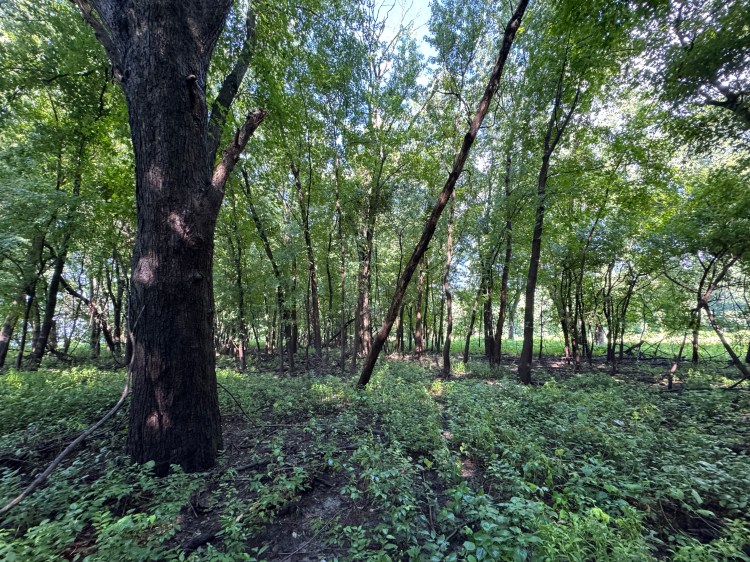
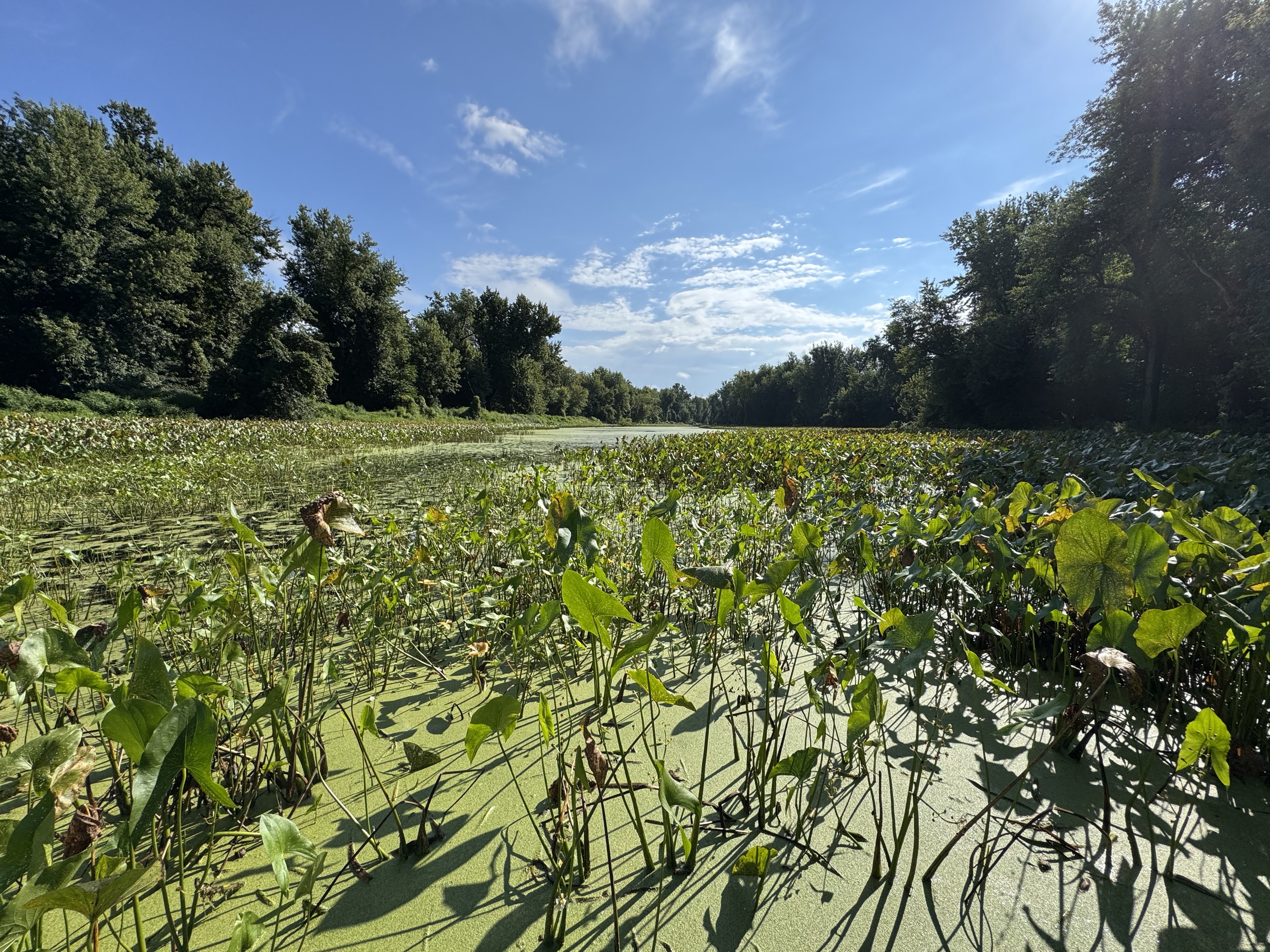
This past summer, I finally arranged a few visits to the islands located in what is called the Andalusia Slough. Initially, I was disappointed with what I found, though not entirely surprised. The vegetation on the islands was shockingly depauperate. The floodplain forests were composed of a near monoculture of silver maple (Acer saccharinum) overtopping an herbaceous layer composed almost entirely of wood nettle (Laportea canadensis), clearweed (Pilea pumila), and lanceleaf aster (Symphyotrichum lanceolatum). Emergent marsh communities were dominated by our two disturbance-tolerant annual smartweeds: pinkweed (Persicaria pensylvanica) and pale smartweed (Persicaria lapathifolia). Both species towered to heights of six to eight feet in some places, as if on steroids. Perhaps the intense nutrient loading from decades of agricultural runoff has encouraged this type of growth. After further exploration, I quickly came to realize that the near entirety of the islands and their intercalated sloughs showed signs of floristic degradation caused by the high-intensity and long-duration flooding that is now a regular occurrence on the Mississippi. However, none of this was necessarily a surprise based on my other experiences in the Mississippi floodplains. As it often does here in the (to put it mildly) ecologically degraded Midwest, my curiosity quickly changed from “what is the vegetation like?” to “where are the pockets of remaining diversity?” Even on the most degraded sites, I have learned that there is often a speck of diversity left somewhere that can tell you something new, a glimmer of hope in the darkness, and I was set on finding it.
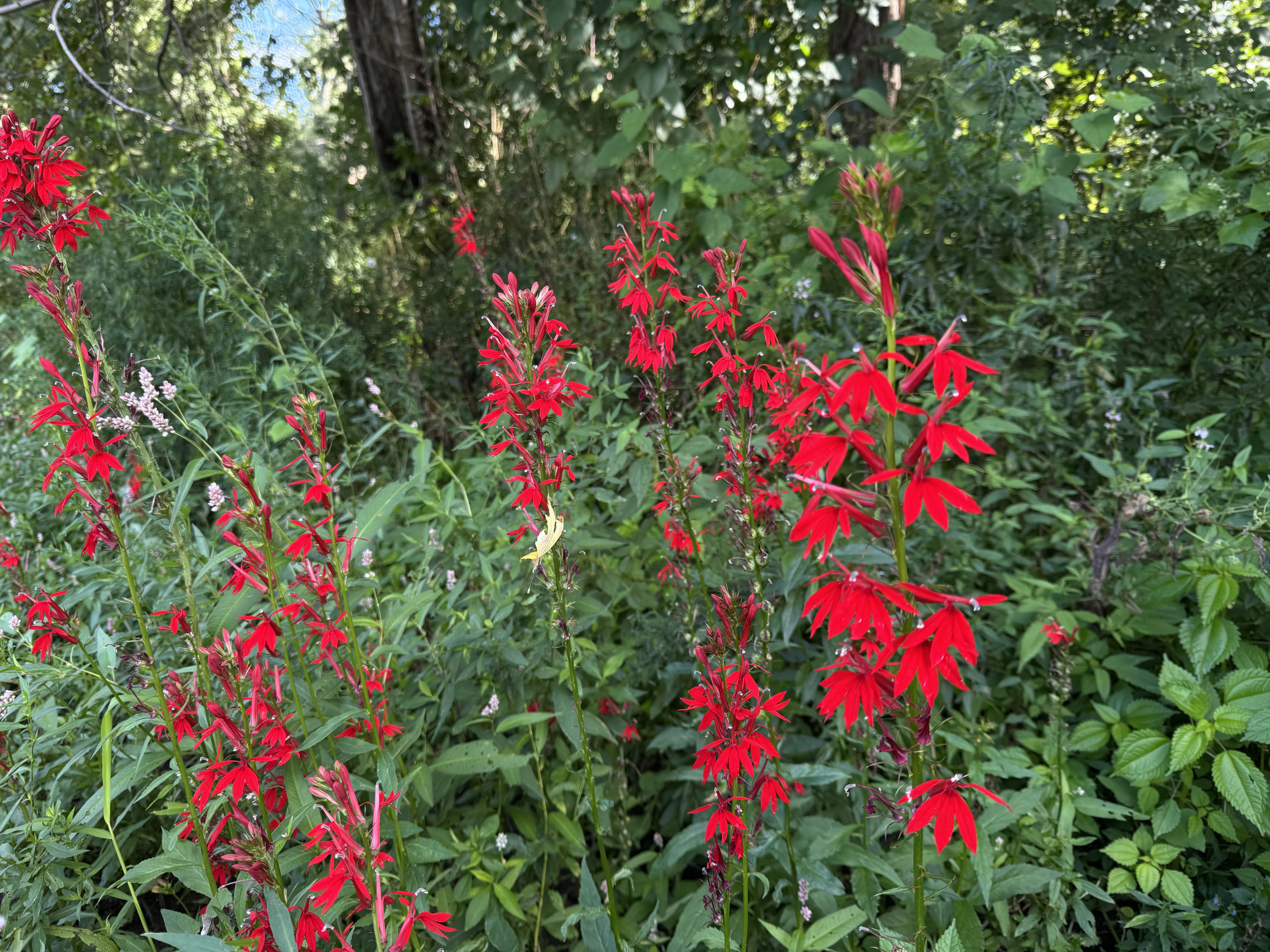
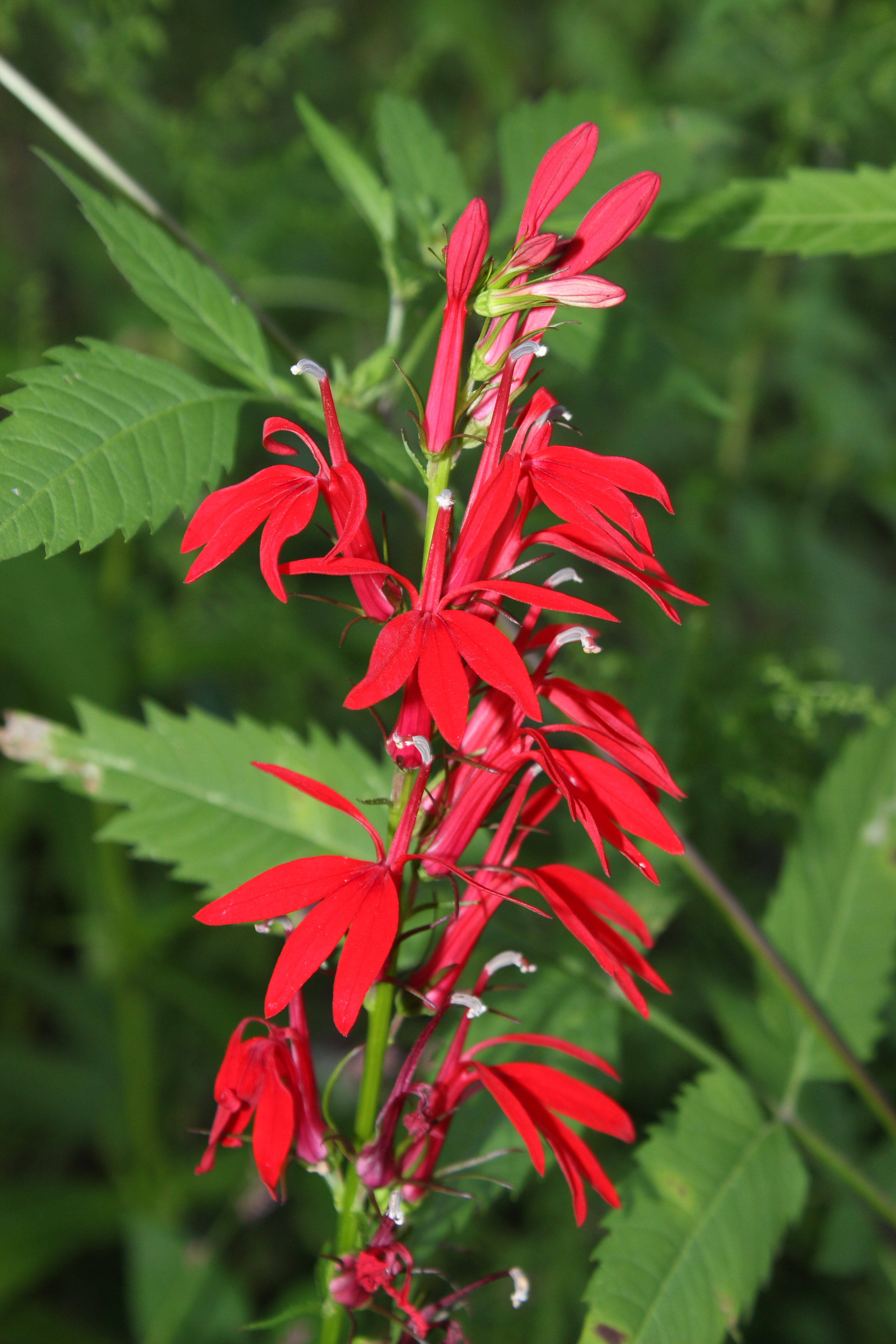
While paddling through a 1.25 mile long slough in the island chain interior, a few glimmers of hope revealed themselves. In this case, they were bright red glimmers. On the muddy shoreline, several hundred stems of cardinal flower (Lobelia cardinalis) stood in regal bloom. If not for my red-green colorblindness, I probably would have spotted them from tens of meters away, but their distinct form caught my eye when I came within just a few. Then, as if on cue, a ruby-throated hummingbird (Archilochus colubris) zipped into view and drank from the vibrant corollas. Now that was more like it!
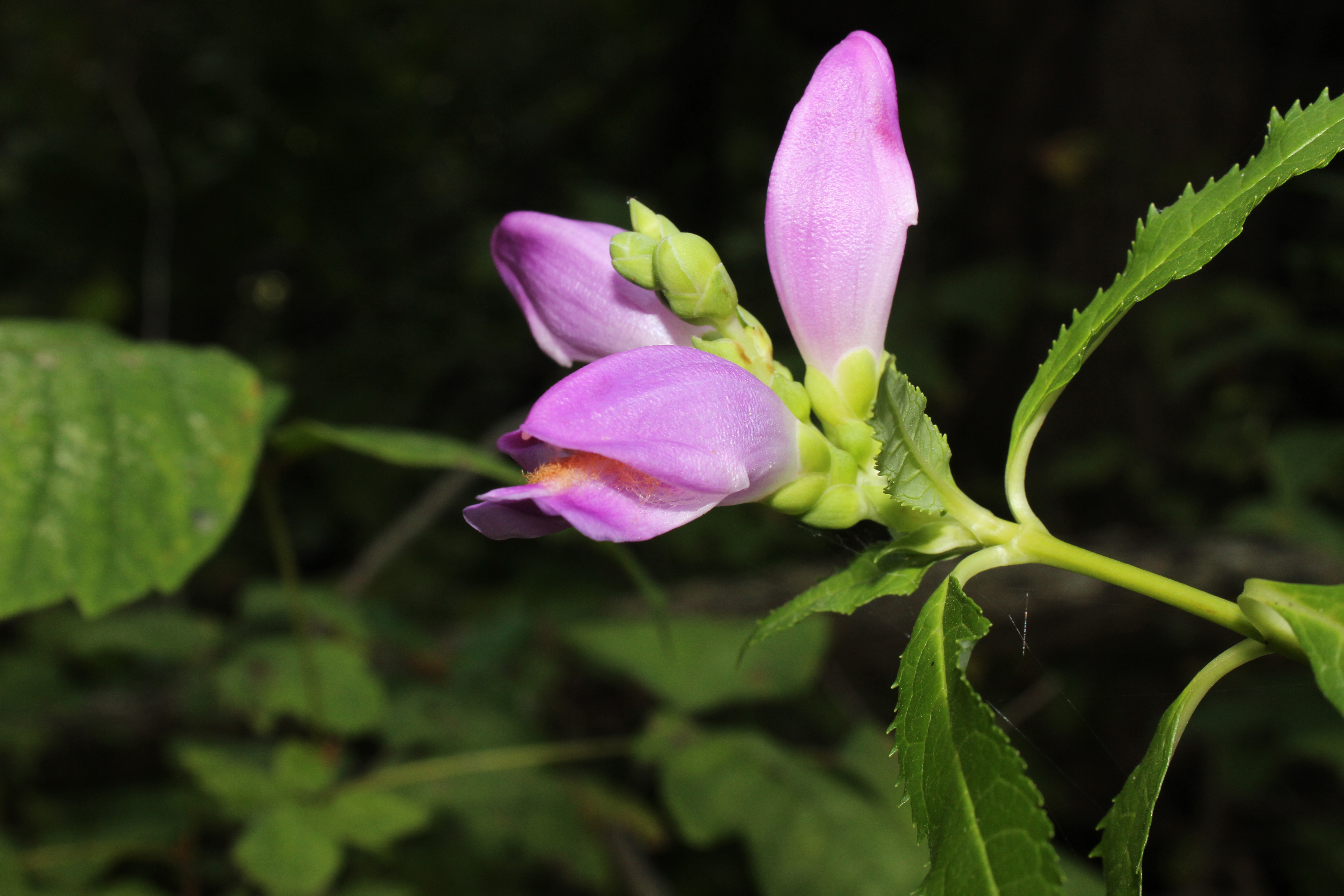
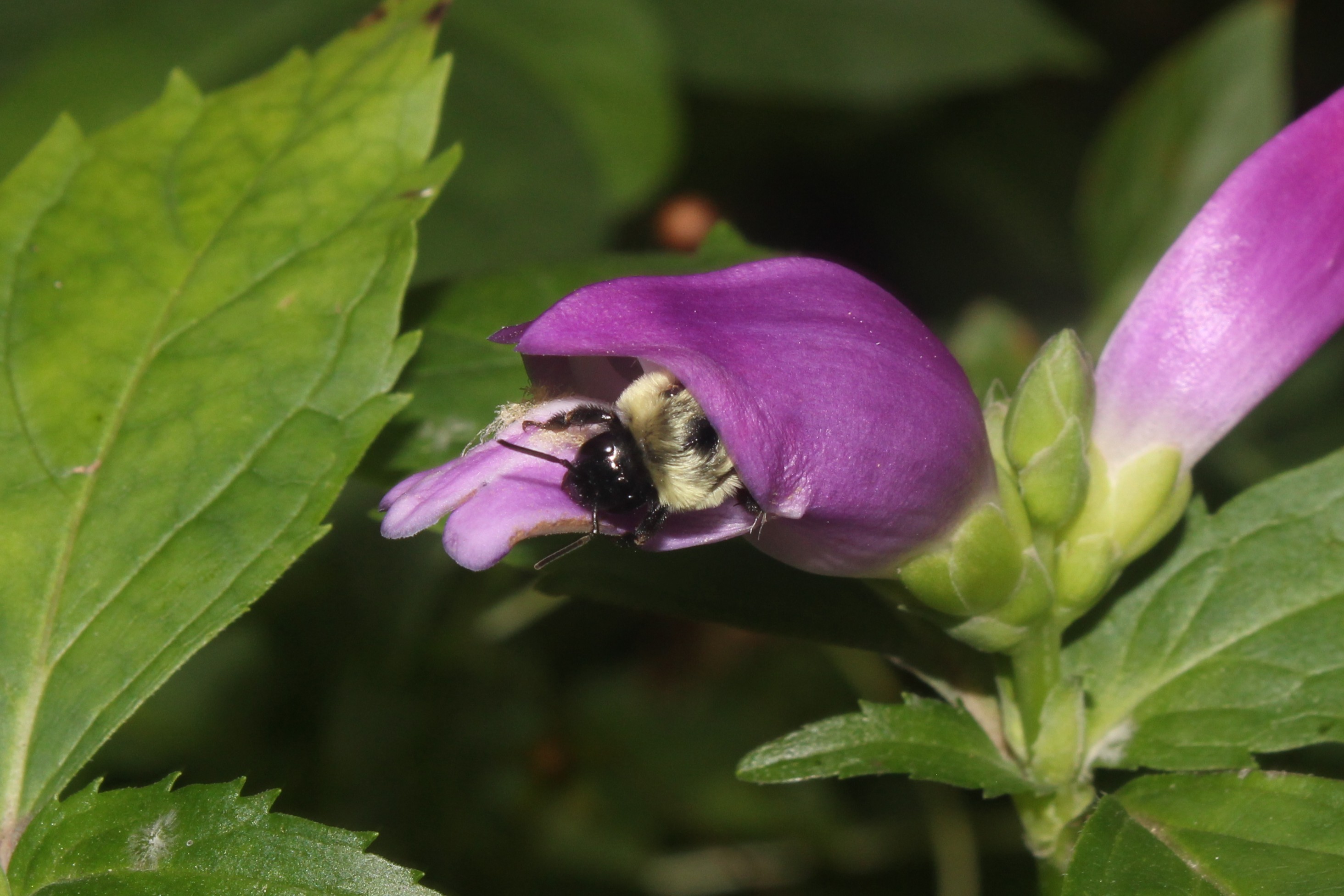
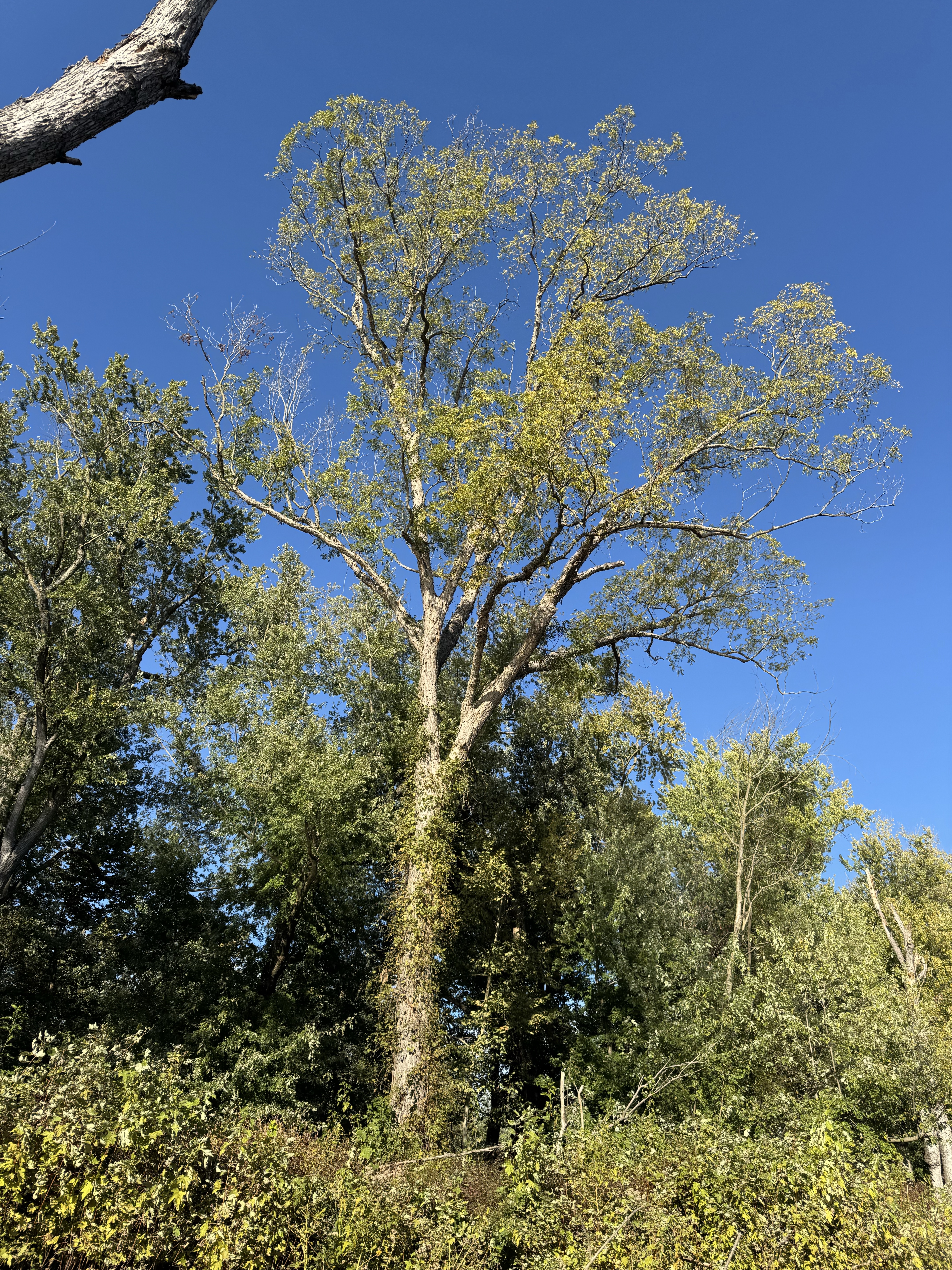
Further down the same shoreline, a vibrant purple stood out amongst the green. The Midwest rose turtlehead (Chelone speciosa), another secret of the Andalusia Islands, revealed itself. Jumping out of my kayak and trying not to slip on the slick Mississippi mud, I climbed up the bank to find a hundred or so blooming stems on a narrow high terrace. Above them stood the skeleton of a burr oak (Quercus macrocarpa). The ligneous corpse acknowledged that this terrace was once protected from the most intense floods. Emphasis on once. Like with the cardinal flower, the turtlehead’s winged companion soon made an appearance. Standing amongst the beautiful blooms, I noticed a movement from within one of the corollas. To my surprise and enjoyment, I watched an eastern bumble bee (Bombus impatiens) crawl out of the corolla head-first, prying open the turtle’s mouth with its rotund body and strong legs. It buzzed over to another flower and quickly slipped into it in search of the sweet nectar reward within.
Alongside the turtlehead grew wild yam (Dioscorea villosa), catchfly grass (Leersia lenticularis), moonseed (Menispermum canadense), showy obedient plant (Physostegia speciosa), marsh hedge nettle (Stachys hispida), smooth hedge nettle (Stachys tenuifolia), and graybark grape (Vitis cinerea). While not breaking any records in terms of diversity, this association stood out as distinct and diverse compared to the acres and acres of floodplain forest and shoreline dominated by a few disturbance-tolerant species. The small burr oak terrace was an echo of the once diverse flora which inhabited the Mississippi River floodplains prior to settlement. Back then, oaks, hickories, and other now rare floodplain trees species were more common. A diversity of wildflowers, sedges, and grasses likely graced the floors of these woodlands. In addition, prairies were also present in the floodplain and on islands. Since then, multiple factors have intersected to eliminate much diversity on these parts of the landscape. These include, in no particular order 1) the raising of water levels in the Upper Mississippi Valley far higher than they were historically through the construction of the lock and dam system, 2) heavy erosion and resulting siltation caused by intensive agriculture throughout the watershed, 3) agriculture and development within the floodplain itself, 4) chemical pollution and eutrophication from industry and agriculture, 5) human-induced climate change which has altered temperature and precipitation cycles, 6) human-introduced invasive pests and pathogens (i.e., Dutch elm disease, emerald ash borer) which have devastated historically important floodplain tree species, and 7) high-intensity and long-duration flood events caused by climate change, artificially maintained water levels, and lack of deep-rooted perennial vegetation throughout the watershed.
While the current reality and outlook for our floodplains looks bleak in important ways, these moments of discovering small pockets of diversity are what keep me going. To know that some beauty and resiliency remain despite how humans have so thoroughly altered the landscape here in the Midwest gives me hope. These minute remnants are a reminder of how beautiful and complex these places were and, if given the opportunity, how they can be once again. We must not take them for granted, however. Their future is, in part, contingent upon people deciding to do something. We must choose to find, appreciate, and steward all pockets of remnant biodiversity if they are to truly live on.
Further reading:
- Ecological Status and Trends of the Upper Mississippi and Illinois Rivers. 2022. U.S. Geological Survey. https://pubs.usgs.gov/publication/ofr20221039
- Upper Mississippi and Illinois River Floodplain Forests: Desired Future and Recommended Actions. 2002. Upper Mississippi River Conservation Committee. https://umrcc.org/wp-content/uploads/2022/04/Upper-Miss-and-Il-River-Floodplain-Forests.pdf
- Upper Mississippi River Systemic Stewardship Plan. 2012. US Army Corps of Engineers. https://www.mvd.usace.army.mil/Portals/52/docs/regional_flood_risk_management/our_mississippi/UMRSystemicFSP7-26-12.pdf
 Flora of the Quad Cities Region