Curious about the biodiversity of the Quad Cities Region? Check out these collection projects on iNaturalist linked below. (Species counts updated: 12/11/2025).
Create an iNat account and upload your photos of our local biodiversity to contribute to these projects! Check out this page for more info on joining iNaturalist.
This year, it struck me that despite living most of my life here in the Quad Cities, I’ve actually spent very little time on the Mississippi River. With its wide channel, broad floodplains, islands, and wooded bluffs it is the defining feature of the landscape, yet somehow, I have been so removed from it. Perhaps an awareness of the unfortunate history of pollution plus the well-constructed levee walls consciously or unconsciously kept me away. Whatever the reason, I decided that it was time to embrace the river. As a botanist accustomed to botanizing on land, the Mississippi River had become something of a mystery in my mind — a Great Unknown, floristically speaking. From behind my computer screen, I have often peered with curiosity at the numerous green islands and their sinuous sloughs which begin at the mouth of Rock River and continue downstream to Muscatine, IA. Given the large area, I knew there must be some interesting plants out there.
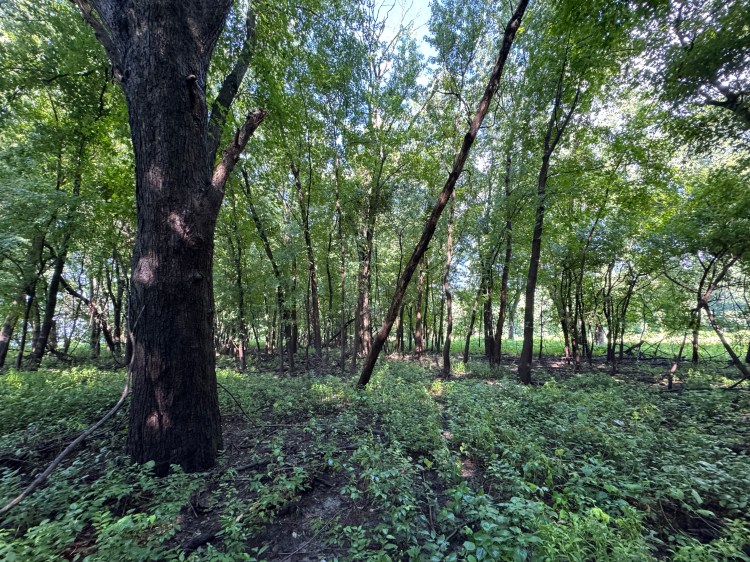
A typical wet floodplain forest in the Upper Mississippi bottomland characterized by a canopy of silver maple and an herbaceous layer composed of whitegrass (Leersia virginica), clearweed (Pilea pumila), and little else. Photo by Grant Fessler.
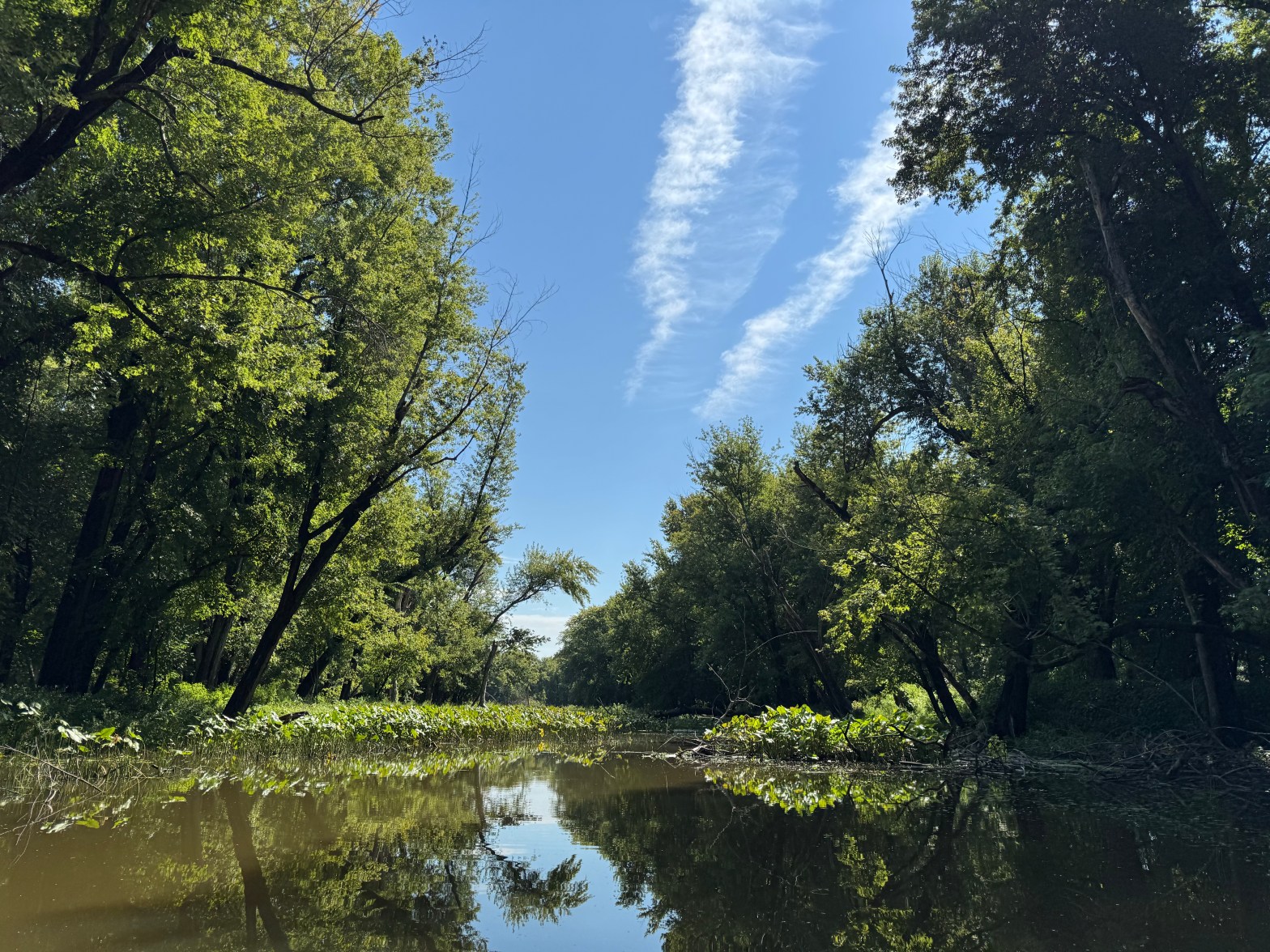
This past summer, I finally arranged a few visits to the islands located in what is called the Andalusia Slough. Initially, I was disappointed with what I found, though not entirely surprised. The vegetation on the islands was shockingly depauperate. The floodplain forests were composed of a near monoculture of silver maple (Acer saccharinum) overtopping an herbaceous layer composed almost entirely of wood nettle (Laportea canadensis), clearweed (Pilea pumila), and lanceleaf aster (Symphyotrichum lanceolatum). Emergent marsh communities were dominated by our two disturbance-tolerant annual smartweeds: pinkweed (Persicaria pensylvanica) and pale smartweed (Persicaria lapathifolia). Both species towered to heights of six to eight feet in some places, as if on steroids. Perhaps the intense nutrient loading from decades of agricultural runoff has encouraged this type of growth. After further exploration, I quickly came to realize that the near entirety of the islands and their intercalated sloughs showed signs of floristic degradation caused by the high-intensity and long-duration flooding that is now a regular occurrence on the Mississippi. However, none of this was necessarily a surprise based on my other experiences in the Mississippi floodplains. As it often does here in the (to put it mildly) ecologically degraded Midwest, my curiosity quickly changed from “what is the vegetation like?” to “where are the pockets of remaining diversity?” Even on the most degraded sites, I have learned that there is often a speck of diversity left somewhere that can tell you something new, a glimmer of hope in the darkness, and I was set on finding it.
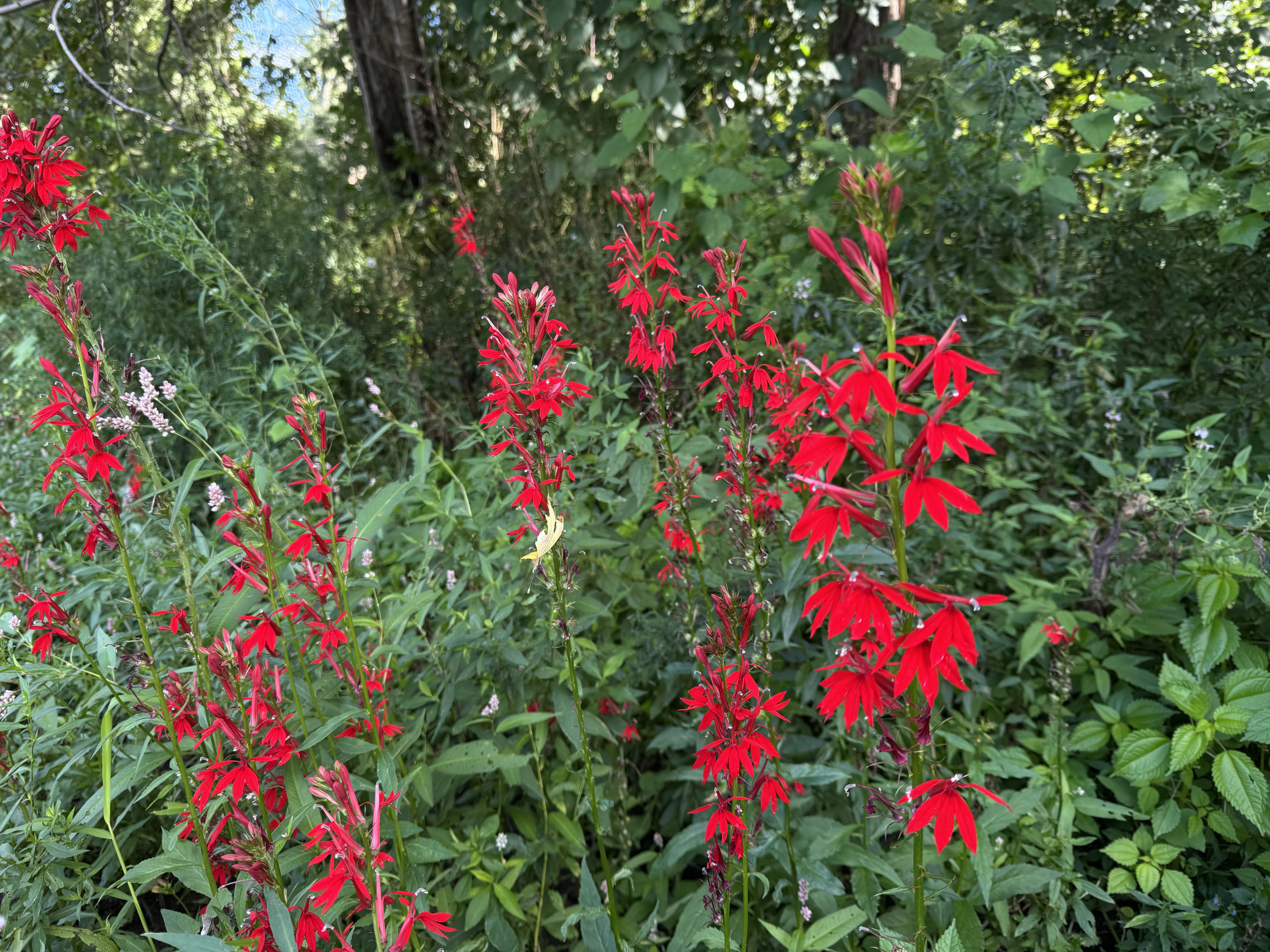
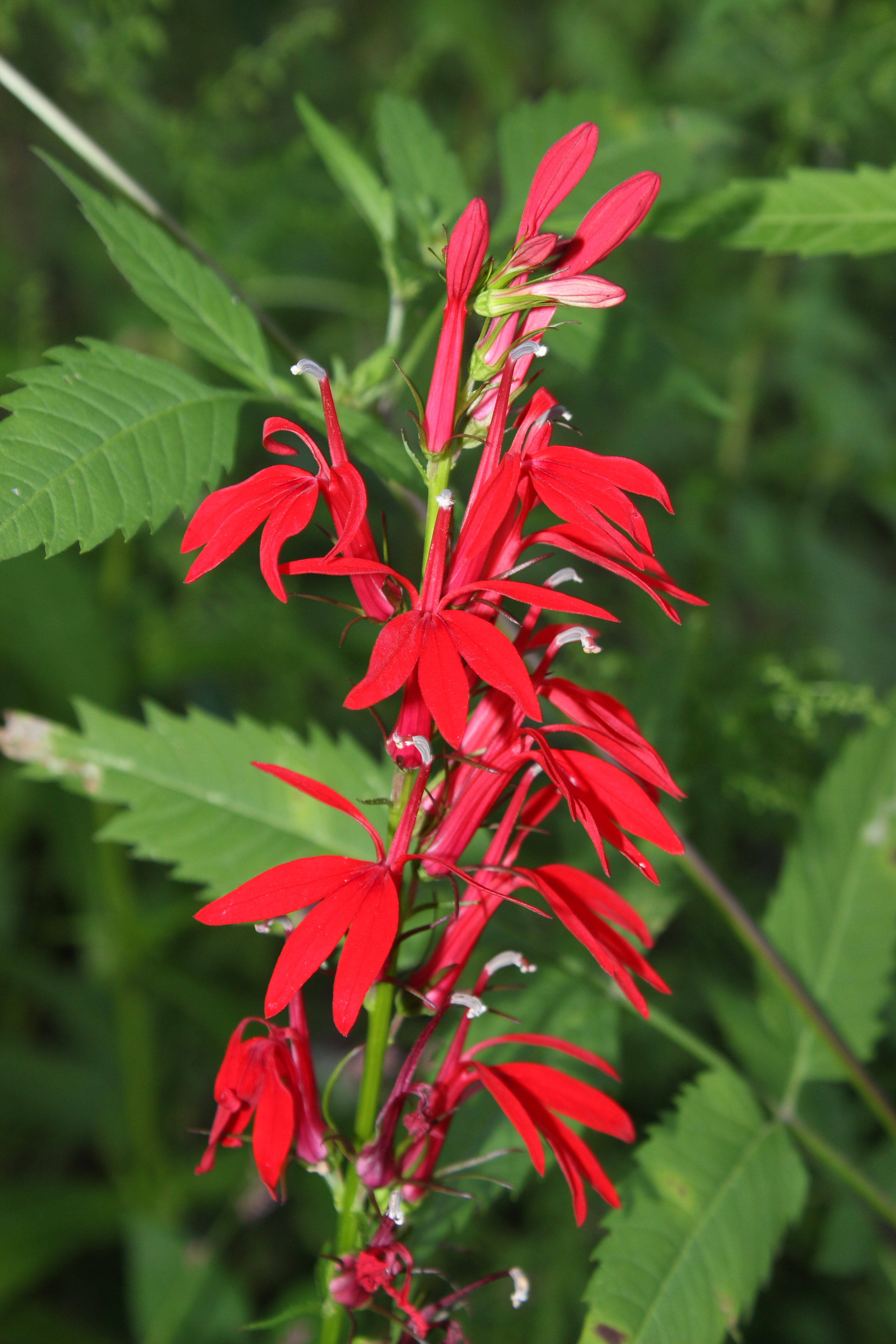
While paddling through a 1.25 mile long slough in the island chain interior, a few glimmers of hope revealed themselves. In this case, they were bright red glimmers. On the muddy shoreline, several hundred stems of cardinal flower (Lobelia cardinalis) stood in regal bloom. If not for my red-green colorblindness, I probably would have spotted them from tens of meters away, but their distinct form caught my eye when I came within just a few. Then, as if on cue, a ruby-throated hummingbird (Archilochus colubris) zipped into view and drank from the vibrant corollas. Now that was more like it!
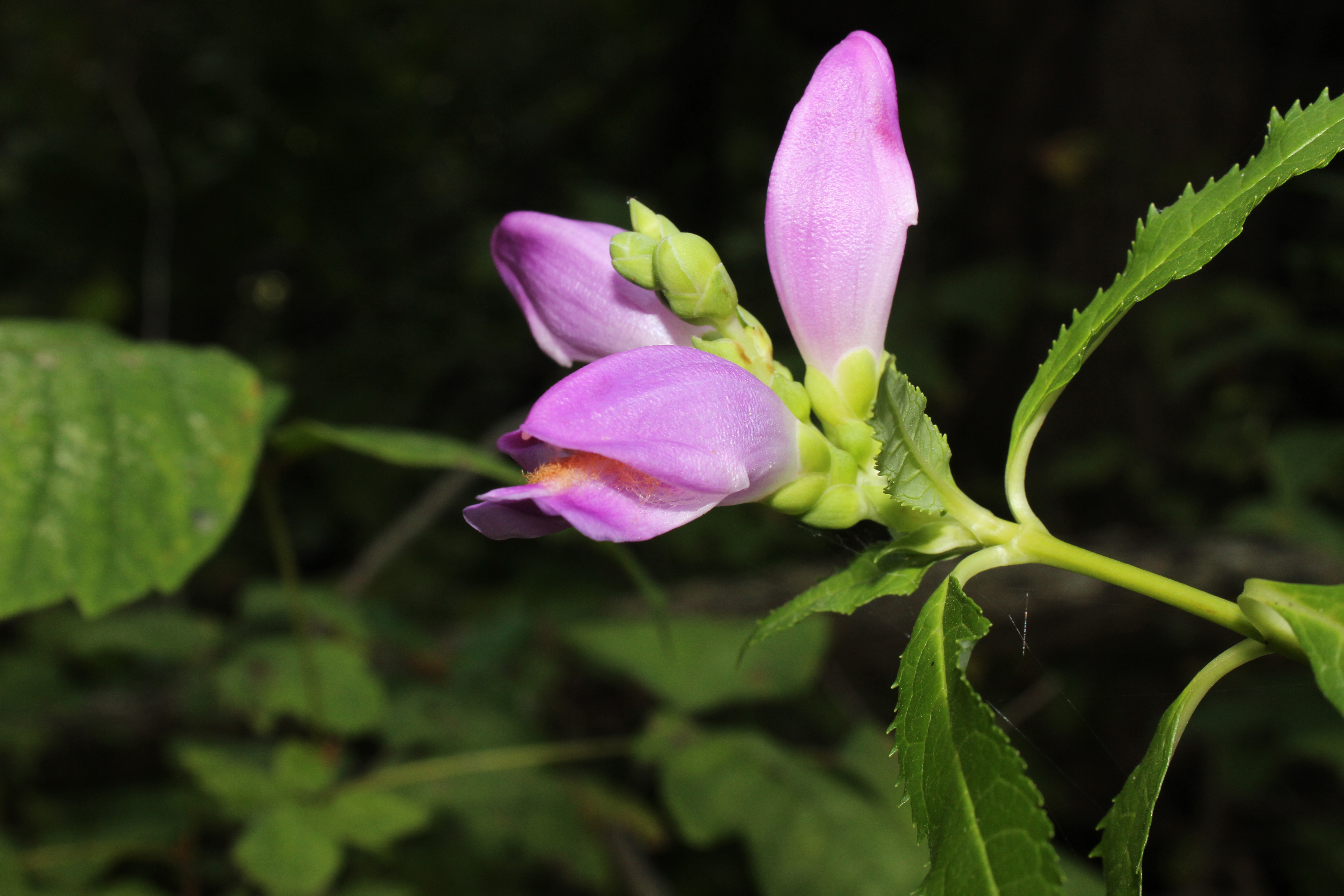
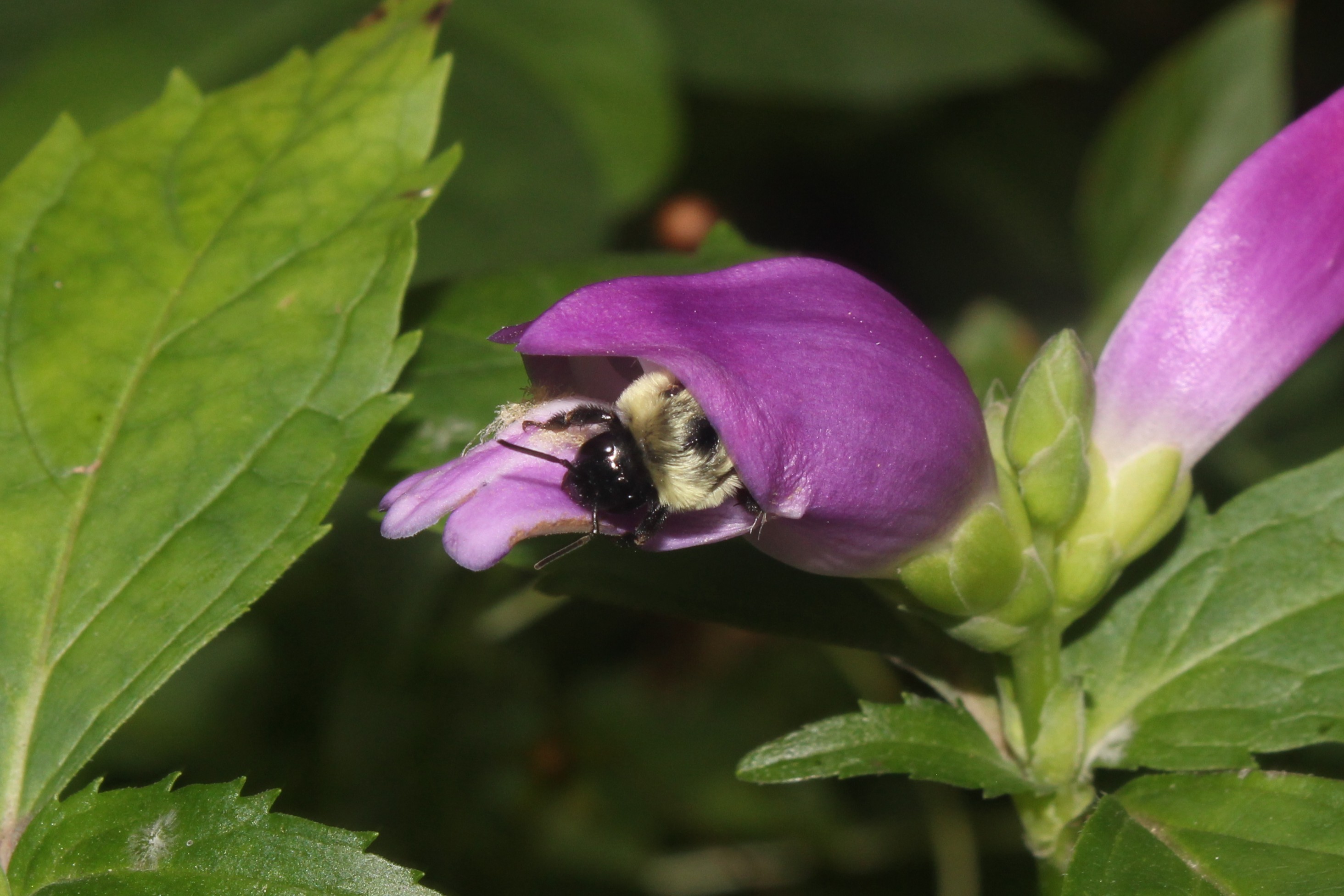
Further down the same shoreline, a vibrant purple stood out amongst the green. The Midwest rose turtlehead (Chelone speciosa), another secret of the Andalusia Islands, revealed itself. Jumping out of my kayak and trying not to slip on the slick Mississippi mud, I climbed up the bank to find a hundred or so blooming stems on a narrow high terrace. Above them stood the skeleton of a burr oak (Quercus macrocarpa). The ligneous corpse acknowledged that this terrace was once protected from the most intense floods. Emphasis on once. Like with the cardinal flower, the turtlehead’s winged companion soon made an appearance. Standing amongst the beautiful blooms, I noticed a movement from within one of the corollas. To my surprise and enjoyment, I watched an eastern bumble bee (Bombus impatiens) crawl out of the corolla head-first, prying open the turtle’s mouth with its rotund body and strong legs. It buzzed over to another flower and quickly slipped into it in search of the sweet nectar reward within.
Alongside the turtlehead grew wild yam (Dioscorea villosa), catchfly grass (Leersia lenticularis), moonseed (Menispermum canadense), showy obedient plant (Physostegia speciosa), marsh hedge nettle (Stachys hispida), smooth hedge nettle (Stachys tenuifolia), and graybark grape (Vitis cinerea). While not breaking any records in terms of diversity, this association stood out as distinct and diverse compared to the acres and acres of floodplain forest and shoreline dominated by a few disturbance-tolerant species. The small burr oak terrace was an echo of the once diverse flora which inhabited the Mississippi River floodplains prior to settlement. Back then, oaks, hickories, and other now rare floodplain trees species were more common. A diversity of wildflowers, sedges, and grasses likely graced the floors of these woodlands. In addition, prairies were also present in the floodplain and on islands. Since then, multiple factors have intersected to eliminate much diversity on these parts of the landscape. These include, in no particular order 1) the raising of water levels in the Upper Mississippi Valley far higher than they were historically through the construction of the lock and dam system, 2) heavy erosion and resulting siltation caused by intensive agriculture throughout the watershed, 3) agriculture and development within the floodplain itself, 4) chemical pollution and eutrophication from industry and agriculture, 5) human-induced climate change which has altered temperature and precipitation cycles, 6) human-introduced invasive pests and pathogens (i.e., Dutch elm disease, emerald ash borer) which have devastated historically important floodplain tree species, and 7) high-intensity and long-duration flood events caused by climate change, artificially maintained water levels, and lack of deep-rooted perennial vegetation throughout the watershed.
While the current reality and outlook for our floodplains looks bleak in important ways, these moments of discovering small pockets of diversity are what keep me going. To know that some beauty and resiliency remain despite how humans have so thoroughly altered the landscape here in the Midwest gives me hope. These minute remnants are a reminder of how beautiful and complex these places were and, if given the opportunity, how they can be once again. We must not take them for granted, however. Their future is, in part, contingent upon people deciding to do something. We must choose to find, appreciate, and steward all pockets of remnant biodiversity if they are to truly live on.
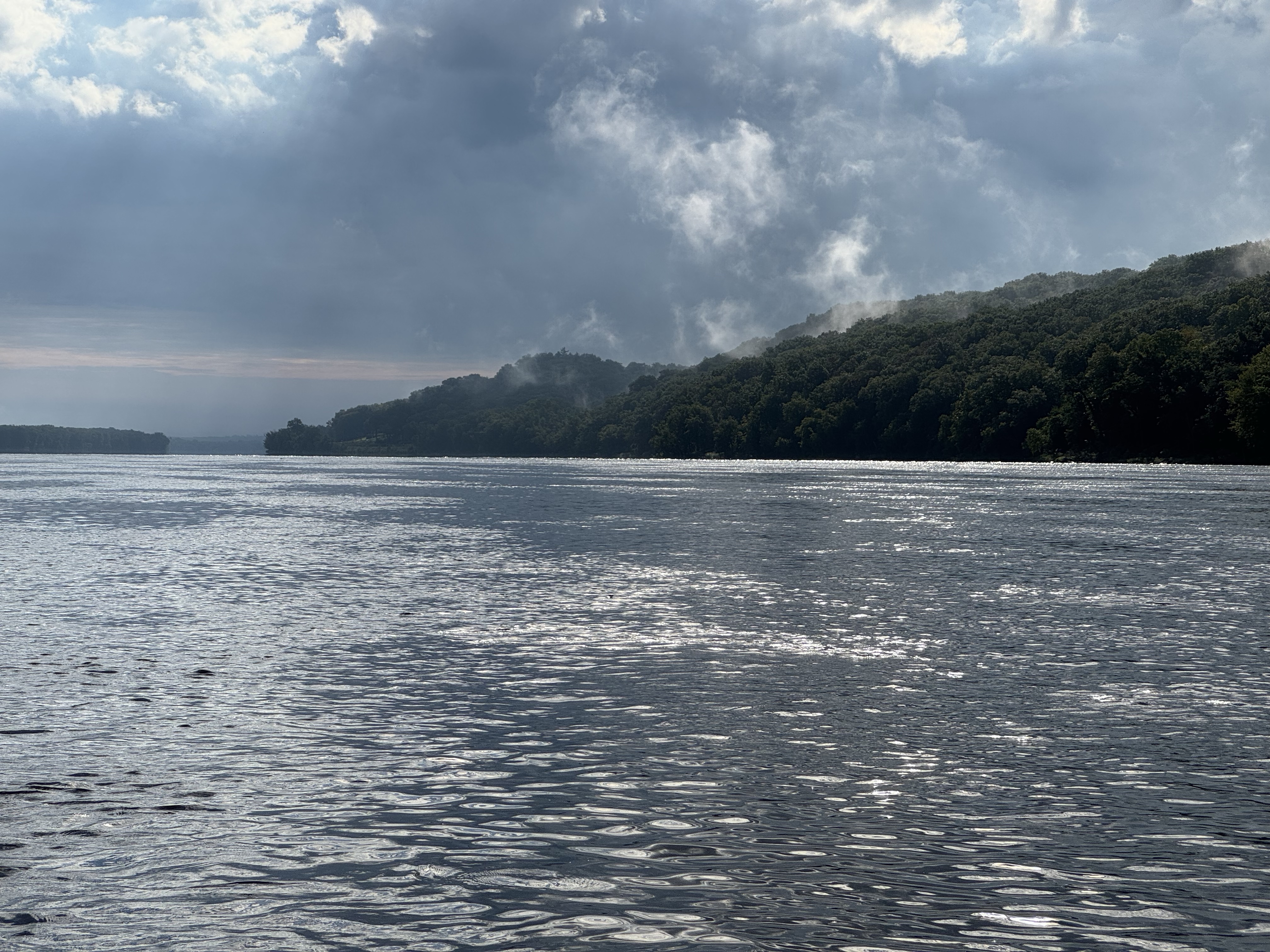
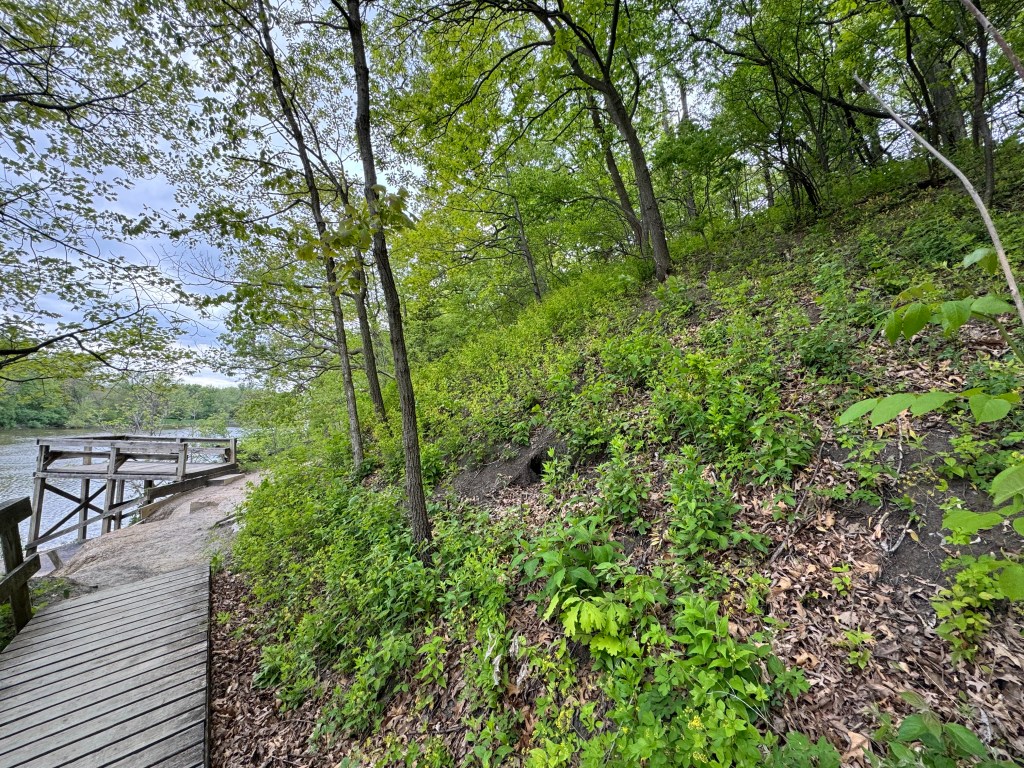
Early morning mist hanging over the forested bluffs of Hauberg Trail at Loud Thunder Forest preserve.
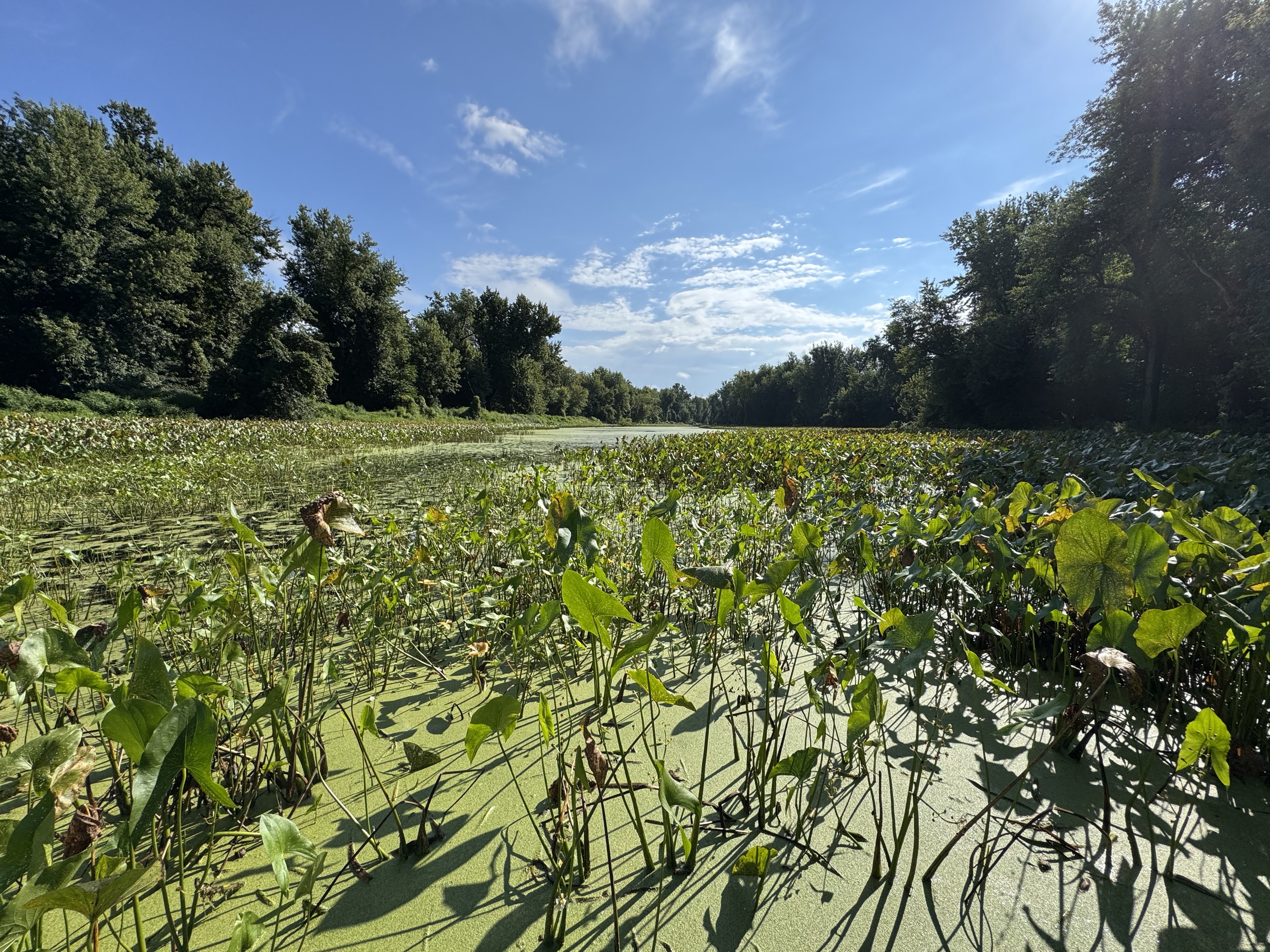
Emergent marsh in a backwater slough dominated by broadleaved arrow head (Sagittaria latifolia).
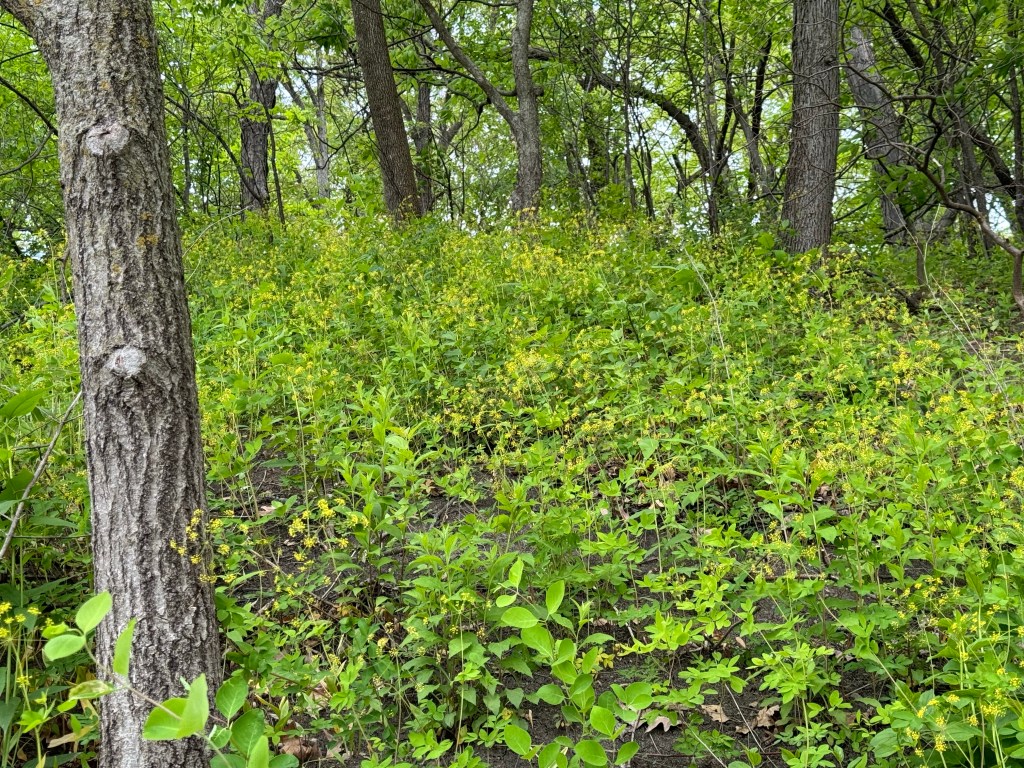
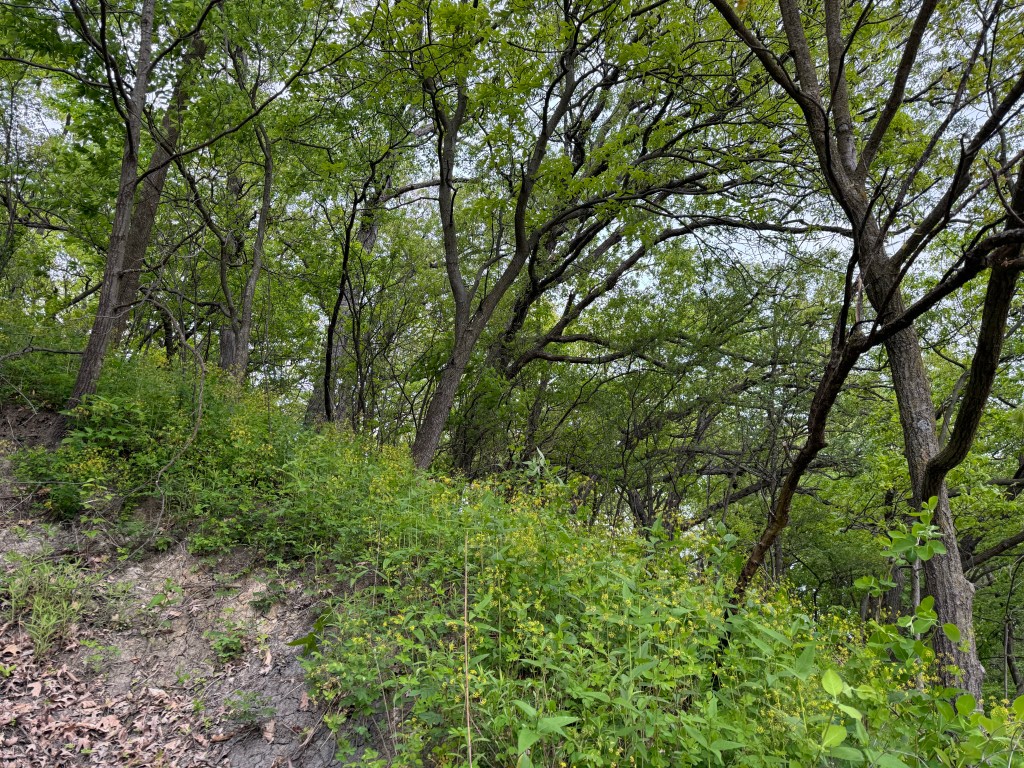
The other day, I paid a visit to one of my favorite natural areas in the Quad Cities: Black Hawk State Historic Site. In particular, I chose to explore the dry, rocky bluff along the Rock River to see what spring flora I could find. Making my way along on the footpath, I soon came upon an area where I helped clear brush this past winter. A dense patch of European buckthorn and rough leaf dogwood had been cleared from a steep south-facing slope where a few stems of remnant prairie species had been spotted the year prior. To my surprise, I was met with lush green and yellow where the thicket and minimal herbaceous cover had been. Yellow Pimpernel (Taenidia integerrima), which, as of last year, grew only in a narrow strip along the footpath where sunlight was adequate, now blanketed the slope! Little did I know that hundreds of plants were lying in wait beneath the brush.
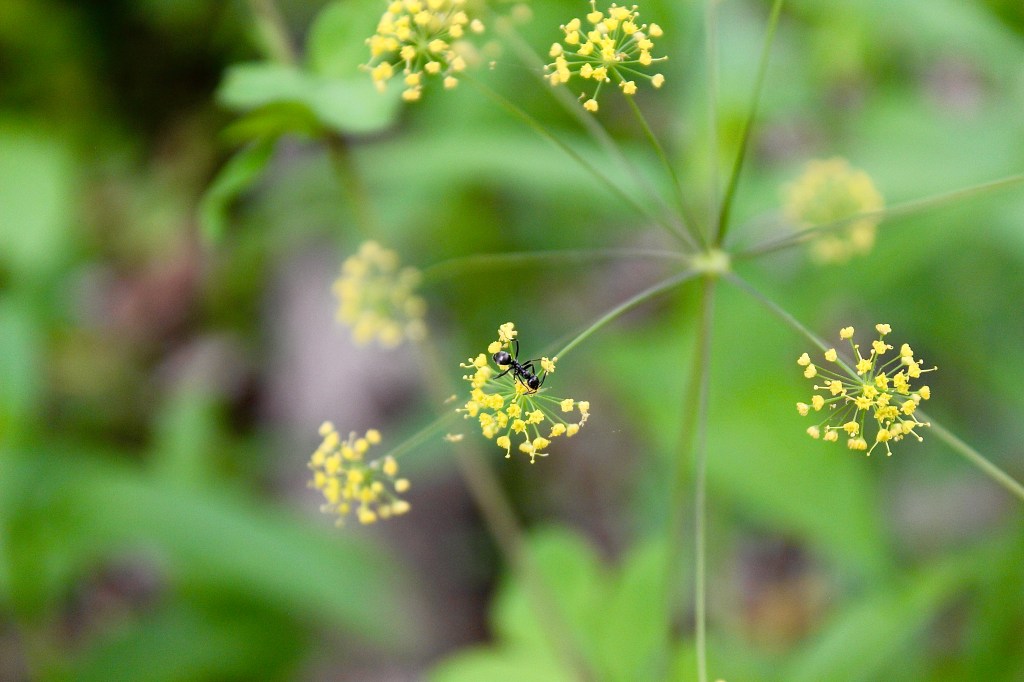
If you have not heard of this funny sounding wildflower belonging to the Carrot Family before, no need to feel bad because Yellow Pimpernel is an uncommon species found almost exclusively in high quality natural areas. It is a plant that does not tolerate heavy shade, and subsequently it is most abundant in open woodlands and savannas, communities which have been in decline for the past two centuries. Yellow Pimpernel was likely much more abundant on the landscape in pre-settlement times than it is today.
This story is not unique to Yellow Pimpernel, however. A large portion of our native flora once flourished in the part-shade of fire maintained oak woodlands and savannas. Since the arrival of Europeans and the removal of indigenous peoples who regularly burned the landscape, so much of our open oak woods and their diverse and beautiful inhabitants have been diminished by canopy closure, fire suppression, and invasive species encroachment. Virtually all remnant oak communities here in the Quad Cities are experiencing this slow and painful death, and the results are less diverse, functional, and beautiful natural areas. Our neighbors to the east in the Chicago Region have been laying the foundation on how to steward these spaces in our day and age for decades now, and I think the time is ripe for the Quad Cities to follow suit and forge our own path in oak woodland restoration.
The golden sight I beheld at Black Hawk is one of success, hope, and inspiration. We have the ability to nurture and heal our suffering natural communities, and sometimes all it takes is a few hours of brushing clearing to make a visible difference.
Perhaps nothing embodies Midwestern summer better than a July thunderstorm. There is something magical and humbling about watching enormous, rain-heavy clouds unleash their tumult and violence over the low, rolling hills and river valleys. To hear the distant booms and crashes of thunder gradually approach until it is directly overhead. To see sudden flashes of lightning and to feel the powerful gusts of wind that bring the rain down in sheets and chill the hot, humid air. And finally, once the storm has passed, to marvel at the towering clouds illuminated by the setting sun reflecting almost indescribable shades of deep purple and blue, vibrant orange and yellow. What a show for the senses so infrequently rivaled!
For millennia, these storms have occurred in this part of the continent when prevailing westerly winds sweeping off of the Rocky Mountains collide with warm, moist Gulf air as it surges northward. The waters of these tempests once fell on the deep-rooted prairies, marshes, and woodlands which ever so slowly trickled this earthly lifeblood into streams, which fed to shallow rivers, and which emptied into the Atlantic Ocean.
Today, our Midwestern landscape looks and behaves quite different. Its original ecological character has been largely erased, or, in the very least, it has been highly altered. Fields of annual corn and soybeans dominate where perennial prairie and savanna once did. The wetlands have, in large part, been drained, and the meandering network of streams have been straightened, channelized, and down-cut by erosion. Water now falls on an incredible amount of bare soil, shallow-rooted vegetation, and pavement. As it drains into the ocean, more quickly that it has in thousands of years, it takes with it what remains of the legacy of the tallgrass prairie: rich, black soil.
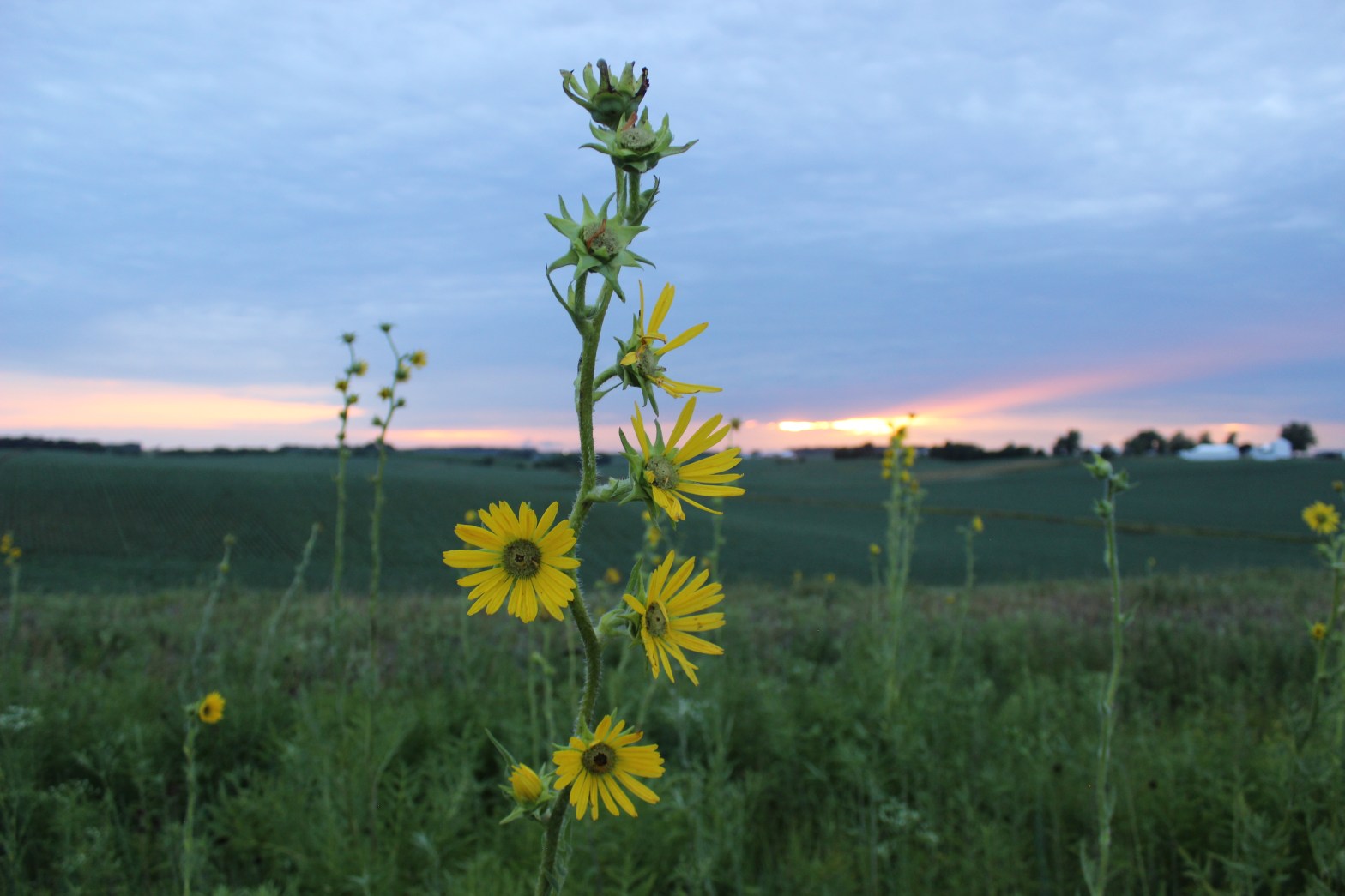
Six-foot tall stems of Compass Plant (Silphium laciniatum) stand heavy with rain from a July thunderstorm.
With landscape-scale prairie essentially gone from most of the Midwest, our summer thunderstorms now lack a unique aspect. Have you ever seen the tall, arching stems of Big Bluestem sway and dance with the yellow-flowered stalks of Compass Plant during a summer gale? What does it look like when the orange flowers of Butterfly Weed are overtopped by brooding purple skies? What does it sound like when the wind whips through the spreading crown of a savanna-grown Burr Oak? What does it feel like to walk through the sopping wet stems and leaves of tallgrass prairie after the storm has passed and to listen as the birds begin to sing once more? These experiences, once a regular part of life on the prairie, are now exceedingly rare.
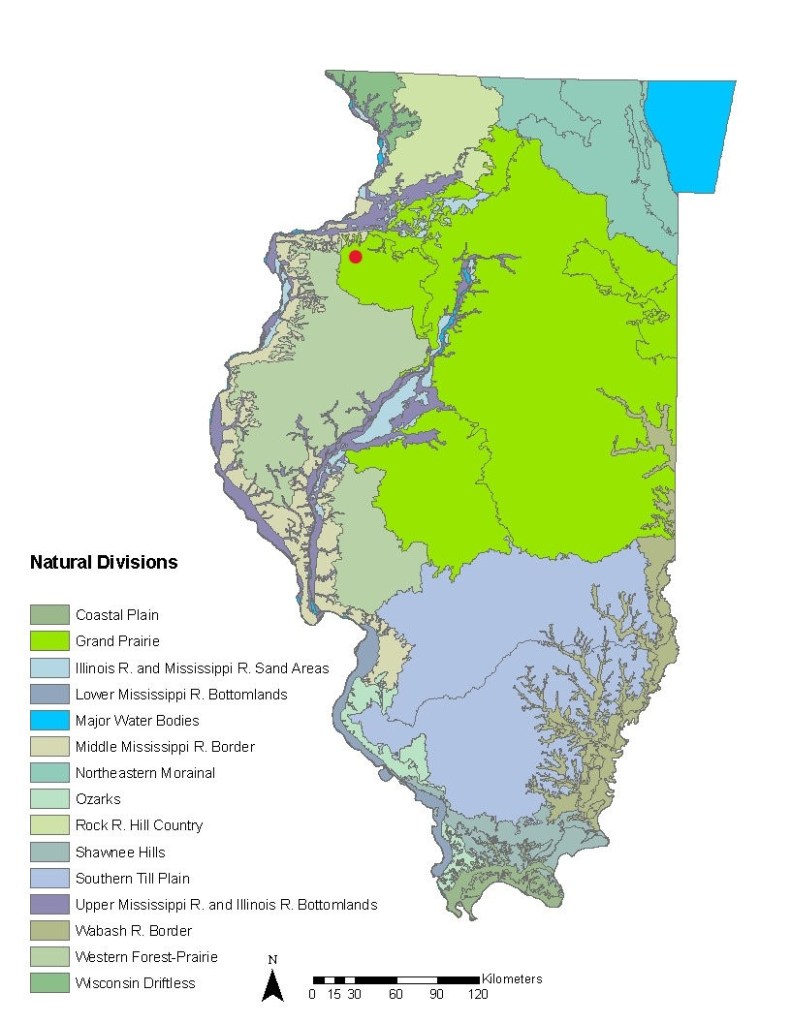
We are lucky to have a few places, such as nature preserves and restorations, where these questions can still be answered. For those of us living in the Quad Cities region, one such place is Munson Township Cemetery Prairie Nature Preserve. Located in the gently rolling prairie plains of Henry County, this 5-acre parcel contains some of the last virgin black soil prairie in this corner of Illinois. In addition, it is one of the westernmost remaining pieces of the original Grand Prairie that once stretched for hundreds of square miles across northern and central Illinois (see map below). The preserve comprises a small ridge with east and west facing slopes, surrounded by a vast sea of corn and soybeans. The establishment of a pioneer cemetery during the 1800s is the primary reason that prairie vegetation persisted all these years. Its more recent health, however, can be attributed to the stewardship efforts of the Henry County Natural Area Guardians.
This old-growth grassland allows us a glimpse at the original character of Illinois. Spring showers bring out the eye-catching blooms of Shooting Star (Dodecatheon meadia), Yellow Star Grass (Hypoxis hirstua), and sedges (Carex spp.) which are followed by the liquifying magenta flowers of Spiderwort (Tradescantia ohiensis), New Jersey Tea (Ceanothus americanus), and Pale Purple Coneflower (Echinacea pallida) in early to mid-summer. Next, Purple Prairie Clover (Dalea purpurea) and Leadplant (Amorpha canescens), two members of the pea family, add purples and indigos to the prairie, their flowers a favorite of pollinators. Once summer is in full swing, the yellows of Compass Plant (Silphium laciniatum), Grey-headed Coneflower (Ratibida pinnata), and Sunflowers (Helianthus spp.) arrive to brighten the scene.
Grey-headed Coneflower (Ratibida pinnata) blooms illuminated by the setting July sun.
During summer, our native prairie grasses such as Big Bluestem (Andropogon gerardii), Little Bluestem (Schizachyrium scoparium), and Indian Grass (Sorghastrum nutans) grow rapidly. At Munson, the green blades and stems gradually swallow the tombstones with each passing day.
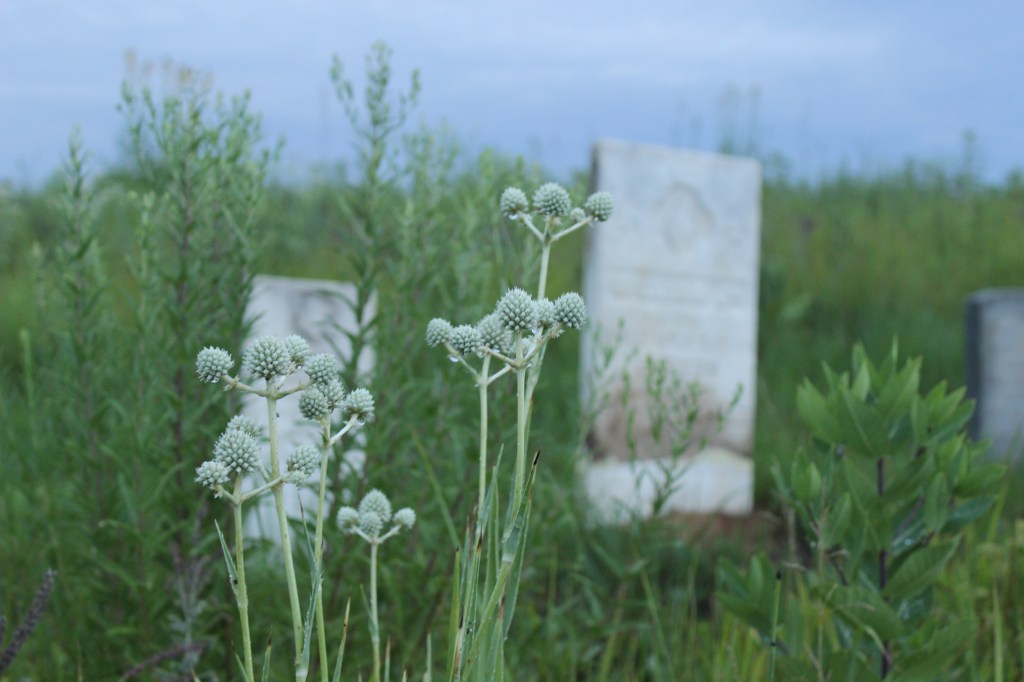
Rattlesnake Master (Eryngium yuccafolium) growing amongst tombstones of early Illinois settlers at Munson Township Cemetery Prairie.
Other summer-blooming residents at Munson include Illinois Tick-trefoil (Desmodium illinoense), Prairie Coreopsis (Coreopsis palmata), Virginia Mountain Mint (Pycnanthemum virginianum), and Rattlesnake Master (Eryngium yuccafolium). The latter of these produces unique, spiky flower heads atop leaves reminiscent of our southwestern Yucca (see above photo).
Late summer and early fall at Munson are colored by more purples, blues, and yellows. The blooms of Stiff Goldenrod (Solidago ridgia), Western Agueweed (Gentianella quinquefoliaoccidentalis), Prairie Blazingstar (Liatris pycnostachya), and Sky Blue Aster (Symphyotrichum oolentangiense) mark the finale of the tallgrass performance.
Western Agueweed (Gentianella quinquefolia occidentalis) adding color to the September prairie.
On this western Illinois ridge, rain continues to water the prairie as it has for thousands of years, and the ancient rhythms of this natural community continue to play out, albeit at a small scale. We are gifted with the opportunity to know what it is like to stand amongst tall grasses and wildflowers after a summer thunderstorm and listen to the insect and bird songs as the sun drops below the horizon. This piece of prairie gifts us with the opportunity to more intimately know this part of the earth and our relationship to it.
If you are interested in exploring this special place with fellow native plant enthusiasts, the Quad Cities Chapter of the Illinois Native Plant Society will be visiting it on July 29th, 2023 from 10am to noon! Meet at the prairie: https://goo.gl/maps/t4Fg7byvh7Sg7MSS7. Feel free to reach out to qcnativeplantsociety@gmail.com with any questions.
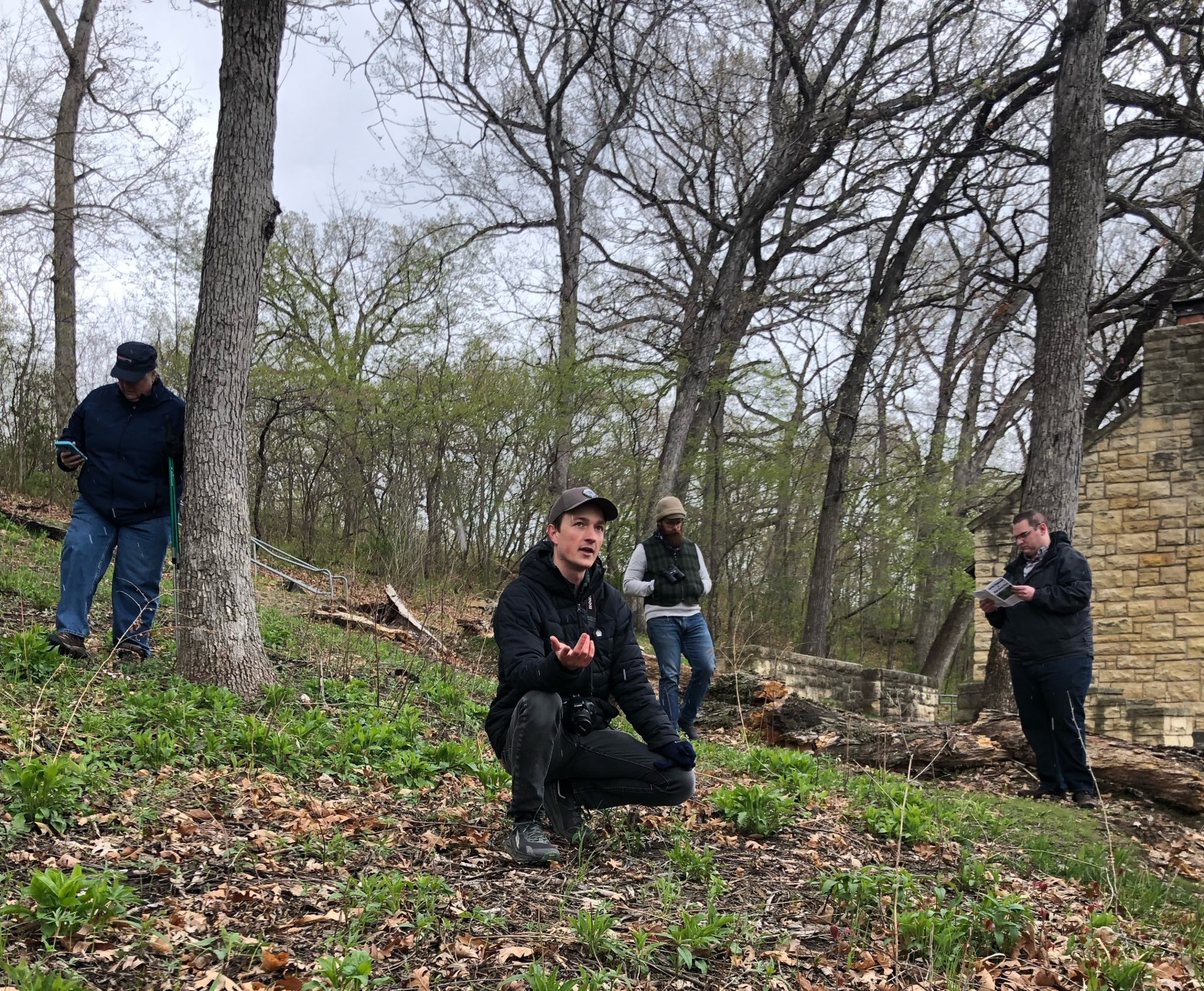
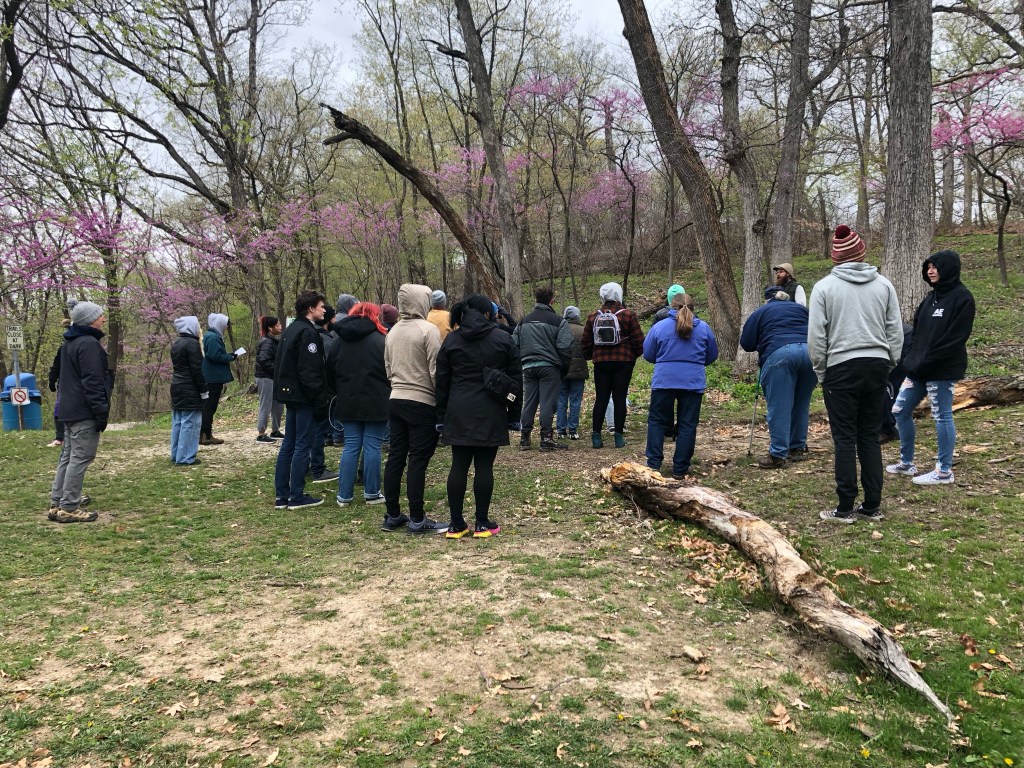
On the overcast morning of Saturday, April 22nd, 2023, I made my way to one of the Quad Cities most prized natural areas, Black Hawk Historic site. As I descended from Black Hawk Road to the parking lot on the Rock River floodplain, I saw a group of people chatting amongst themselves. A wave of nervous excitement washed over me. These folks were here to be led on a wildflower walk by me and my friends in celebration of Earth Day! I was surprised and elated to see the relatively large turnout despite the chilly 40-degree temperatures.
After some introductions and dissemination of handouts (see my Black Hawk wildflower booklet here), we set forth to explore the spring flora of the park’s steep, rocky bluffs and rich woodlands.
I was joined by two co-leaders, my good friends Rob Liva, of QC Wild Ones, and Sam Chavez, of the QC chapter of the Illinois Native Plant Society.
At the trailhead, Rob took a moment to share about the ecological restoration efforts that he has been involved with at the site. He painted a picture for folks of how healthy Illinois woodlands should look and what we can do to steward them. The eastern Rock River bluff portion of the park has been regularly burned over the past decade, and thus is one of the best examples of healthy dry and dry-mesic oak woodland in the QC region (be sure to visit the bluff top in late summer and early fall for a show of yellows and purples from all the sun-loving savanna plants there).
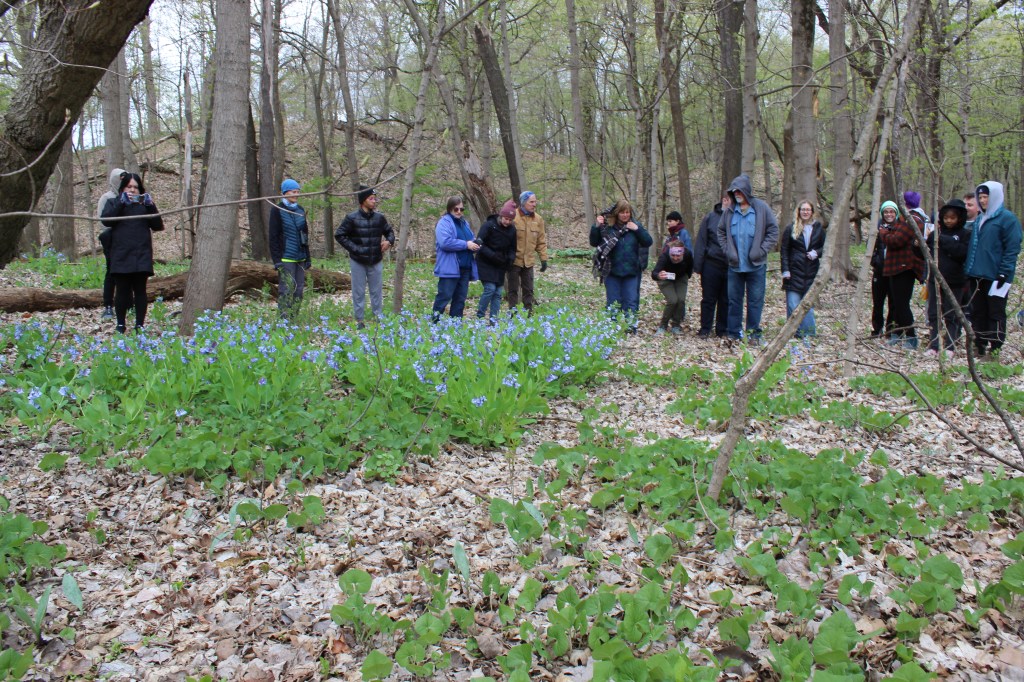
Rob Liva informing the group about ecological restoration practices. Photo by Melissa Fudge of QC Wild Ones.
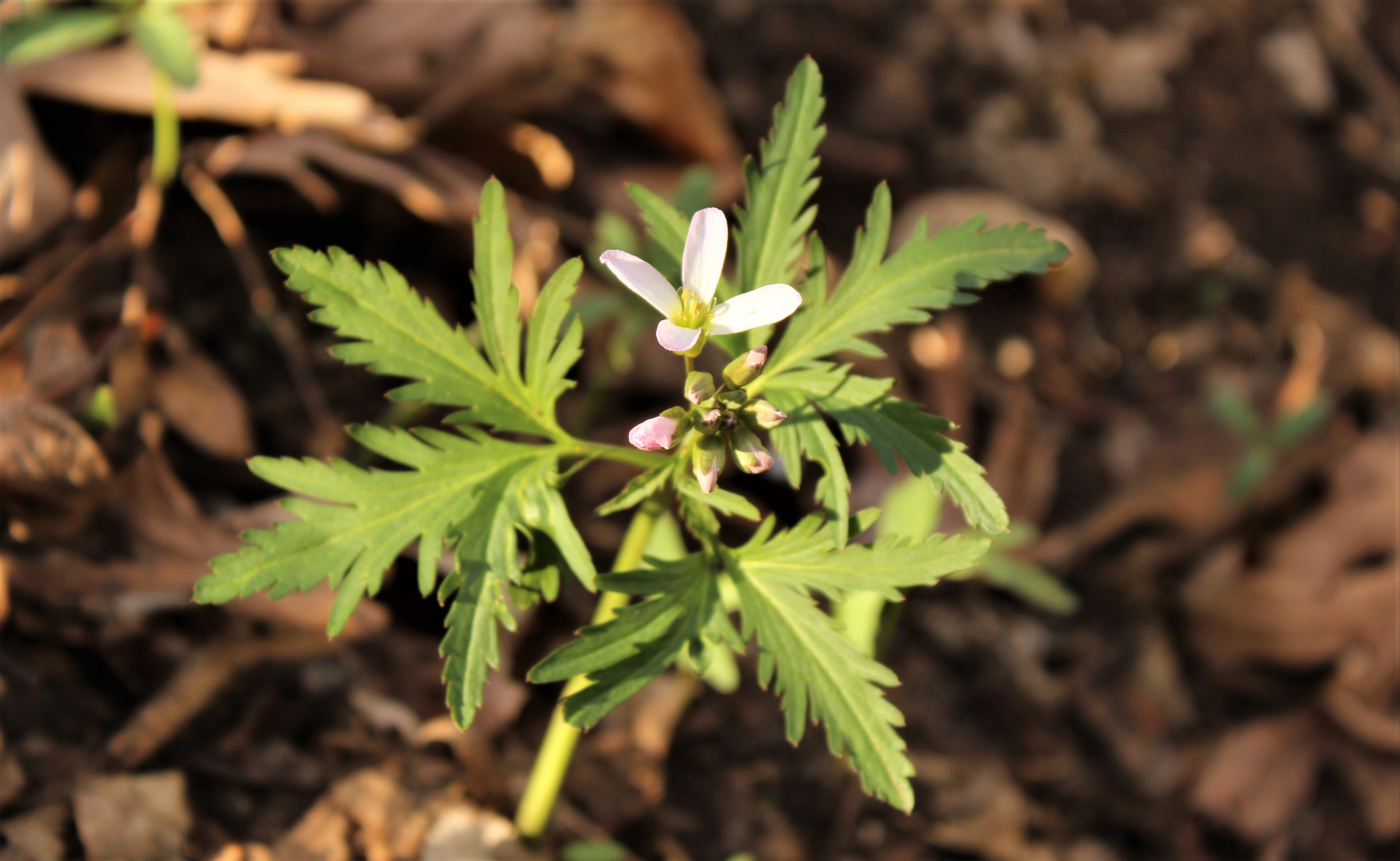
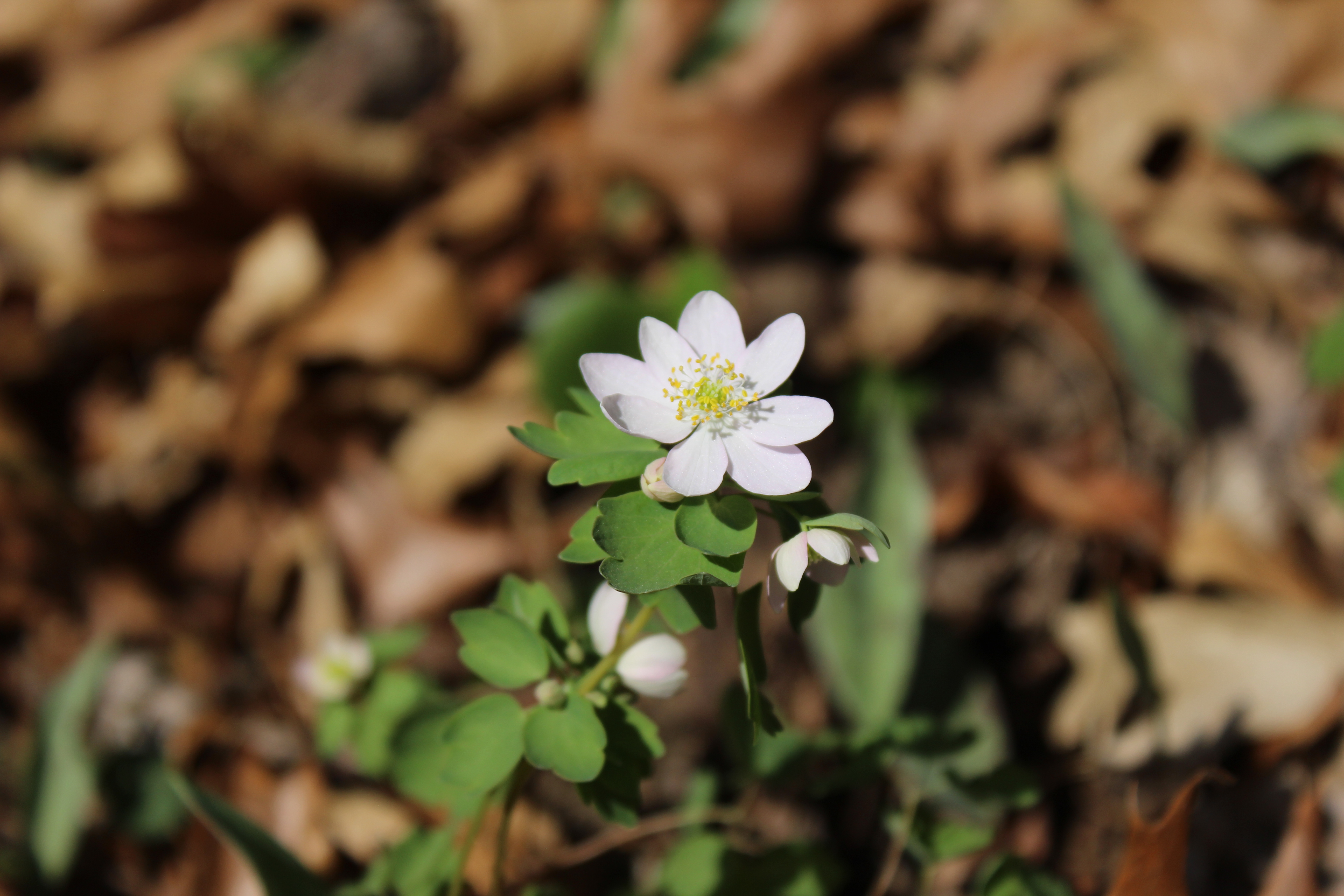
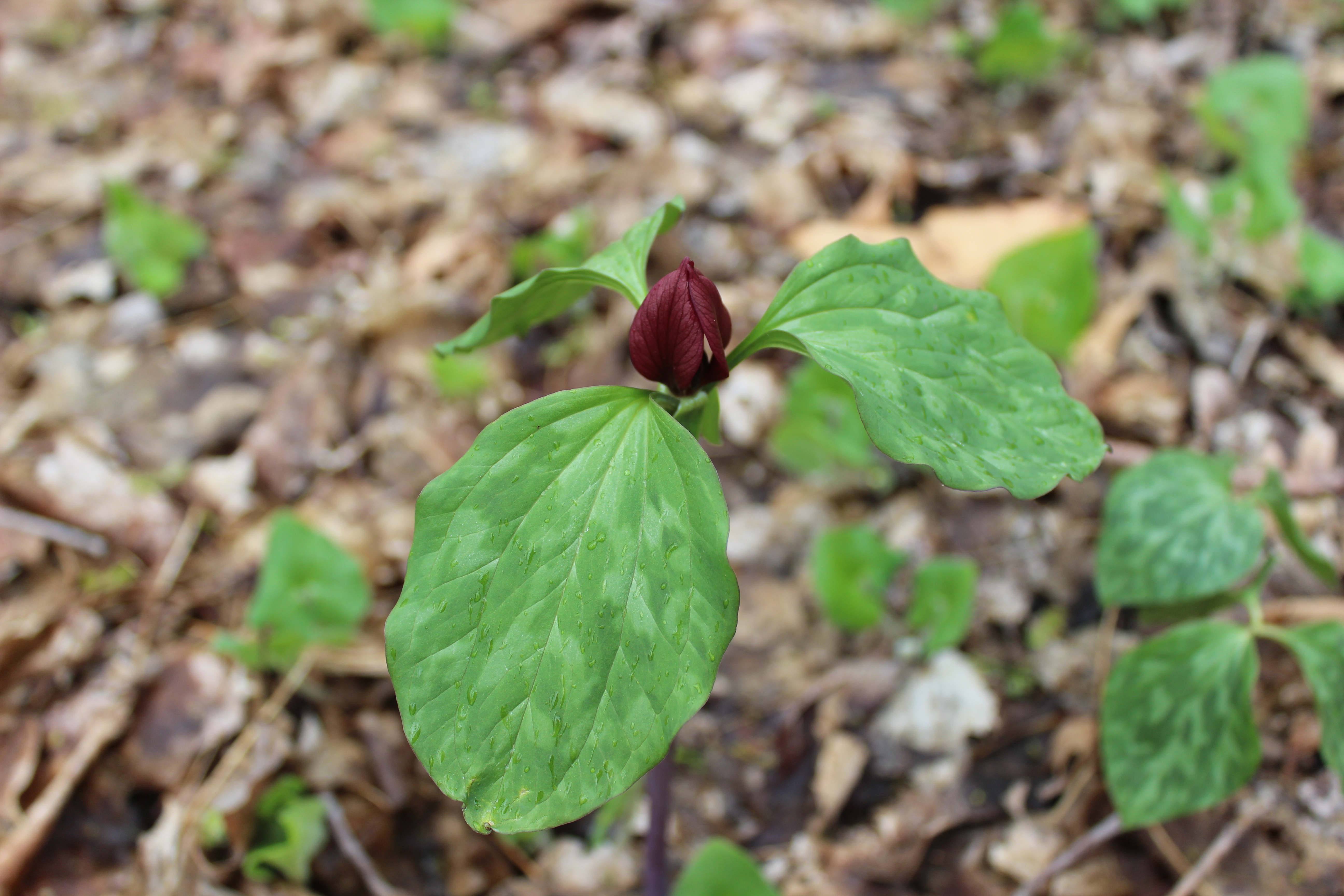
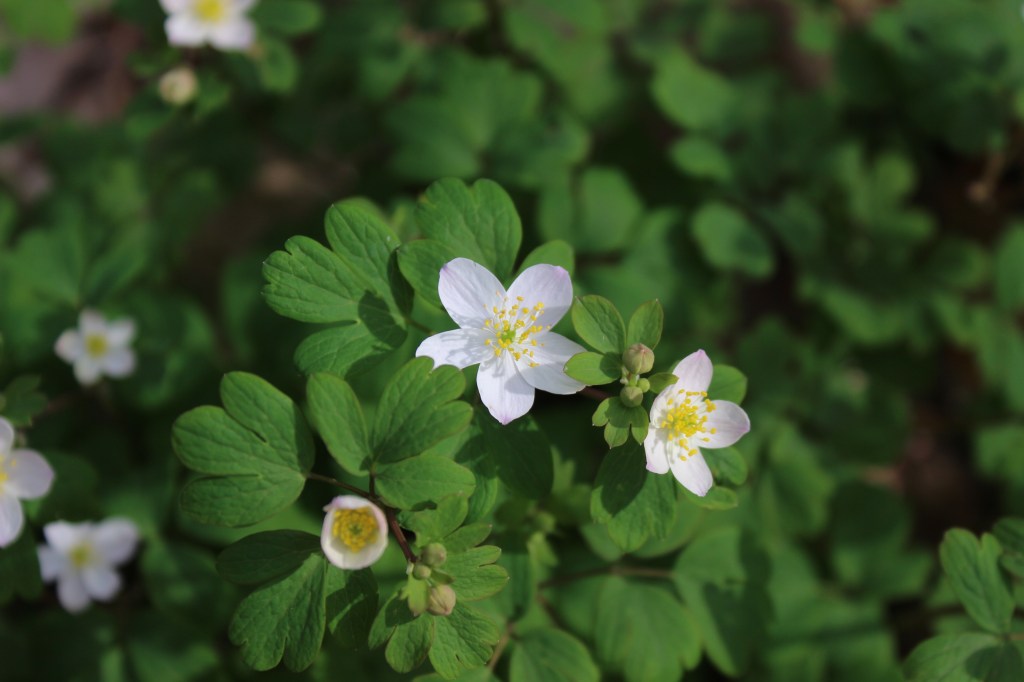
Upon entering the woodlands, we were immediately greeted by an uplifting display of Redbud (Cercis canadensis) flowers! They lined the sides of the path, almost creating a purple tunnel for us to walk through. Carpets of green and white emerging from the recently burned woodland floor redirected our eyes towards the ground. I introduced the group to several of the spring ephemerals there, including Cut-leaved Toothwort (Cardamine concatenata), Rue Anemone (Thalictrum thalictroides), Prairie Trillium (Trillium recurvatum), and White Trout Lily (Erythronium albidum).
As we made our way down the Rock River trail, Rob, Sam, and I continued to point out plants and answer questions. A particularly relevant question, “What makes a plant native?” prompted a great group discussion. Rob and I shared our perspectives on native, non-native, and invasive plants and why it is important to manage invasives for the sake of preserving and protecting biodiversity.
The group then made its way up the bluff and over the pedestrian bridge to the North side of the park. This is where the dedicated Illinois Nature Preserve called Black Hawk Forest resides. Sam and I took a moment to explain the significance of the site and the state nature preserve system before entering the woods.
Sam Chavez pointing out Uvularia grandiflora in Black Hawk Forest. Photo by Melissa Fudge.
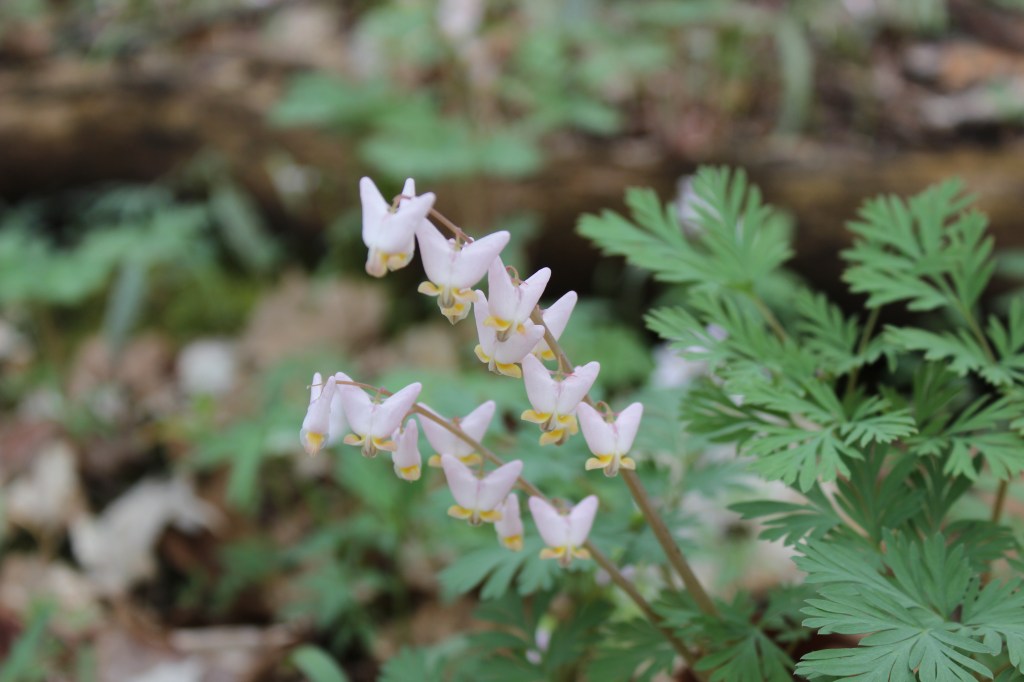
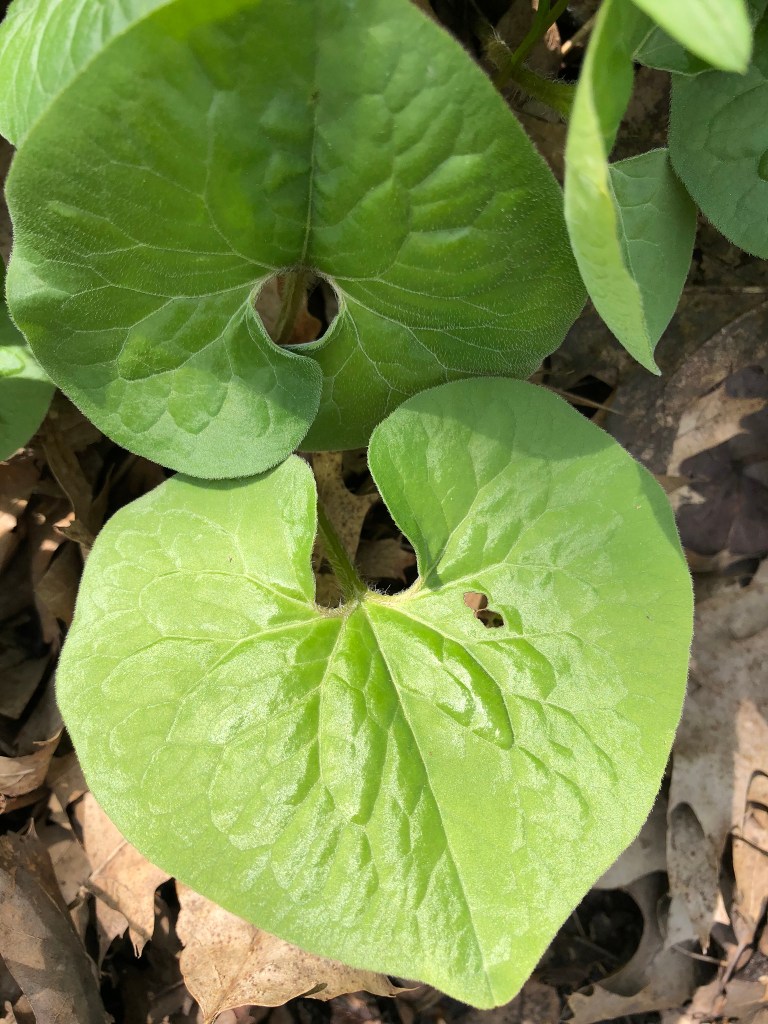
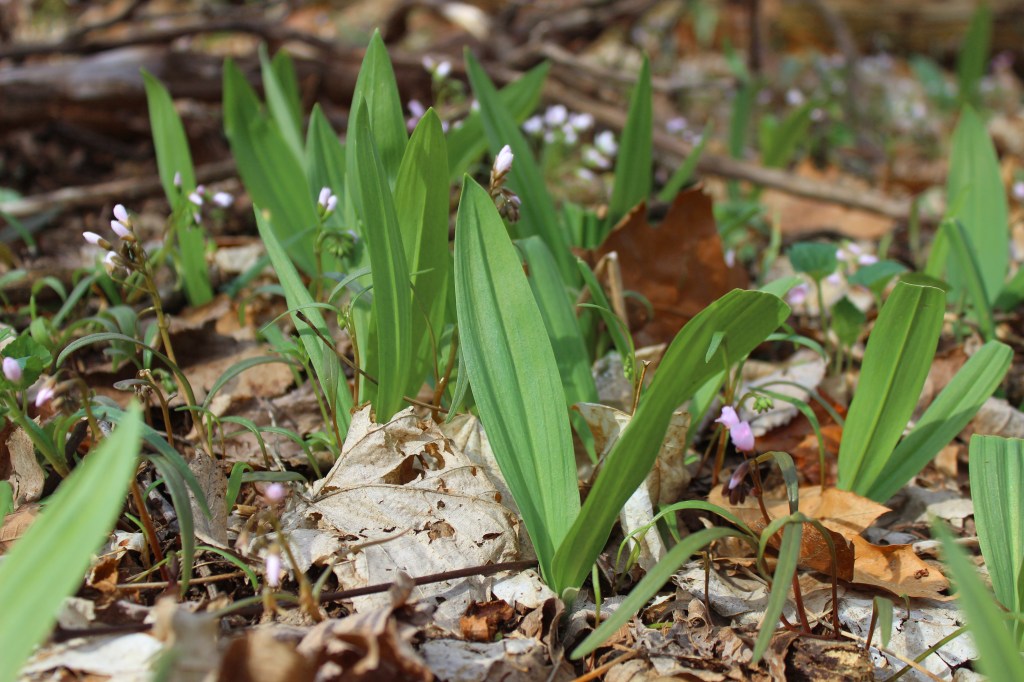
The trail dropped us into a broad ravine with a stream running through it. A diverse array of spring flora carpeted the ground in most places. The group got to see Large-flowered Bellwort (Uvularia grandiflora), Dutchman’s Breeches (Dicentra cucullaria), Virginia Waterleaf (Hydrophyllum virginianum), Canada Wild Ginger (Asarum canadense), False Rue-anemone (Enemion biternatum), Narrowleaf Wild Leek (Allium burdickii), and Spring Beauty (Claytonia virginica), among others.
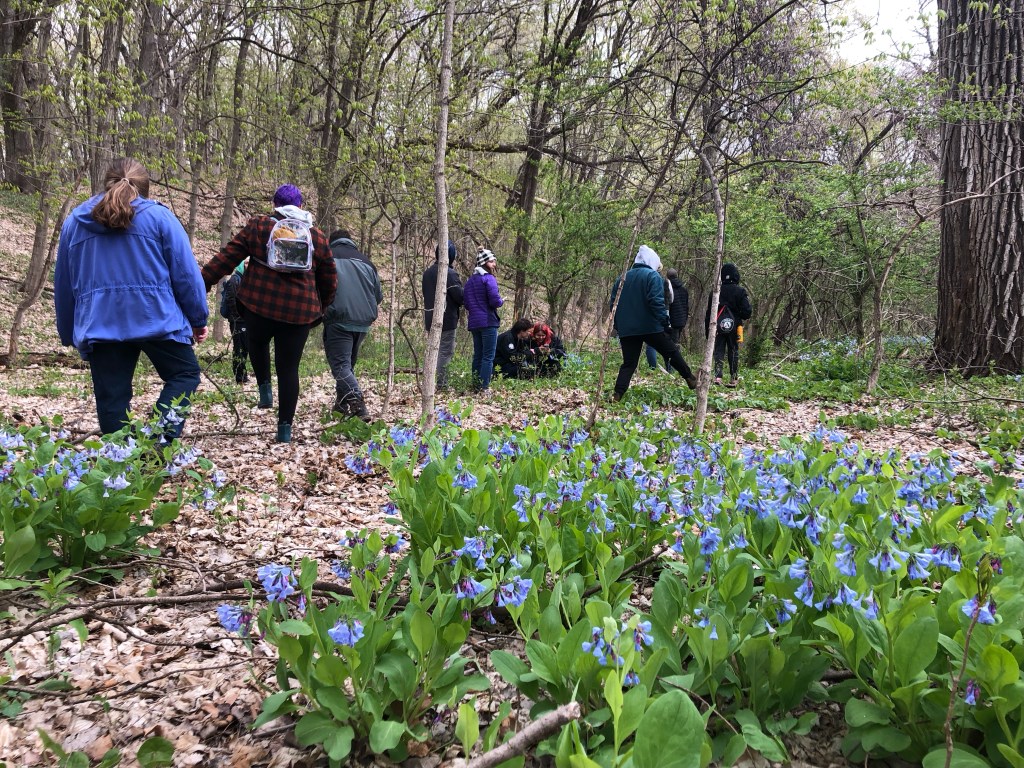
We continued to follow the trail through the rich woodland. Little did anyone know, however, that we were almost at the grand finale! Our final stop was in the southeast corner of the preserve along the stream there. Upon reaching the destination, we were greeted by a swath of bright blue! People were quickly drawn towards the patches of Bluebells (Mertensia virginica) growing on the stream terrace.
Photo by Melissa FudgeSpring blooms of Virginia Bluebells (Mertensia virginica)
The bright blue beauties were quite the showstopper! After the getting our fill of the Bluebells, we moseyed back to the parking lot and concluded our Earth Day celebration.
I want to thank to everyone who showed up for the hike! It was great to meet so many new people and see some familiar faces. I hope folks had an enjoyable time despite the cold spring weather and grew their appreciation for our local flora. Another big thanks and shout out goes to the entire QC Wild Ones team for organizing and advertising the event!
If you are interested in attending events like this in the future, keep an eye on the Wild Ones and QC INPS sites and consider becoming a member. I will share updates with those who subscribe here, as well.
Attached below is a downloadable PDF of the spring wildflower booklet I made for Black Hawk Forest.
With a sudden burst of unseasonably warm weather this past week, the spring ephemerals have leapt into blooming here in the Quad Cities region. Our remnant woodlands are now teaming with whites, purples, blues, and yellows, and the early spring pollinators are hard at work. Bumblebee (Bombus) queens and mining bees (Andrena) have awoken from their winter dens, and the first red admirals (Vanessa atlanta), eastern commas (Polygonia comma), and spring azures (Celastrina ladon) are now in flight. In addition to all the hustle and bustle in the woods, the very first signs of color are now beginning to show in the prairies.
Recently, my friend Sam and I were informed by an expert botanist of the location of one of Illinois’ rarest and earliest prairie wildflowers — Erythronium mesochoreum, the prairie trout lily. He said that they were up and already blooming! We quickly set a time to go visit.
April 14th, 2023
It was a hot early spring day, and the sky was cloudless. My car’s thermometer read 82 degrees (oof!) as I drove down a two-lane county highway in rural Whiteside County, Illinois. The sun beat down on the barren soil of the crop fields as I imagined what the landscape must’ve looked like 200 years ago when it was covered by the vast aboriginal prairies, savannas, and wetlands.
I arrived at the site (the identify of which I feel obligated to omit due to the conservation concerns of this species) and parked on the side of a gravel road near a large open-grown oak. Soon Sam joined me. We were at one of the few types of places where the original Illinois prairie has survived — a pioneer cemetery. Some of these cemeteries were never plowed, only mowed or hayed, and thus, the flora has remained more or less intact. This particular cemetery protected approximately one acre of sand prairie, a unique type of prairie largely restricted to the Mississippi, Rock, and Illinois river valleys in Illinois.
With our eyes focused on the ground, we eagerly searched for small, white flowers amongst the dry remains of last year’s vegetation. Ah-ha! we spotted a blooming plant in the mowed lawn of the cemetery.
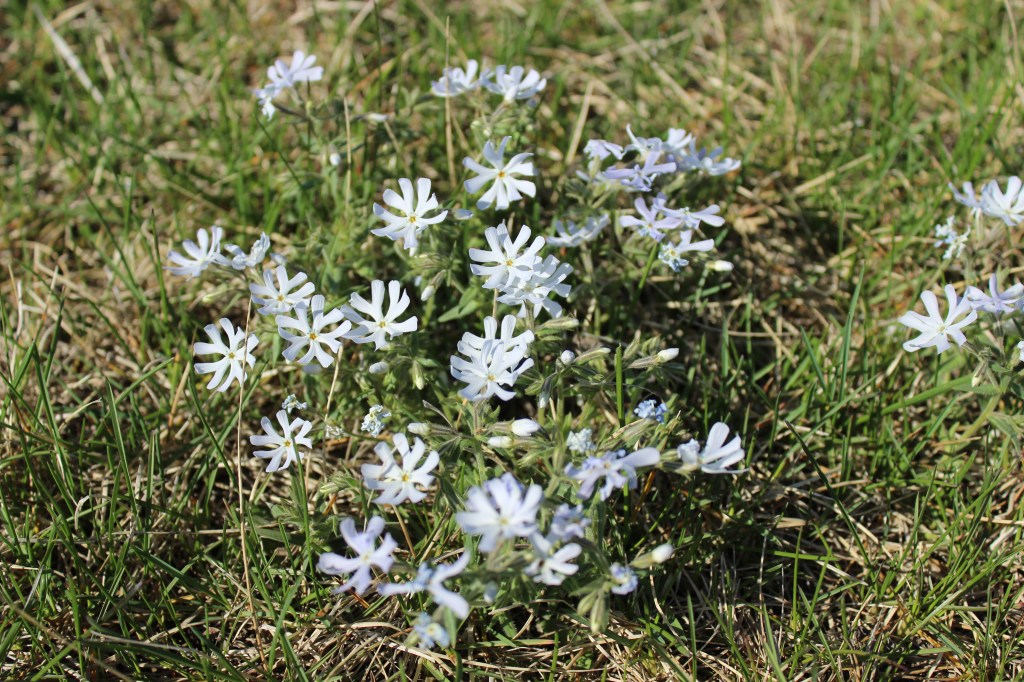
Phlox bifida (cleft phlox) in bloom
Upon closer inspection, we were greeted by the bright flowers of cleft phlox (Phlox bifida). Although this wasn’t the trout lily, we were happy to find it, as it was the first time either of us had met this species! The flowers had a sweet, gentle, and intoxicating aroma, the kind which lifts the spirits and momentarily releases one from their day-to-day worries. Many clumps of phlox grew in the lawn, seemingly benefitting from the regular disturbance.
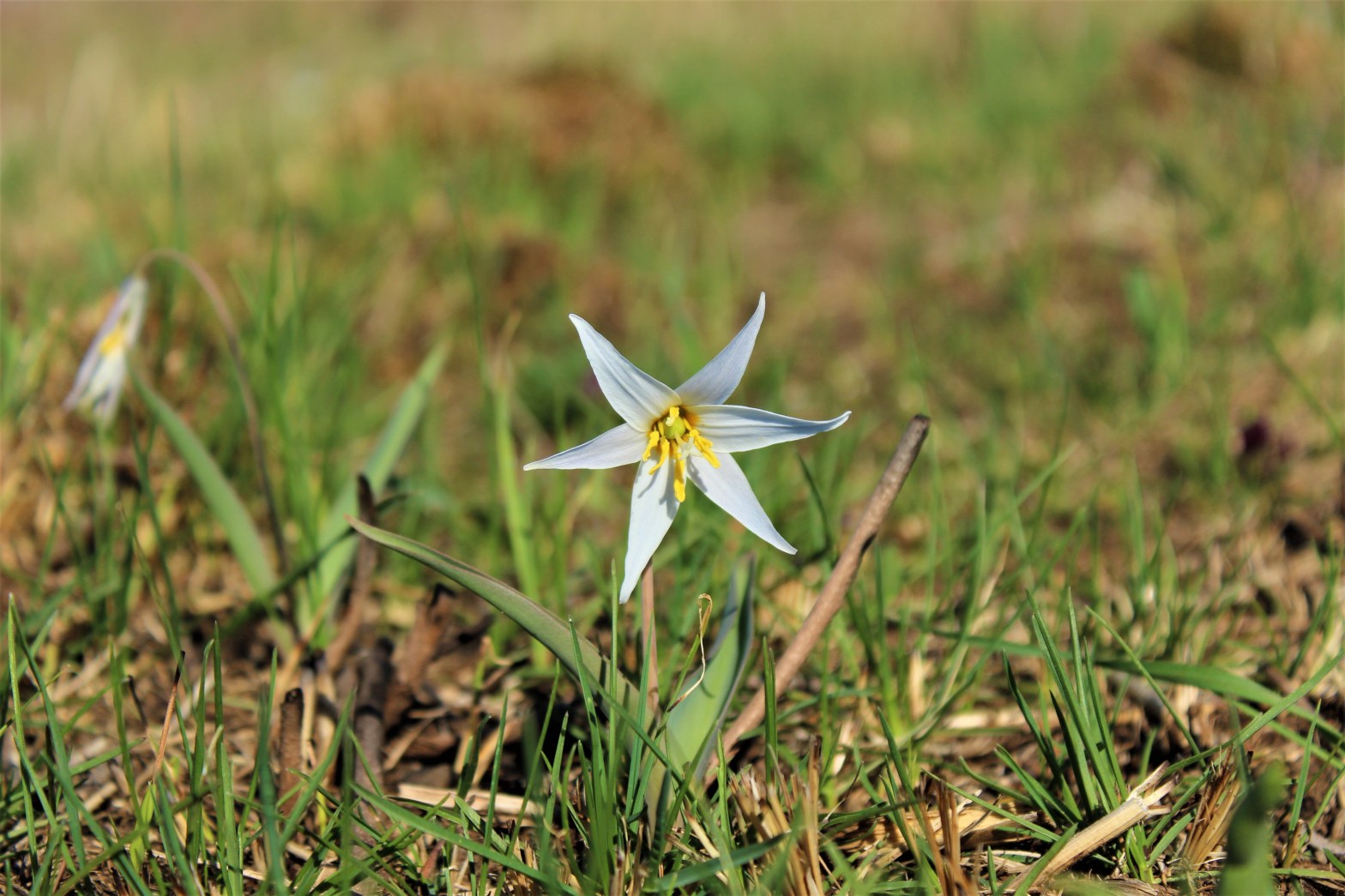
We continued our search, now heading towards an area of the sand prairie which was burned last fall. We walked amongst dry stems of little bluestem (Schizachyrium scoparium), leadplant (Amorpha canescens), dropseed (Sporobolus sp.), and prairie rose (Rosa sp.). As we reached the bare ground of the burned area, something small and white quickly caught my eye. It was the prairie trout lily!
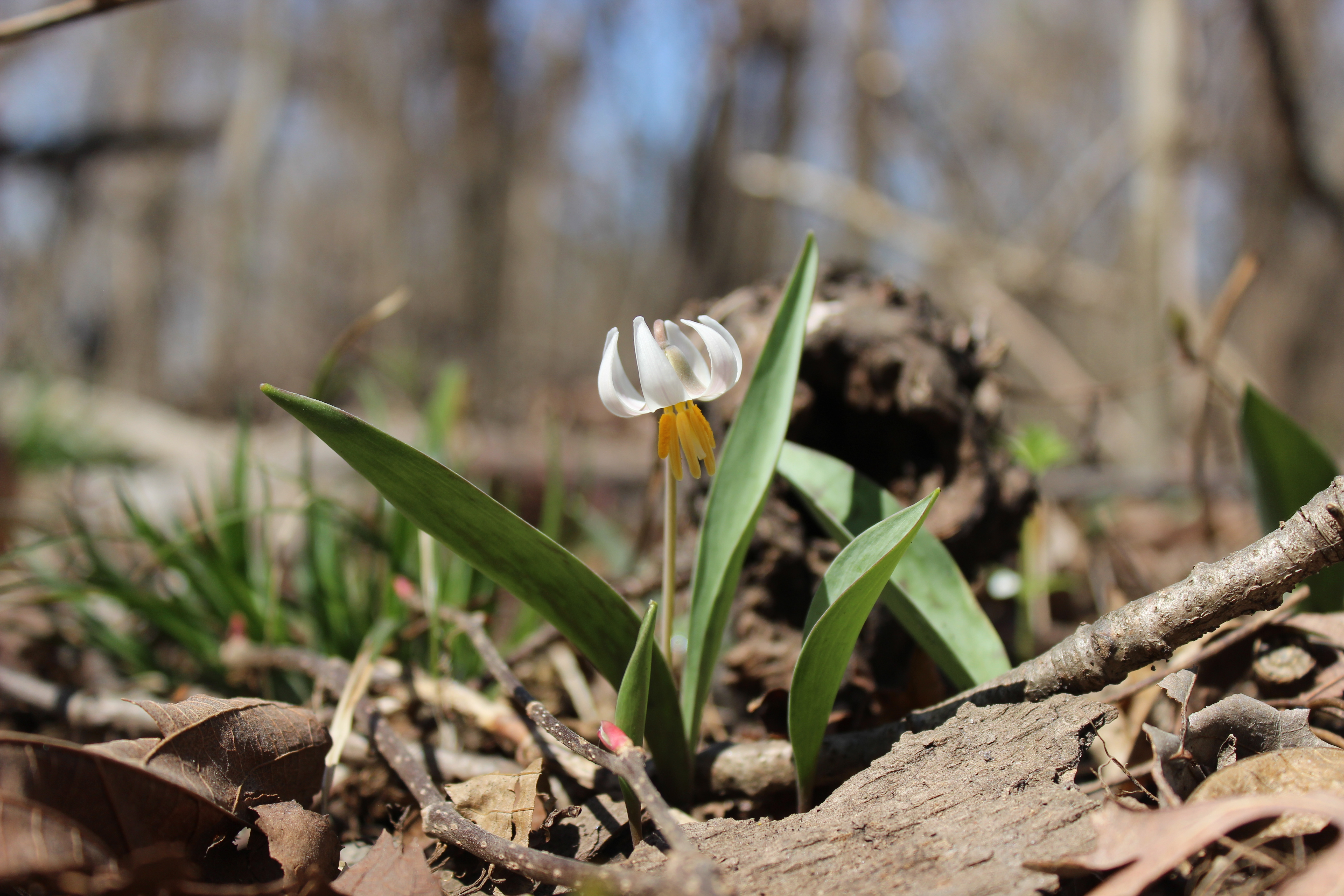
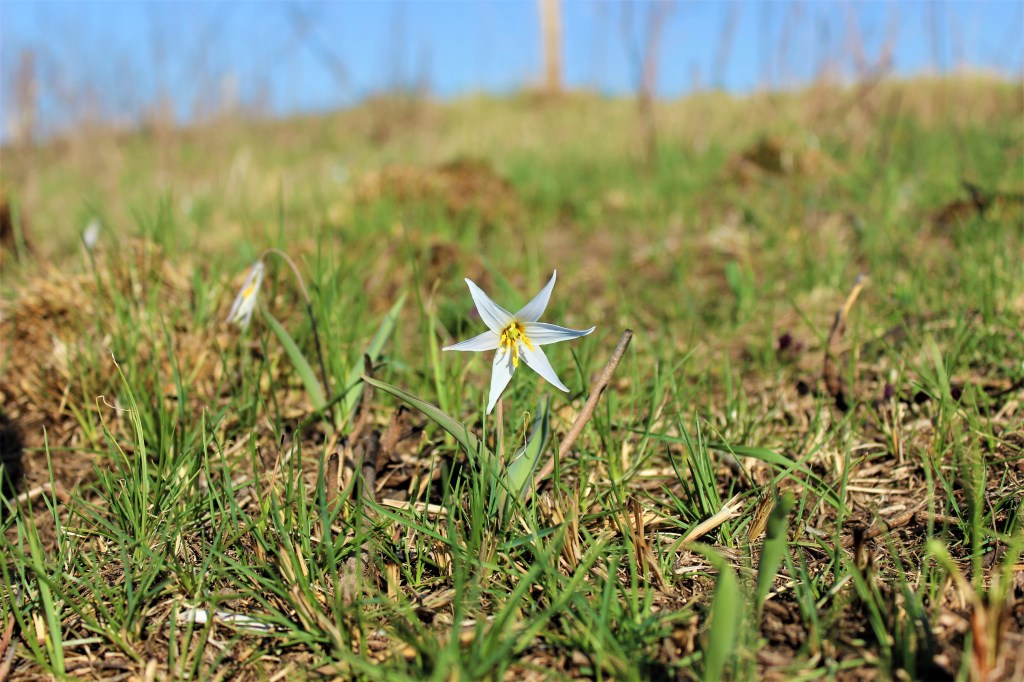
Erythronium mesochoreum with mostly closed tepals. Note the folded (conduplicate) leaves.
Before we knew it we were standing amongst several hundred trout lilies! Some had already gone to seed, others were dropping their tepals, having been pollinated, and yet others were still in bloom. What a euphoric moment! Being in the presence of these prairie treasures was a memory I will surely never forget.
A prairie trout lily individual going to seed.
You may be wondering, however, if is this the same white trout lily (Erythronium albidum) that is common in our woodlands. Although the two species are very similar at first glance, they are considered separate for several reasons:
The leaves of E. mesochoreum are consistently folded along their length (conduplicate) and generally lack mottling (see above photos) vs. the more or less flat and mottled leaves of E. albidum.
E. mesochoreum tends to have tepals that are, at most, spreading vs. tepals that are usually sharply bent upwards (reflexed) in E. albidum (see photo below).
E. mesochoreum does not usually form dense colonies like E. albidum does. Those who have payed close attention to E. albidum may recall how it can carpet the forest floor with sterile leaves while producing relatively few flowering stems (see photo below).
The final character that splits the two, at least here in Illinois, is that E. mesochoreum is strongly associated with dry prairies where as E. albidum is almost exclusively a woodland species.
E. albidum individual displaying characteristic recurved tepals (top) and a dense E. albidum colony with many sterile leaves (note the mottling) (bottom).
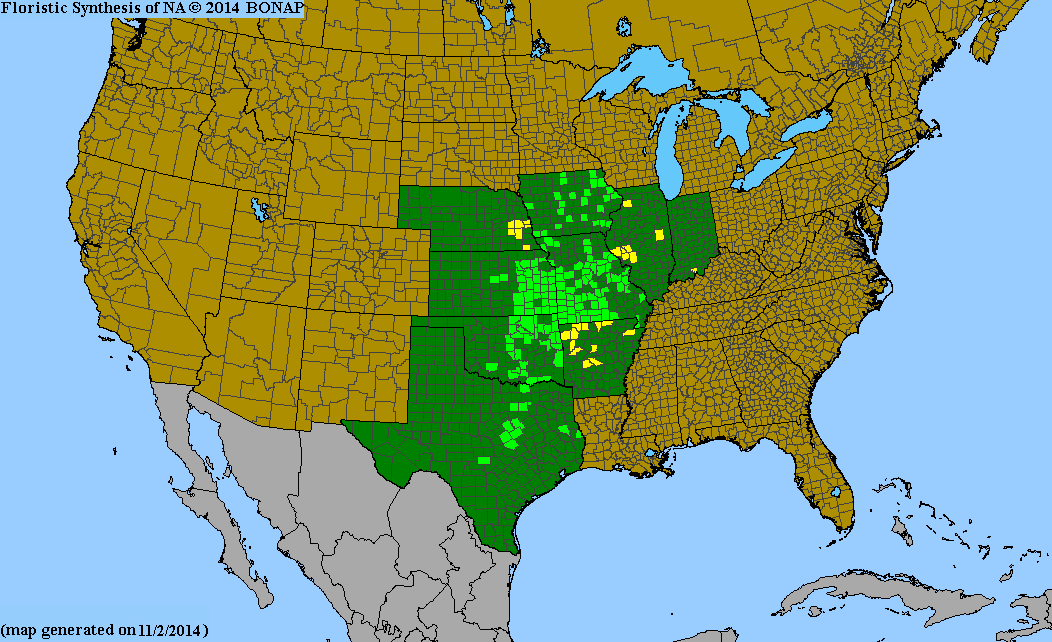
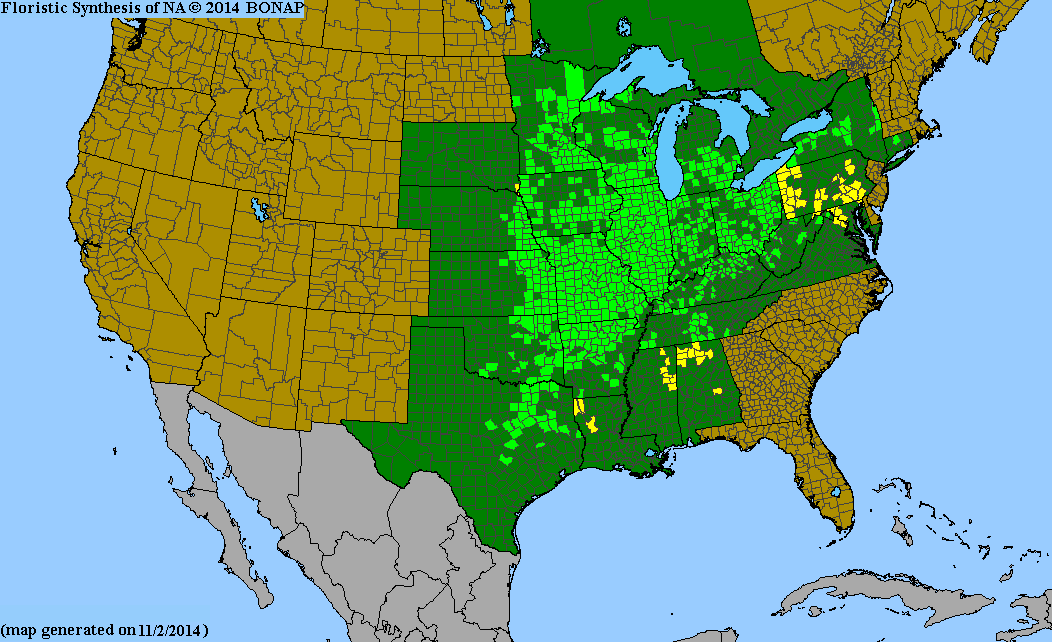
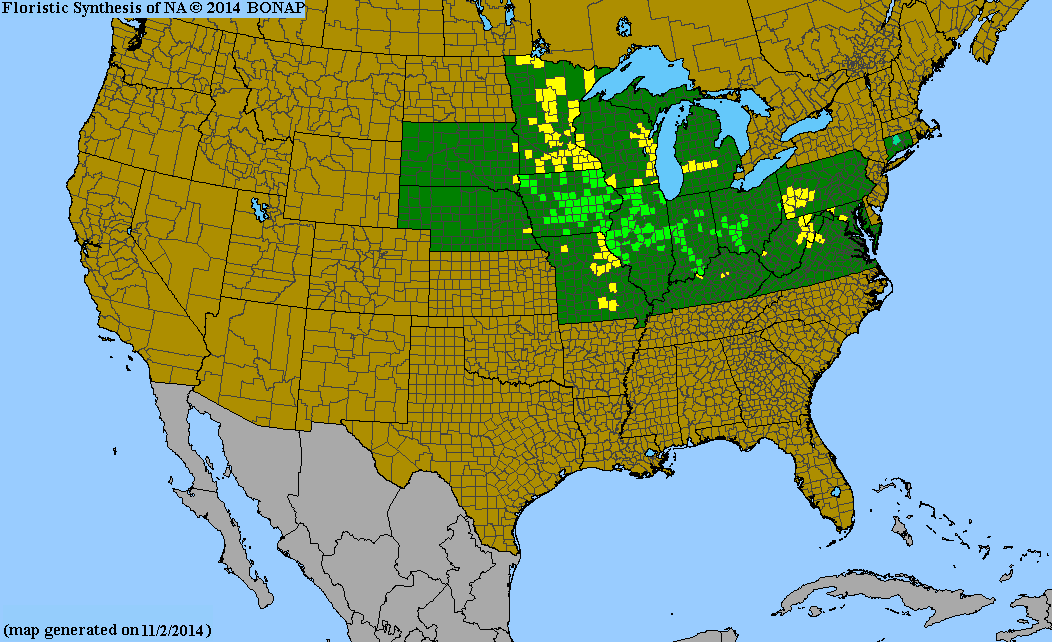
The ranges of the two species are also very different (see maps below). Note that prairie trout lily is only known from a small handful of counties in Illinois and is very rare. There is one other species of Erythronium present in Illinois called yellow trout lily (E. americanum). It is easily distinguished from the other two by its yellow flowers, and it is generally restricted to the eastern half of Illinois.
Sam and I spent the next hour or so exploring the prairie before heading our separate ways. It was quite the honor to start getting to know that fragment of original Illinois. I will definitely be returning later in the season to see what other secrets she is willing to share.
Kaul, Robert B., The Status of Erythronium albidum and E. mesochoreum (Liliaceae) in Nebraska. (1989). Transactions of the Nebraska Academy of Sciences and Affiliated Societies. 172. https://digitalcommons.unl.edu/tnas/172
Mohlenbrock, R. H. (2014). Vascular Flora of Illinois: A field guide. Southern Illinois University Press.
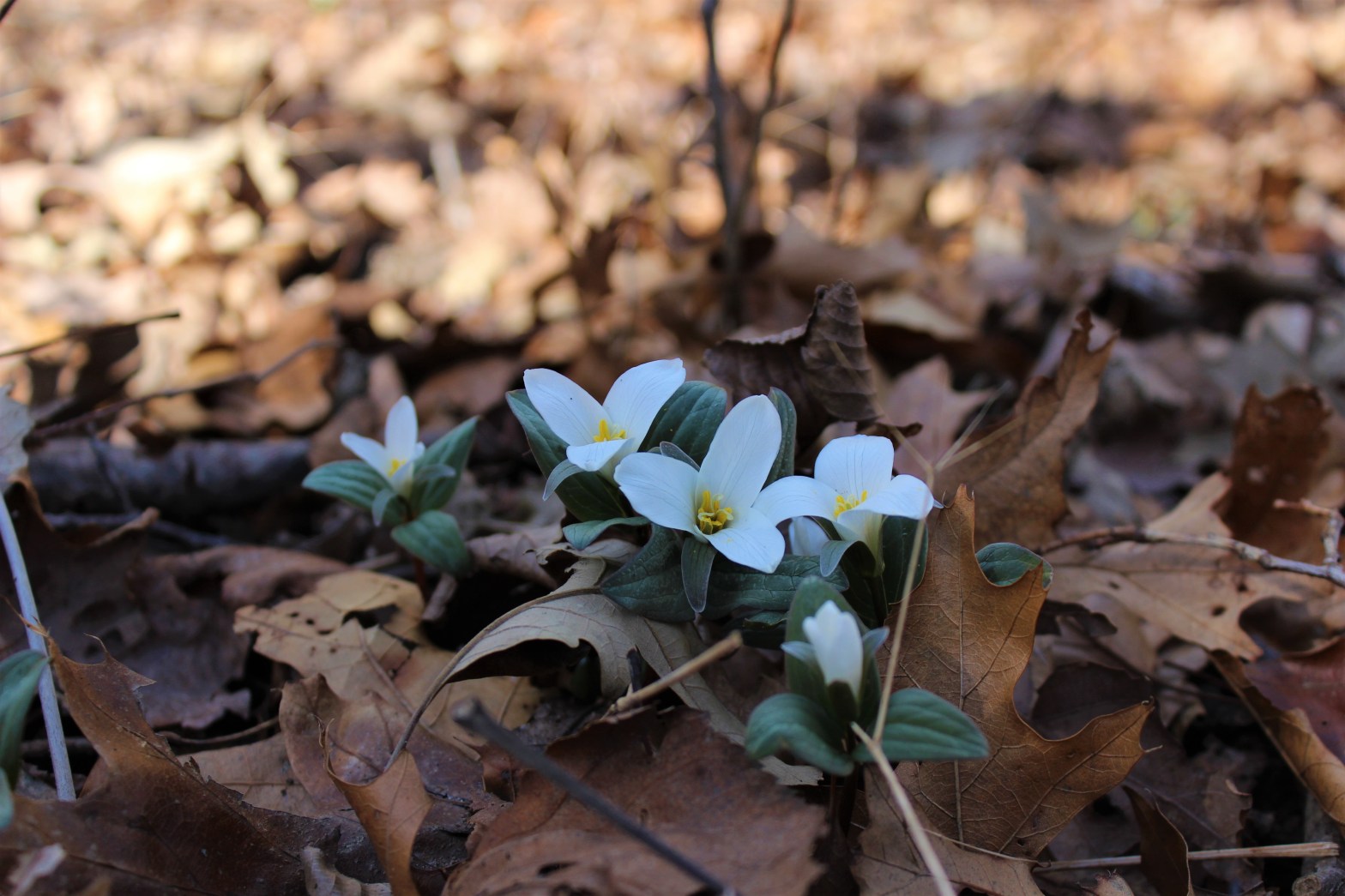
Today, several friends and I met in rural Rock Island County, IL with the hopes of feasting our weary, plant-starved eyes on the blooms of Snow Trillium (Trillium nivale). One by one, we pulled down the gravel driveway of a private property located amongst bare farm fields and wooded ravines. We were greeted by the former landowner, Stacy, who had graciously arranged for us to visit the property. Once everyone had assembled, we meandered our way towards a wooded slope just a off of the driveway. The sun was shining and a strong southerly wind pushed us along. Having just experienced an early spring snow storm the week before, the warmer weather felt luxurious. As we approached the snow trillium spot, we walked beneath the gnarled, outstretched limbs of several old, open grown burr oak trees (Quercus macrocarpa). We took a turn on an old farm road at the base of a north facing slope along a small stream. More old burr and white oak (Quercus alba) towered above us. Soon after the turn, someone pointed down to the ground and exclaimed “There they are!”
Amongst the dry leaves first appeared one, then three, then ten, then perhaps a couple hundred tiny white flowers! We were exuberant! People scattered and hunched down to get a close look at the tiny beauties. Some trilliums looked like they had just emerged while others had fully opened, basking in the gentle warmth of the early April sun. Along with the snow trillium we found the early shoots of sweet cicely (Osmorhiza sp.), spring beauty (Claytonia virginica), and Canada meadow garlic (Allium canadense). It was amazing to see just how early the trilliums were compared to all other herbaceous species.
And it wasn’t just the plants that were waking up! We observed several small insects buzzing about. I was lucky enough to capture this fly visiting one of the snow trilliums, perhaps pollinating it (above photo).
Photo by Rob Liva
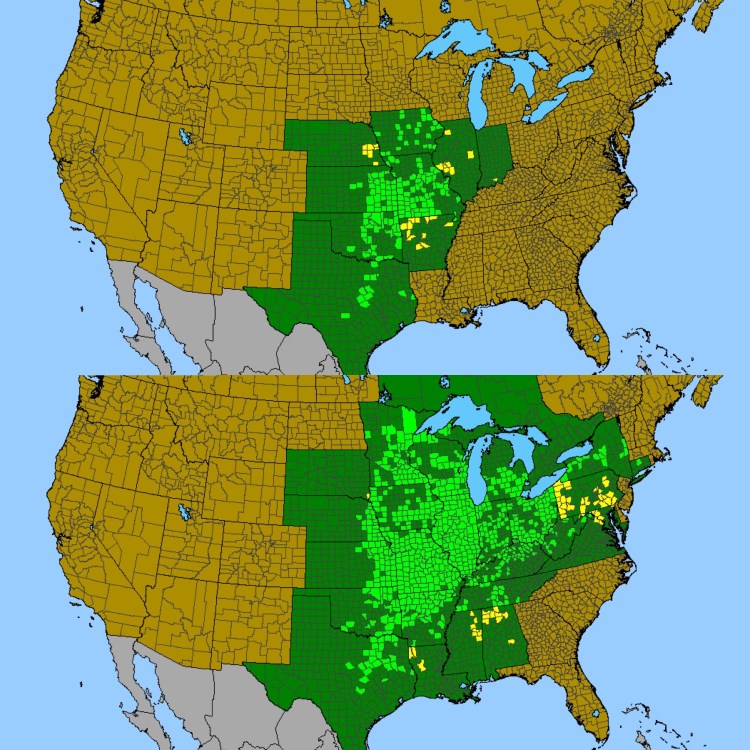
Part of what made the experience so exciting was that this population of Trillium nivale represents the first for Rock Island County. It has been collected from a few nearby counties (Henry County, IL; Muscatine and Clinton Counties, IA), but never here (see BONAP distribution map below). So, with permission, two plants were collected for depositing in an herbarium to document this plant’s presence in the county.
A keen observer and veteran botanist amongst us noted that the site was largely free from invasive species, like the honeysuckle (Lonicera maackii) which grew abundantly in the understory of adjacent woods. He believed this was an indication that the trillium’s slope must’ve been spared from grazing and other disturbances over the past couple hundred years. It is these small slivers of land, usually too steep or unfavorable for farming and grazing animals, where some of the most special remaining pieces of our Illinois natural history hangs on.
After we had our fill of the trilliums, a couple folks headed home while the rest of us explored the property a bit more before deciding to call it a day.
What an amazing kick off to the spring botanizing season! A big thanks goes out to Stacy from all of us for making this outing possible. An afternoon in the woods with fellow nature and plant nerds is always one well spent.












 Flora of the Quad Cities Region