by Grant Fessler

Table of Contents
- Introduction
- The ecology of spring-blooming woodland wildflowers
- Actaea pachypoda – White Baneberry, Doll’s Eyes
- Anemone quinquefolia – Wood Anemone
- Arisaema triphyllum – Jack-in-the-pulpit
- Asarum canadense – Canada Wild Ginger
- Cardamine concatenata – Cut-leaved Toothwort
- Caulophyllum thalictroides – Blue Cohosh
- Claytonia virginica – Spring Beauty
- Dicentra canadensis – Squirrel Corn
- Dicentra cucullaria – Dutchman’s Breeches
- Enemion biternatum – False Rue Anemone
- Erythronium albidum – White Trout Lily
- Geranium maculatum – Wild Geranium
- Hepatica acutiloba – Sharp-lobed Hepatica
- Mertensia virginica – Virginia Bluebells
- Phlox divaricata – Woodland Phlox
- Podophyllum peltatum – Mayapple
- Dodecatheon meadia – Eastern Shooting Star
- Sanguinaria canadensis – Bloodroot
- Symplocarpus foetidus – Eastern Skunk Cabbage
- Thalictrum thalictroides – Rue Anemone
- Trillium recurvatum – Prairie Trillium
- Uvularia grandiflora – Large-flowered Bellwort
- Viola eriocarpa – Smooth Yellow Violet
- Viola sororia – Common Blue Violet
For further information on this project and to see how I am defining the Quad Cities region, see the project overview page.
Introduction
I invite you to get to know the spring-blooming plants of the Quad Cities Region! Here I present a collection of some of our most common and charismatic spring woodland wildflowers with notes about their habitat, frequency, and places you can visit to see each one. All photos were taken by me here in the Quad Cities region or in nearby areas of Iowa and Illinois.
Note that each species profile includes the Illinois and Iowa C value, aka coefficient of conservatism value. This number (which can range from 0-10) is supposed to reflect the species’ fidelity to a specific habitat and sensitivity to human disturbances. A C value of 0 is given to non-native species and very “weedy” native species that thrive with disturbance. A C value of 10 is given to species which reflect high quality, undisturbed remnant habitat or ones which are restricted to a very specific habitat type. You will notice that the C values of many spring wildflowers are in the middle and upper end of the range. This reflects the generally conservative nature of these species.
The ecology of spring-blooming woodland wildflowers
Most of the species presented here are faithful to wooded natural communities with well-drained to moderately well-drained soils. They often prefer places on the landscape where soil stays moist, but not wet, and where nutrients accumulate. In the Quad Cities region, those conditions often correspond with lower slopes, north and east facing slopes, and stream floodplains and terraces that do not flood very often. Level uplands with mesic soil also harbour spring wildflowers but they usually contain fewer species.
Naturally, wildflower blooms are of high importance for the earliest insects to awaken in the spring. Bumblebee queens rely on the blooms of species like Dutchman’s breeches and bluebells as they begin building their nest. Smaller, but no less important pollinators like mining bees (Andrena spp.) can be found flying about the blooms of many different spring flowers, as well. Some species of mining bees will specialize in a specific genus or even a single species of plant. One such example is Andrena erigeniae which specializes in Claytonia virginica (spring beauty) pollen.
Some spring-blooming wildflowers are considered spring ephemerals. These species are only visible during what is called the vernal window. This brief period begins in March and early April and ends by late May or early June when the tree canopy has fully leafed out. For example, the common spring ephemeral Claytonia virginica (spring beauty) often begins flowering in April and completely disappears by June. Other spring-blooming wildflowers like Sanguinaria canadensis (bloodroot) and Asarum canadense (Canada wild ginger) retain vegetative shoots well into summer, and are not considered true spring ephemerals.
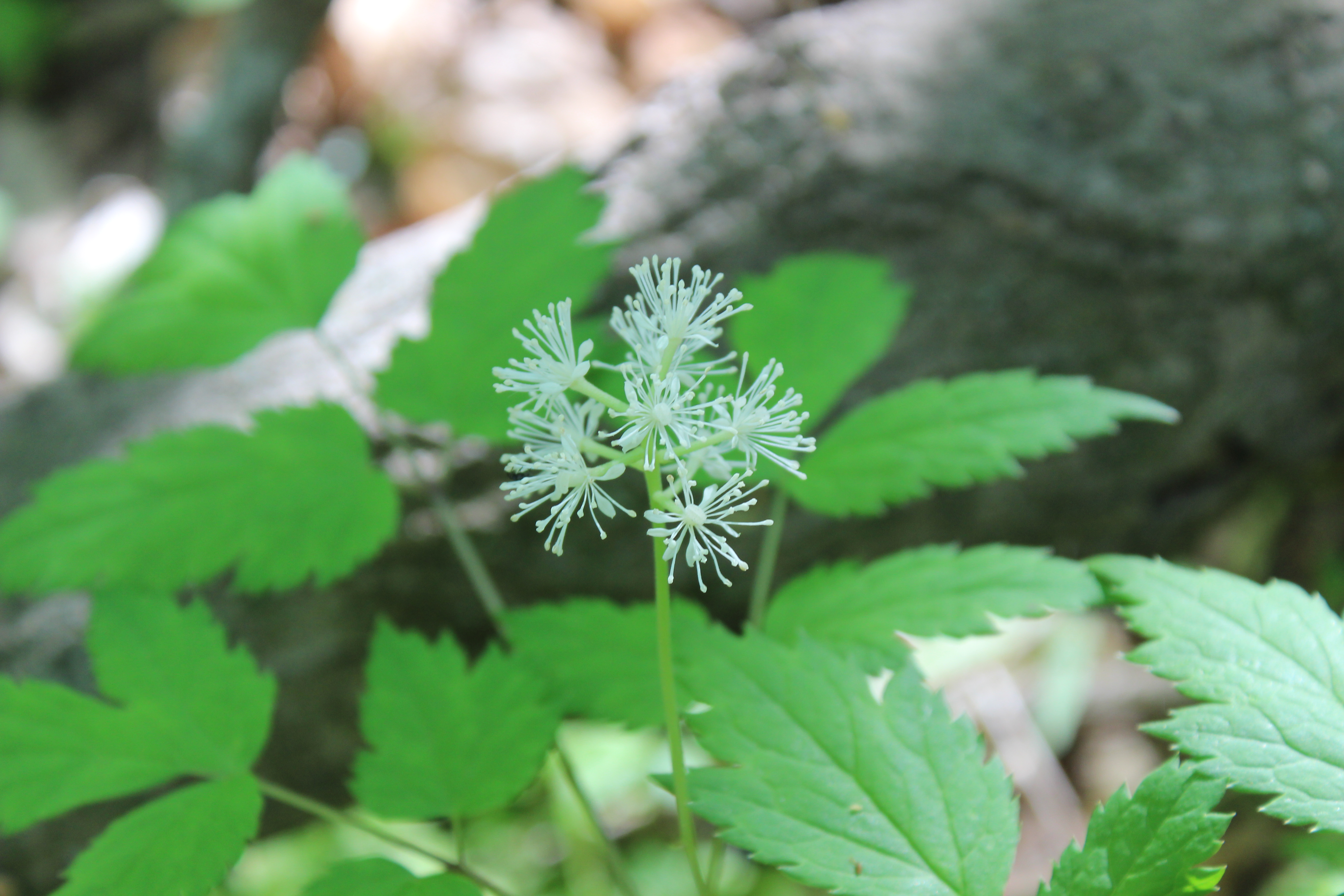
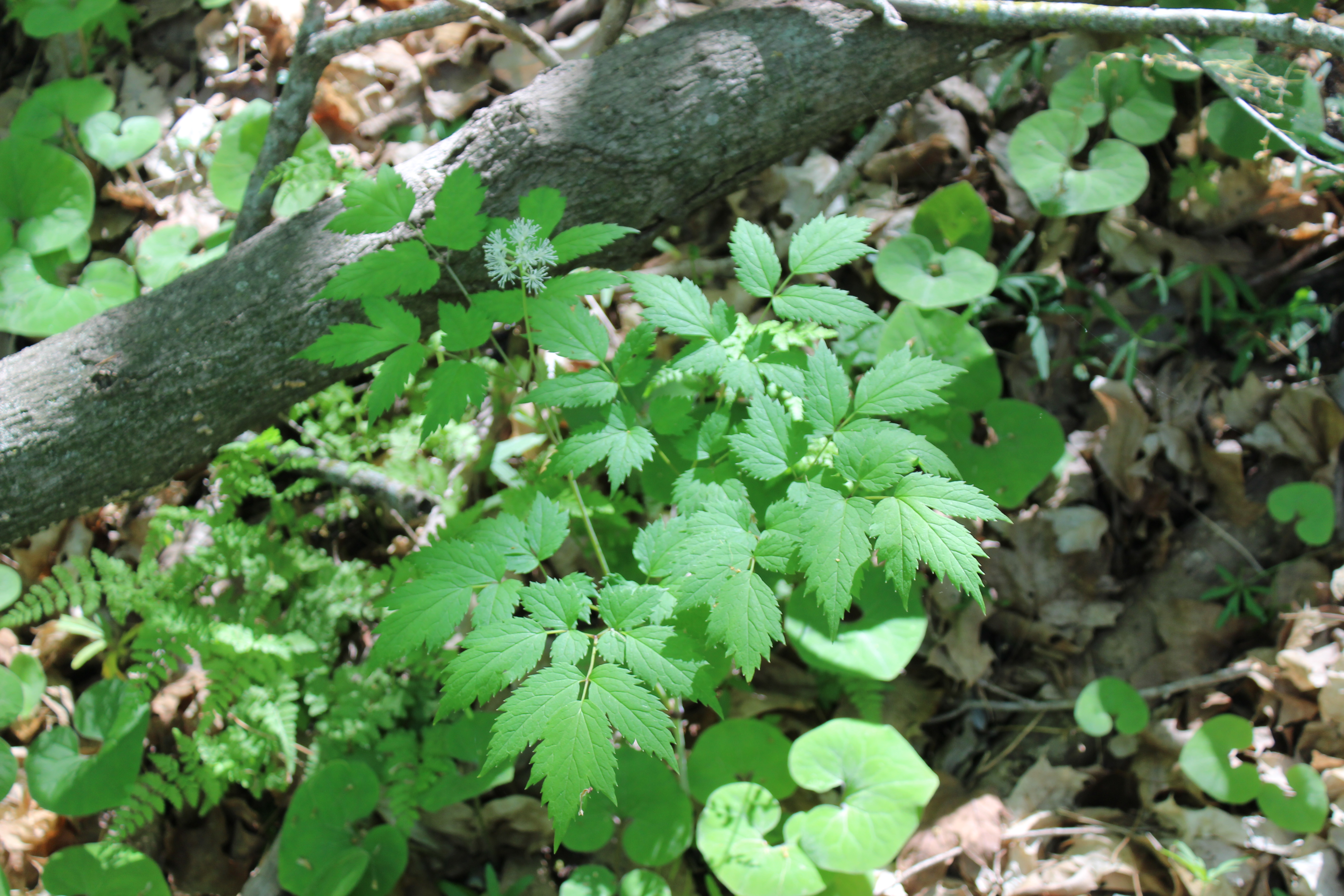

Actaea pachypoda – White Baneberry, Doll’s Eyes
Family: Ranunculaceae (Buttercup Family)
Habitat: Mesic forest and woodland; common.
IL C Value: 7
IA C Value: 7
Where to see this species in the QC: Black Hawk Forest, Loud Thunder Forest Preserve, Wild Cat Den State Park, Devil’s Glen Park
Notes: This is a fairly conservative species of mesic forest and woodlands. The flowers develop into white berries marked with a distinct black dot, reminiscent of toy doll eyes. The similar Actaea rubra (red baneberry) is a more northern ranging species and is not currently known from our region. Its closest outposts include Mississippi Palisades state park, and the rock river hill country near Dixon, IL.


Anemone quinquefolia – Wood Anemone
Family: Ranunculaceae (Buttercup Family)
Habitat: Mesic forest and woodland; infrequent.
IL C Value: 7
IA C Value: 8
Where to see this species in the QC: Wild Cat Den State Park, Scott County Park, Fairmont Cemetery (Davenport), Forest Grove Park (Bettendorf)
Notes: So far, this species is only known from the Iowa side of the QC. It is an infrequent spring flower of mesic upland woodlands. It can form large patches dominated by vegetative shoots with few blooming stems. This species is also known by the name Anemonoides quinquefolia.
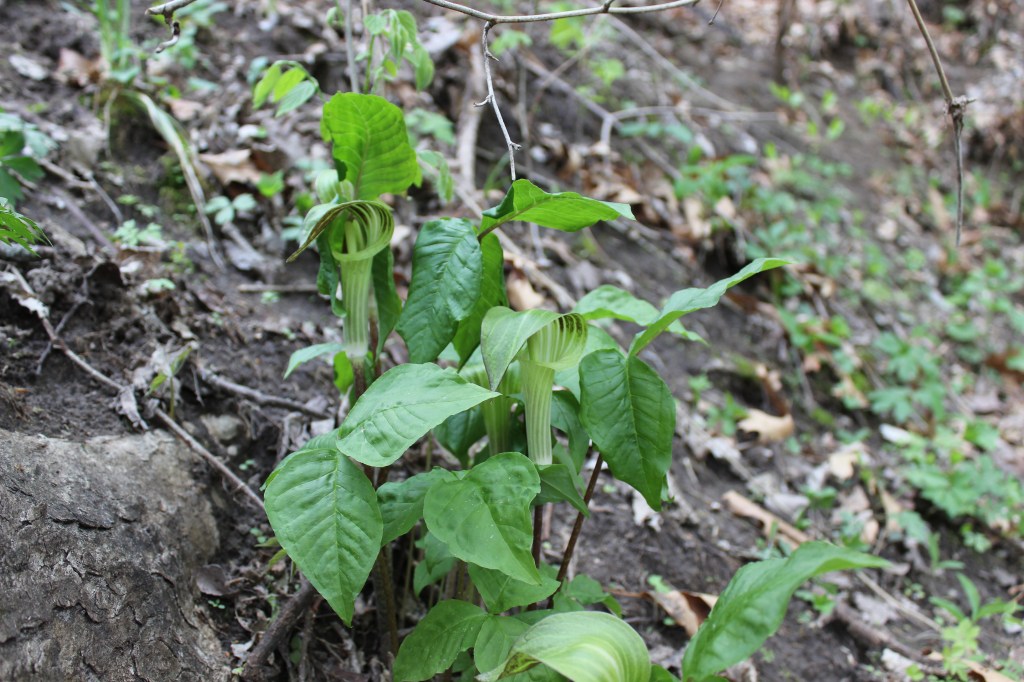
Arisaema triphyllum – Jack-in-the-pulpit
Family: Araceae (Arum Family)
Habitat: Mesic forest and woodland; frequent.
IL C Value: 4
IA C Value: 4
Where to see this species in the QC: Black Hawk Forest, Loud Thunder Forest Preserve, Wild Cat Den State Park, Scott County Park, Devil’s Glen Park
Notes: This common forest and woodland plant gets its name from its flower structure. As with plants in the Arum family, jack-in-the-pulpit flowers are made up of a cylindrical spadix (aka “jack”) within a sheath-like spathe (aka “the pulpit”). This species can switch between male and female depending on the year.
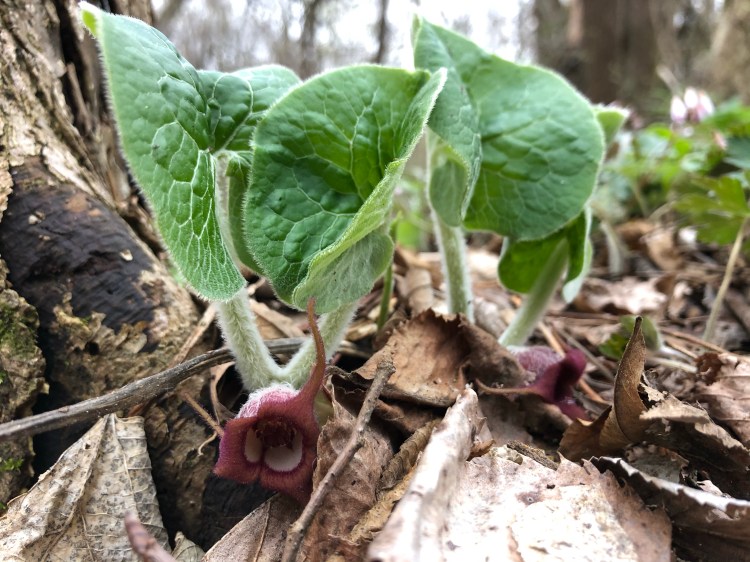


Asarum canadense – Canada Wild Ginger
Family: Aristolochiaceae (Birthwort Family)
Habitat: rich, mesic forest and woodland; locally common.
IL C Value: 5
IA C Value: 8
Where to see this species in the QC: Black Hawk Forest, Loud Thunder Forest Preserve, Illiniwek Forest Preserve, Wild Cat Den State Park, McLamarrah Park (Bettendorf)
Notes: This is a characteristic species of rich, mesic forests. It is most often encountered on the lower slopes of ravines and bluffs. The heart-shaped leaves can be see until fall, but the small flowers held close to the ground are only present in spring.
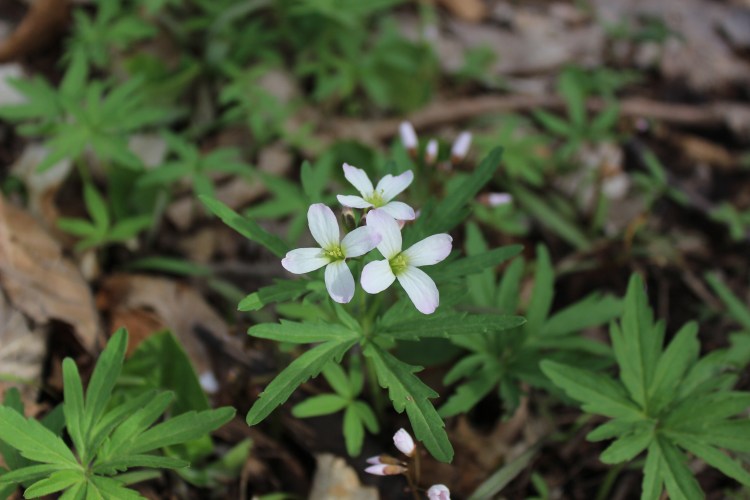
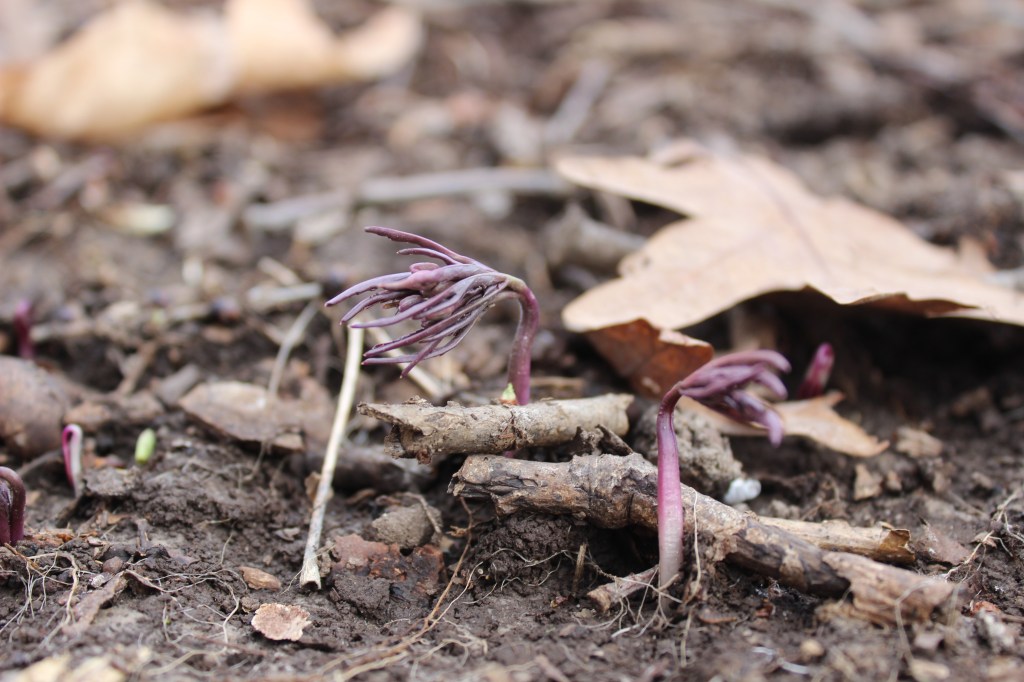
Cardamine concatenata – Cut-leaved Toothwort
Family: Brassicaceae (Mustard Family)
Habitat: mesic forest and woodland; frequent.
IL C Value: 4
IA C Value: 7
Where to see this species in the QC: Black Hawk Forest, Loud Thunder Forest Preserve, WIld Cat Den State Park, Devil’s Glen Park
Notes: Cut-leaved toothwort is also known by the scientific name Dentaria laciniata.
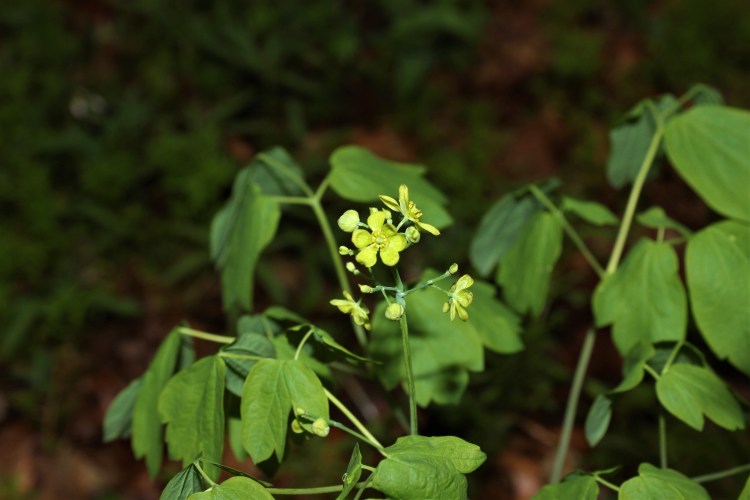


Caulophyllum thalictroides – Blue Cohosh
Family: Berberidaceae (Barberry Family)
Habitat: rich, mesic forest and woodlands; infrequent.
IL C Value: 8
IA C Value: 9
Where to see this species in the QC: Loud Thunder Forest Preserve, Wild Cat Den State Park, Cameron Woods State Preserve
Notes: This is an infrequent plant of well-drained, mesic forests and woodlands. The flowers turn into deep blue-colored berries during summer and fall.

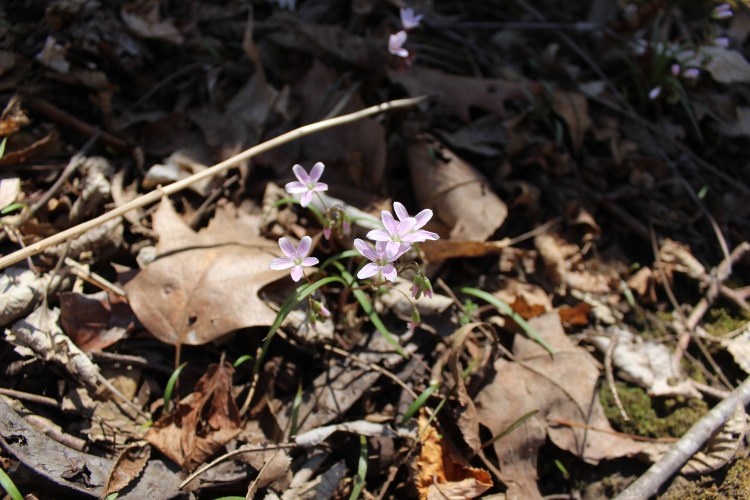

Claytonia virginica – Spring Beauty
Family: Montiaceae (Miner’s Lettuce Family)
Habitat: dry to mesic forest and woodland; frequent.
IL C Value: 1
IA C Value: 4
Where to see this species in the QC: Black Hawk Forest, Loud Thunder Forest Preserve, Wild Cat Den State Park, Scott County Park, Devil’s Glen Park
Notes: This is one of the earliest vascular plants to emerge in spring. I have observed fresh spring beauty shoots on warm slopes as early as February 6th in Rock Island County. Its flowers, which open and close with the sun, are one of the first blooms available to pollinators in early spring.

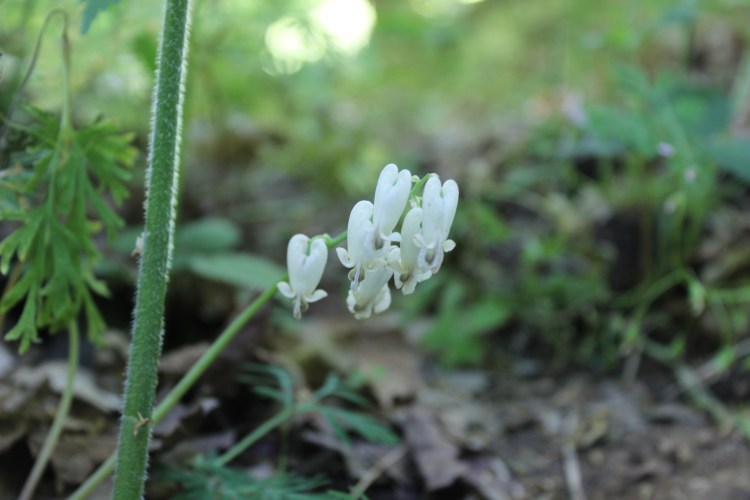
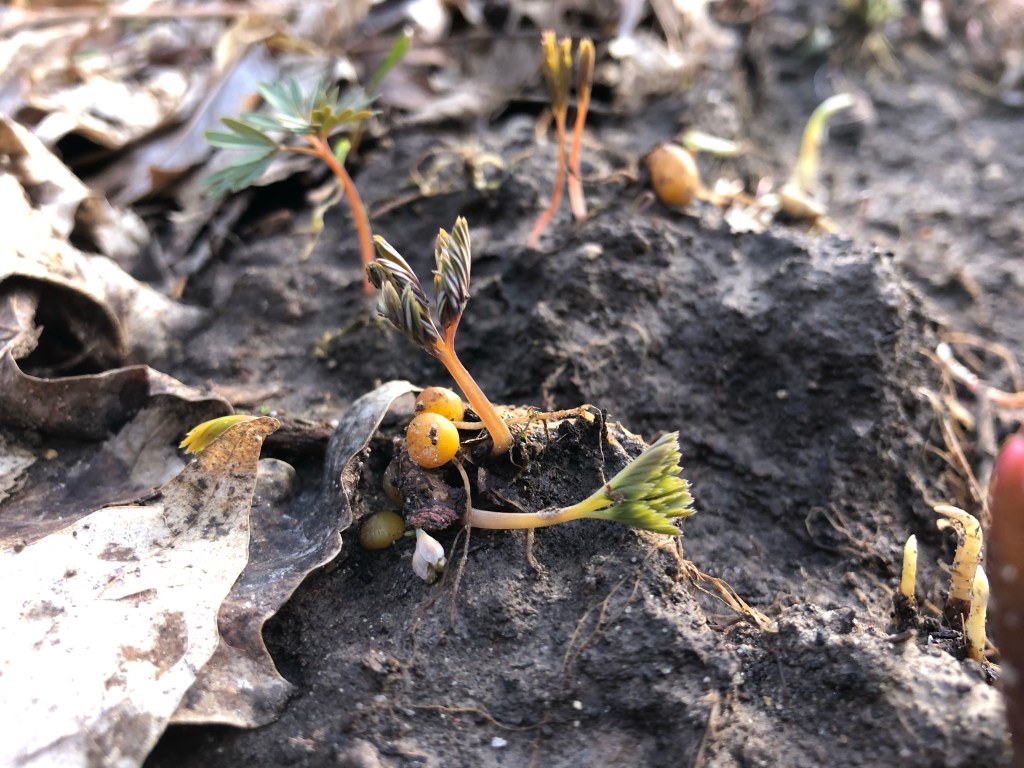
Dicentra canadensis – Squirrel Corn
Family: Papaveraceae (Poppy Family)
Habitat: rich, mesic forest; rare.
IL C Value: 7
IA C Value: 10
Where to see this species in the QC: Wild Cat Den State Park
Notes: This is a rare species in the Quad Cities region. It is currently only known from Wild Cat Den and Hampton, IL. The common name “squirrel corn” comes from the species’ bright orangy-yellow rhizomes reminiscent of corn kernels. Notably, it blooms a week or so later than the more common Dicentra cucullaria.


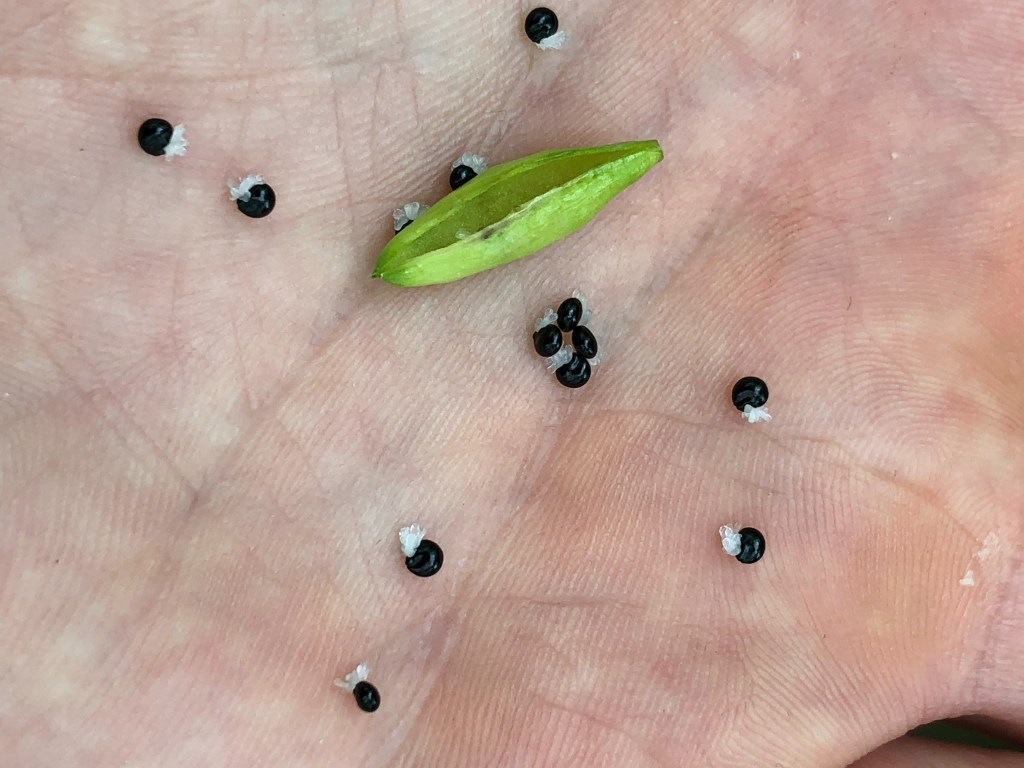
Dicentra cucullaria – Dutchman’s Breeches
Family: Papaveraceae (Poppy Family)
Habitat: mesic forest and woodland; common.
IL C Value: 5
IA C Value: 7
Where to see this species in the QC: Black Hawk Forest, Loud Thunder Forest Preserve, Illiniwek Forest Preserve, Dorrance Forest Preserve, Wild Cat Den State Park, McLamarrah Park (Bettendorf)
Notes: The common name “dutchman’s breeches” comes from the resemblance of its flowers to upside down pantaloons. This is a favorite species of queen bumblebees in early spring.
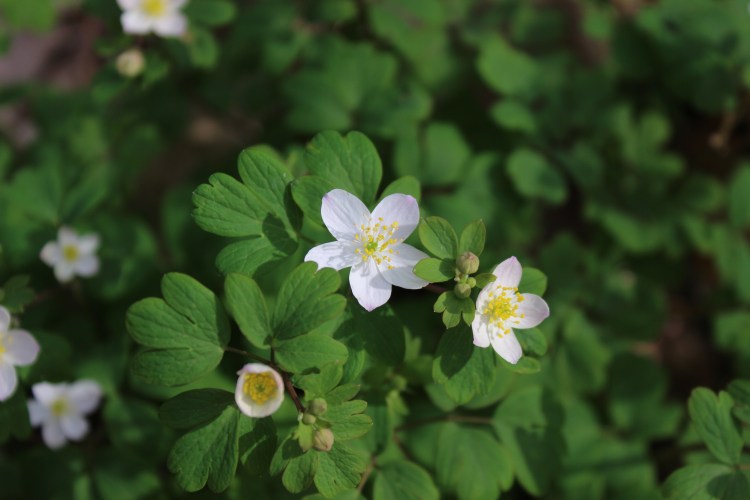

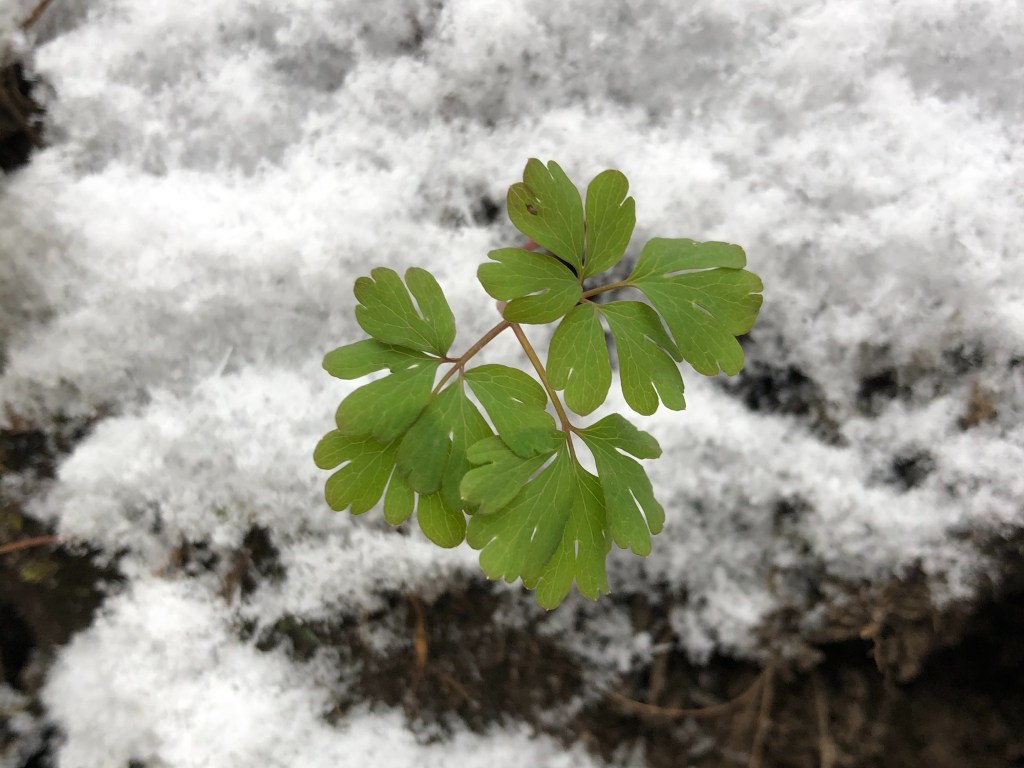
Enemion biternatum – False Rue Anemone
Family: Ranunculaceae (Buttercup Family)
Habitat: rich, mesic forest; typically in association with streams; not infrequent.
IL C Value: 5
IA C Value: 5
Where to see this species in the QC: Black Hawk Forest, Loud Thunder Forest Preserve, Wild Cat Den State Park, Cameron Woods State Preserve.
Notes: False rue anemone has an affinity for moderately well-drained to somewhat poorly-drained soils, especially those of stream floodplains and terraces. This species can be distinguished from the very similar looking Thalictrum thalictroides (rue anemone) by its 5 petals and more deeply lobed leaflets. This species also goes by the scientific name Isopyrum biternatum.

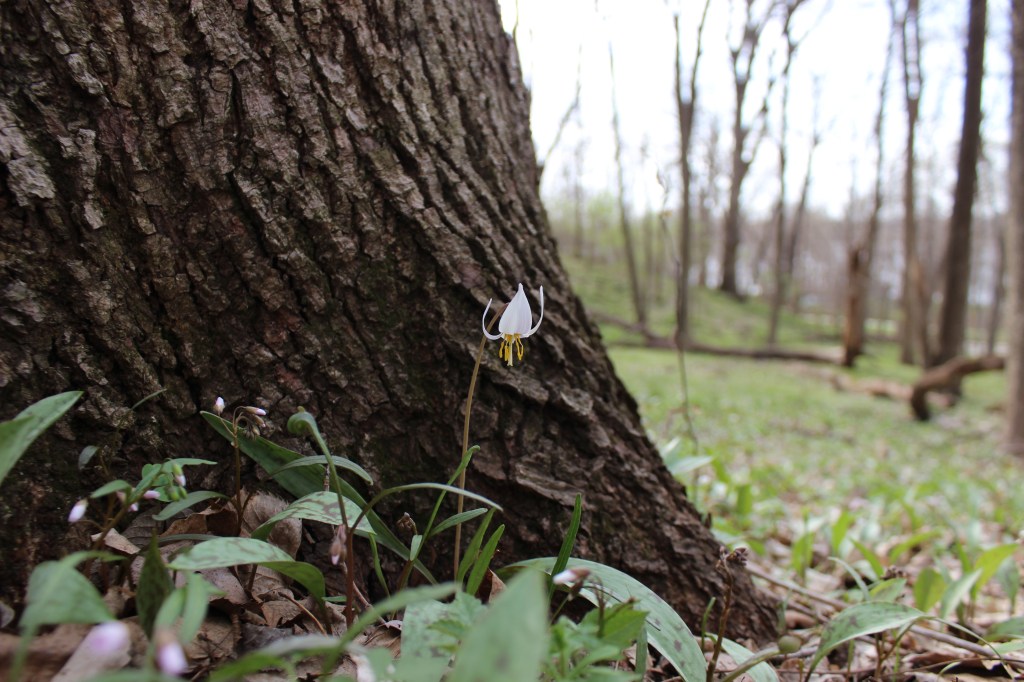

Erythronium albidum – White Trout Lily
Family: Liliaceae (Lily Family)
Habitat: Dry-mesic to mesic forest and woodland; common.
IL C Value: 4
IA C Value: 6
Where to see this species in the QC: Black Hawk Forest, Loud Thunder Forest Preserve, Illiniwek Forest Preserve, Wild Cat Den, Devil’s Glen Park.
Notes: This is the common trout lily of mesic forests and woodlands in the Quad Cities. The other species of trout lily native to eastern forests, Erythronium americanum (yellow trout lily), is conspicuously absent from our region. It can be found further east, north, and south.


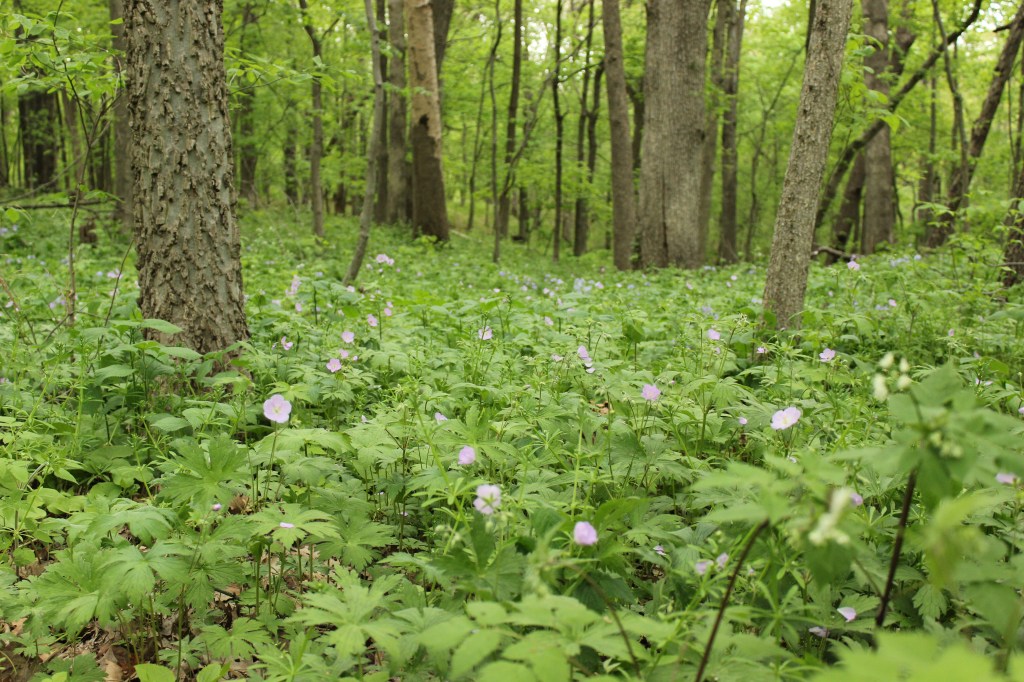
Geranium maculatum – Wild Geranium
Family: Geraniaceae (Geranium Family)
Habitat: dry-mesic to mesic forest and woodland; common.
IL C Value: 4
IA C Value: 6
Where to see this species in the QC: Black Hawk Forest, Loud Thunder Forest Preserve, Dorrance Forest Preserve, Wild Cat Den, Devil’s Glen Park.

Hepatica acutiloba – Sharp-lobed Hepatica
Family: Ranunculaceae (Buttercup Family)
Habitat: rich, mesic forest and woodland; locally common.
IL C Value: 7
IA C Value: 6
Where to see this species in the QC: Black Hawk Forest, Loud Thunder, Wild Cat Den, McLamarrah Park
Notes: Sharp-lobed hepatica can be seen year-round due to its evergreen vegetative leaves. Look for this species on lower and north-facing slopes. Like many spring-blooming species, the seeds of Hepatica are dispersed by ants. The very similar Hepatica americana (round-lobed hepatica) is not known from our region and but can be found further our north, east, and south. The rock river hills region near Dixon, IL is the nearest outpost for this round-lobed hepatica.

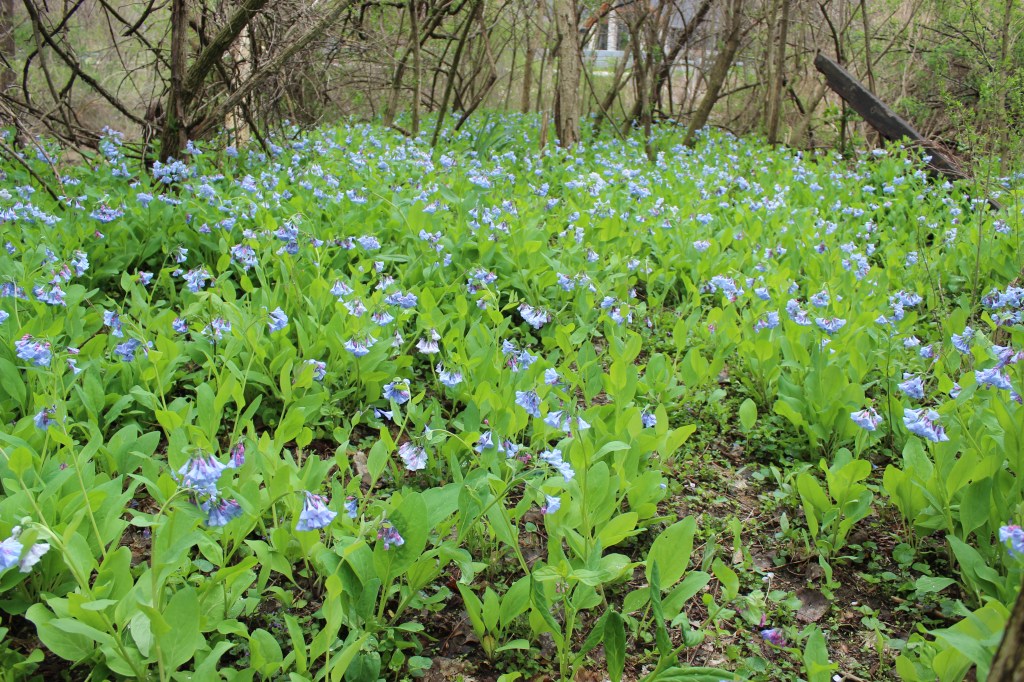
Mertensia virginica – Virginia Bluebells
Family: Boraginaceae (Borage Family)
Habitat: stream floodplains and terraces; rich mesic woodlands; common.
IL C Value: 5
IA C Value: 4
Where to see this species in the QC: Black Hawk Forest, Wild Cat Den, Forest Grove Park
Notes: A floodplain woodland aglow with the vibrant greens and blues of Virginia bluebells is a sight to behold! This native species is a true spring ephemeral. Its foliage and flowers quickly disappear as spring progresses to summer.
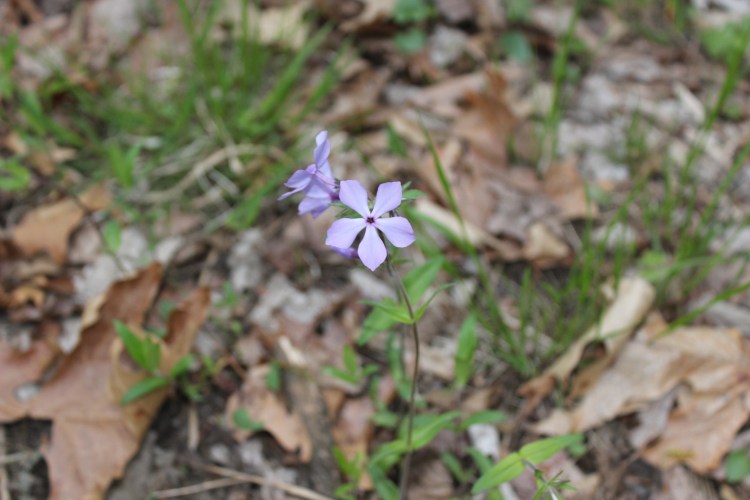

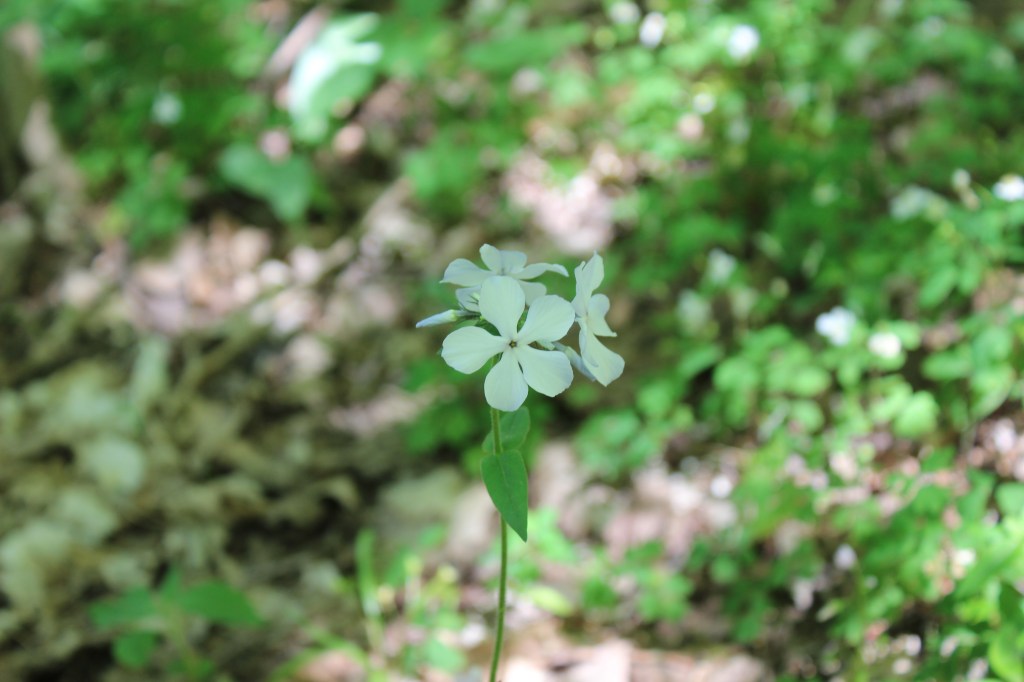
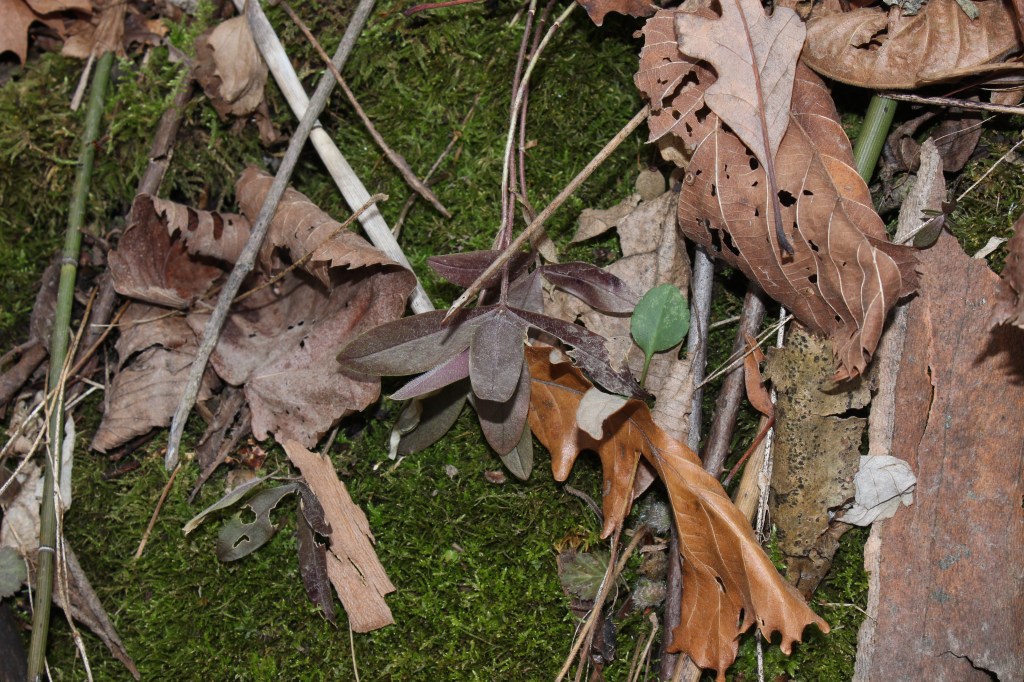
Phlox divaricata – Woodland Phlox
Family: Polemoniaceae (Phlox Family)
Habitat: mesic stream floodplains and terraces; mesic forest and woodland; common.
IL C Value: 5
IA C Value: 5
Where to see this species in the QC: Black Hawk Forest, Loud Thunder Forest Preserve, Wild Cat Den, Devil’s Glen Park, Illiniwek Forest Preserve
Notes: This is a common species of mesic woods and moderately well-drained floodplains. Like sharp-lobed hepatica, woodland phlox can be found all year round due to its evergreen vegetative shoots. The flowers of this species are typically blue-purple but white flowered individuals can also be found.
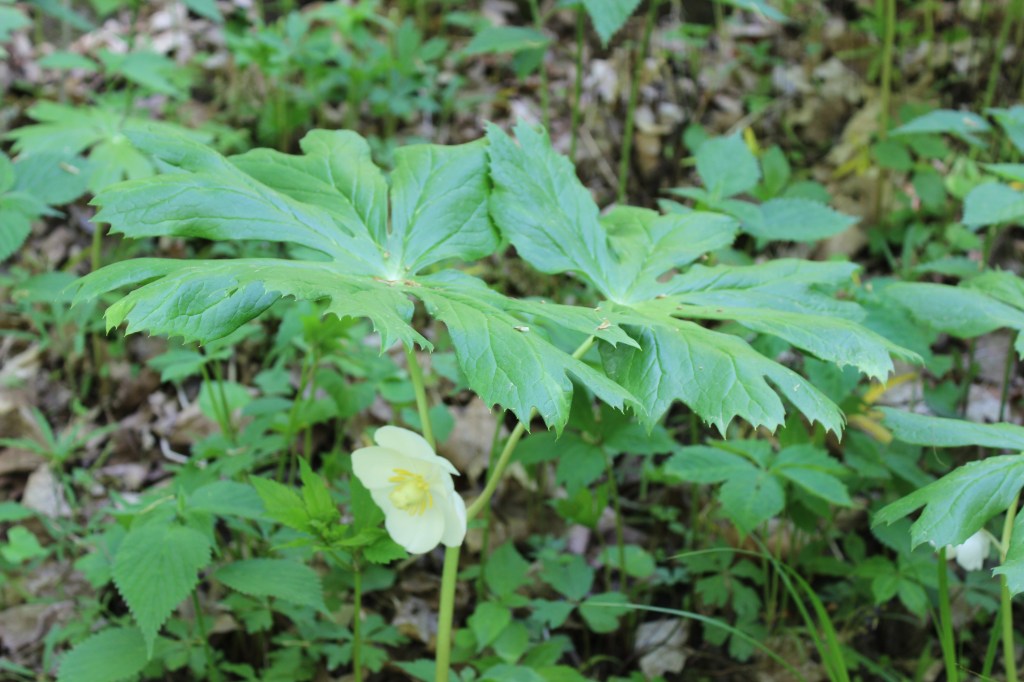
Podophyllum peltatum – Mayapple
Family: Berberidaceae (Barberry Family)
Habitat: mesic to dry-mesic forest and woodland; common.
IL C Value: 4
IA C Value: 4
Where to see this species in the QC: Black Hawk Forest, Loud Thunder Forest Preserve, Illiniwek Forest Preserve, Wild Cat Den, Forest Grove Park, McLamarrah Park
Notes: Mayapple is a common species in forests and woodlands in our region. It can form large colonies that outcompete other vegetation due to its broad, umbrella-like leaves. The fruit it produces is a favorite food of wildlife.


Dodecatheon meadia – Eastern Shooting Star
Family: Primulaceae (Primrose Family)
Habitat: prairie; dry to dry-mesic woodland; uncommon.
IL C Value: 6
IA C Value: 7
Where to see this species in the QC: Sunderbruch Park, Wild Cat Den, Devil’s Glen Park, Elton Fawks Nature Preserve, Munson Township Cemetery Prairie Nature Preserve
Notes: This charismatic spring wildflower was likely more common in the past than it is now. Shooting star is equally at home in prairies and woodlands. Due to the near complete elimination of this species’ prairie habitat, I most often find shooting star on south and west facing slopes in woodlands. Some sources call this Primula meadia.


Sanguinaria canadensis – Bloodroot
Family: Papaveraceae (Poppy Family)
Habitat: mesic forest and woodland; common.
IL C Value: 5
IA C Value: 7
Where to see this species in the QC: Black Hawk Forest, Loud Thunder Forest Preserve, Illiniwek Forest Preserve, Wild Cat Den, Forest Grove Park, McLamarrah Park
Notes: The elegant white petals of bloodroot flowers open and close with the sun and are a lovely sight in early spring. The common name “bloodroot” refers to the red sap found in its roots.

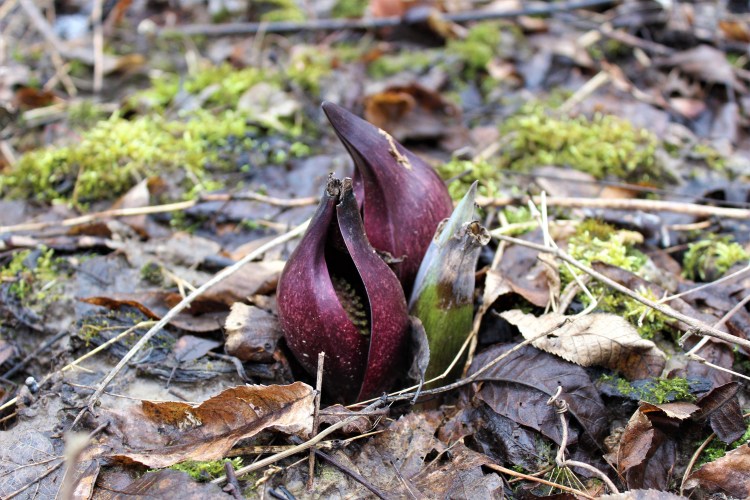

Symplocarpus foetidus – Eastern Skunk Cabbage
Family: Araceae (Arum Family)
Habitat: seeps; fens; rare.
IL C Value: 8
IA C Value: 9
Where to see this species in the QC: Ike’s Fen (Geneseo, IL), Johnson Sauk Trail State Park
Notes: We are located on the western edge of the eastern skunk cabbage range. It is rare with us and only found in places where perennial seepage occurs. This is the very first species to bloom in the spring. It usually opening its alien-like flowers in mid-late February often times when snow is still on the ground.


Thalictrum thalictroides – Rue Anemone
Family: Ranunculaceae (Buttercup Family)
Habitat: dry and dry-mesic woodlands; common.
IL C Value: 5
IA C Value: 7
Where to see this species in the QC: Black Hawk Forest, Loud Thunder Forest Preserve, Illiniwek Forest Preserve, Wild Cat Den, Fairmont Cemetery
Notes: This dainty species has an affinity for the well-drained upper slopes and ridges in upland forest and woodland. It is also known by the name Anemonella thalictroides.

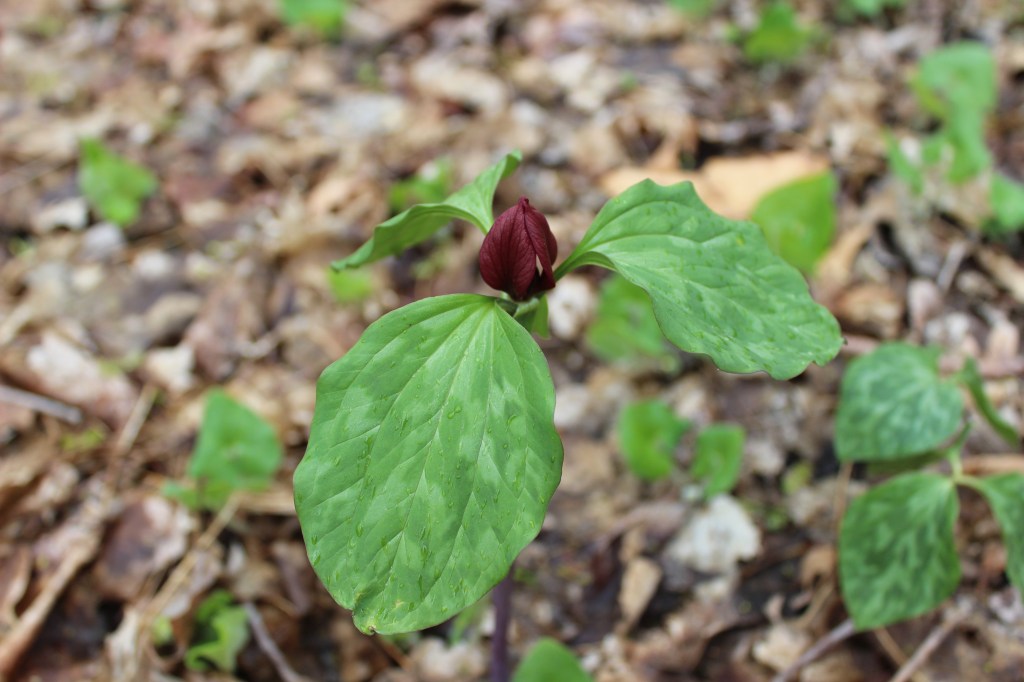

Trillium recurvatum – Prairie Trillium
Family: Melanthiaceae (Bunchflower Family)
Habitat: dry mesic to mesic forest and woodland; common.
IL C Value: 5
IA C Value: 8
Where to see this species in the QC: Black Hawk Forest, Loud Thunder Forest Preserve, Wild Cat Den, Devil’s Glen Park, Illiniwek Forest Preserve
Notes: This is our most common trillium species easily encountered in remnant wooded natural communities. Note the mottled leaves and maroon-red petals.


Uvularia grandiflora – Large-flowered Bellwort
Family: Colchicaceae (Bellwort Family)
Habitat: Rich, mesic forest and woodland; locally common.
IL C Value: 7
IA C Value: 7
Where to see this species in the QC: Black Hawk Forest, Martin Conservation Area, Elton Fawks Nature Preserve, Wild Cat Den, Wapsi River Environmental Education Center and preserve
Notes: This species is faithful to rich, mesic lower slopes in remnant wooded natural communities. The bright yellow petals stand out in the early spring gray and brown.
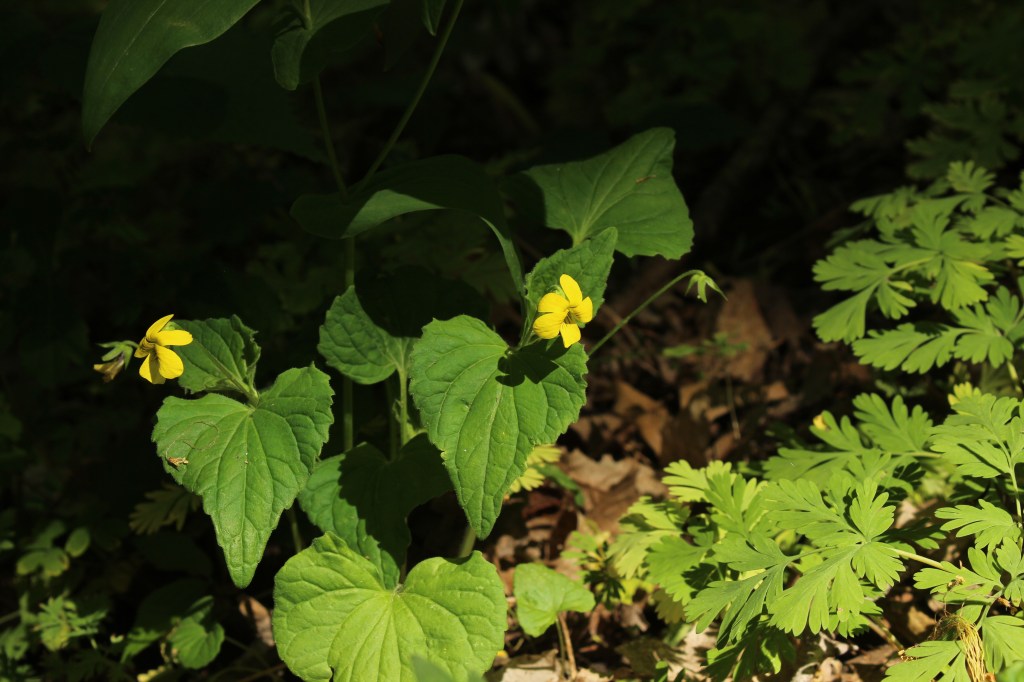

Viola eriocarpa – Smooth Yellow Violet
Family: Violaceae (Violet Family)
Habitat: dry-mesic to mesic forest and woodland; common.
IL C Value: 7
IA C Value: 5
Where to see this species in the QC: Black Hawk Forest, Loud Thunder Forest Preserve, Wild Cat Den, Cameron Woods Preserve, Devil’s Glen Park
Notes: Until 2023, this species was called Viola pubescens. It is common in well-drained soils of upland woods.


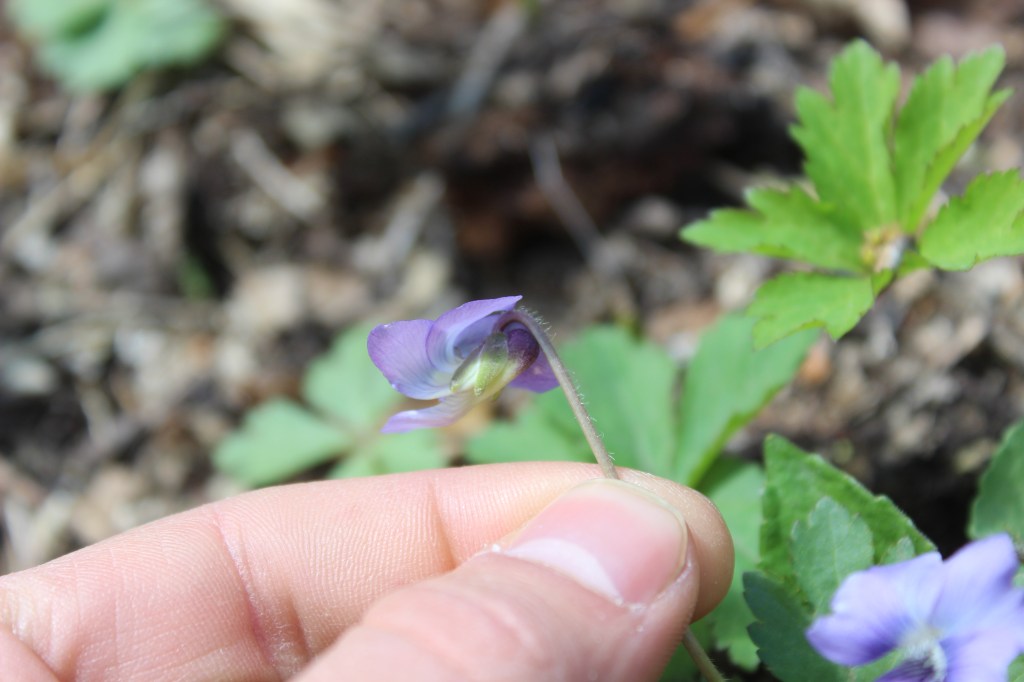
Viola sororia – Common Blue Violet
Family: Violaceae (Violet Family)
Habitat: dry-mesic to mesic wooded natural communities; lawns; frequent.
IL C Value: 3
IA C Value: 1
Where to see this species in the QC: Black Hawk Forest, Loud Thunder Forest Preserve, Illiniwek Forest Preserve, Wild Cat Den, Cameron Woods Preserve, Devil’s Glen Park, and your backyard!
Notes: This is the state flower of Illinois and is found in remnant and disturbed habitats.
 Flora of the Quad Cities Region